 뒤로
뒤로Building Blocks of Managerial Accounting: Structured Study Notes
스터디 가이드 - 스마트 노트
 자료에 맞춘 맞춤형 노트, 핵심 정의, 예시, 맥락을 확장해 제공합니다.
Building Blocks of Managerial Accounting
Business Sectors: Service, Merchandising, and Manufacturing Companies
Managerial accounting distinguishes between three main types of business sectors, each with unique characteristics regarding their operations and inventory management.
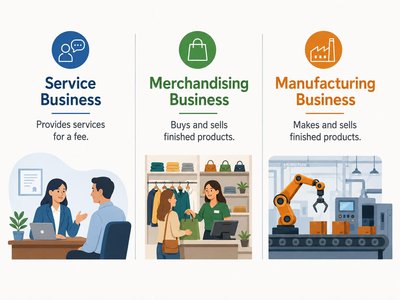
Service Companies: Sell intangible services and generally do not hold inventory. Examples include health care, insurance, banking, and consulting.
Merchandising Companies: Resell tangible products purchased from manufacturers and suppliers. They carry substantial inventory and include retailers (e.g., Walmart, Amazon) and wholesalers.
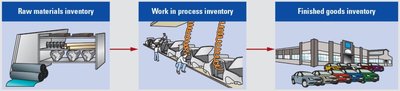
Manufacturing Companies: Use labor, plant, and equipment to convert raw materials into finished products. They maintain three types of inventory: raw materials, work in process, and finished goods.
Example: Ford Motor Company is a manufacturing company, while Walmart is a merchandising company.
Additional info: Service companies are the largest sector of the U.S. economy.
Comparison Table: Business Sectors
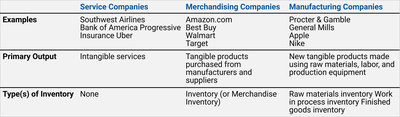
The following table summarizes the differences between service, merchandising, and manufacturing companies:
Service Companies | Merchandising Companies | Manufacturing Companies |
|---|---|---|
Intangible services | Tangible products purchased from manufacturers and suppliers | New tangible products made using raw materials, labor, and production equipment |
None | Inventory (or Merchandise Inventory) | Raw materials inventory, Work in process inventory, Finished goods inventory |
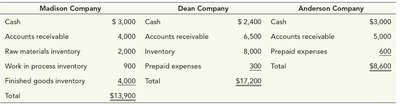
Identifying Company Types from Balance Sheets
Balance sheets can reveal the type of company based on their current asset sections. Service companies typically lack inventory, merchandisers have inventory, and manufacturers show raw materials, work in process, and finished goods inventory.
The Value Chain and Its Elements
Definition and Components
The value chain consists of all activities that add value to a company’s products and services. These activities span from research and development to customer service.
Research and Development (R&D): Creating new or improved products/services and production processes.
Design: Engineering products/services and production processes.
Production or Purchases: Manufacturing products or purchasing merchandise for resale.
Marketing: Promotion and advertising.
Distribution: Delivery to customers.
Customer Service: Support after the sale.
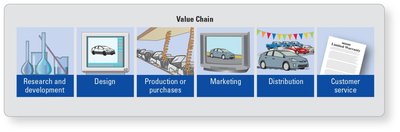
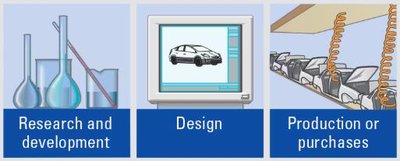

Example: A car manufacturer’s value chain includes R&D for new models, design of vehicles, production, marketing campaigns, distribution to dealerships, and after-sale service.
Sustainability in the Value Chain
Sustainability initiatives can be integrated into each element of the value chain, such as environmentally safe packaging, life-cycle assessment, sustainable purchasing, ethical marketing, and extended customer service.
Direct and Indirect Costs
Cost Objects and Cost Classification
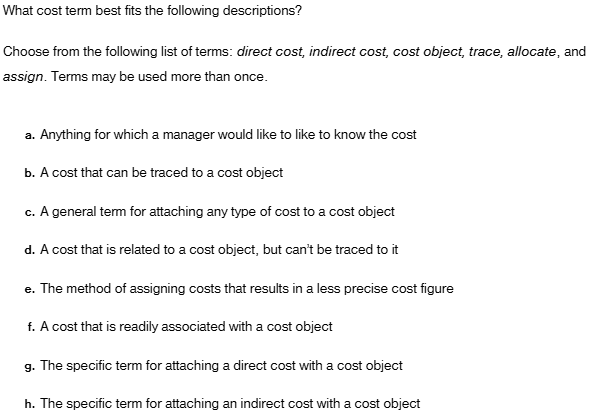
A cost object is anything for which managers want to know the cost, such as products, departments, or business segments.
Direct Costs: Costs that can be traced directly to a cost object (e.g., direct materials for a car).
Indirect Costs: Costs that relate to a cost object but cannot be traced specifically (e.g., plant utilities shared by multiple products).

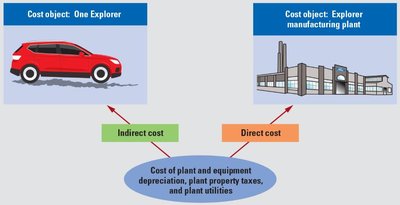
Example: The cost of tires is a direct cost for a car, while factory rent is an indirect cost.
Assigning Costs
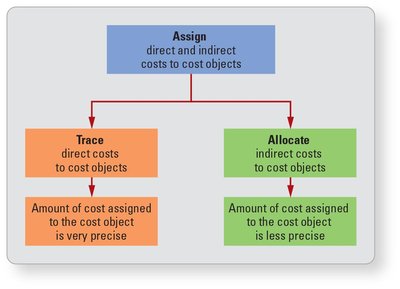
Direct costs are traced to cost objects, while indirect costs are allocated. Tracing is more precise than allocation.
Cost Terms Exercise
Understanding cost terms is essential for accurate cost assignment and decision-making.
Product Costs and Period Costs
Internal and External Reporting
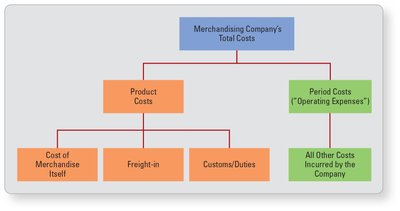
For internal decision-making, all costs across the value chain are considered. For external reporting, costs are classified as product or period costs according to GAAP or IFRS.
Product Costs: Costs incurred to produce or purchase products; treated as inventory until sold.
Period Costs: Costs not related to inventory; expensed immediately as operating expenses.

Manufacturing Costs
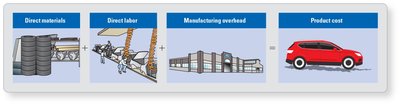
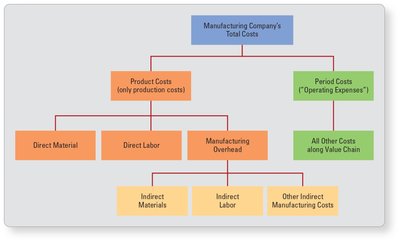
Manufacturing companies’ product costs include:
Direct Materials (DM): Primary materials in the finished product.
Direct Labor (DL): Compensation for employees who convert raw materials.
Manufacturing Overhead (MOH): All other manufacturing costs (indirect materials, labor, and other indirect costs).
Formula:
Prime and Conversion Costs
Prime costs and conversion costs are important classifications in manufacturing:
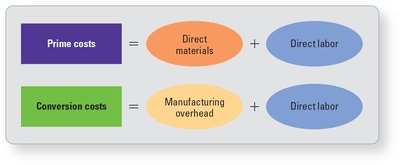
Prime Costs: Direct materials + Direct labor
Conversion Costs: Manufacturing overhead + Direct labor
Product vs. Period Costs Table
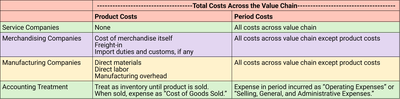
The following table summarizes product and period costs across company types:
Company Type | Product Costs | Period Costs | Accounting Treatment |
|---|---|---|---|
Service | None | All costs across value chain | Expense in period incurred |
Merchandising | Cost of merchandise, freight-in, duties | All costs except product costs | Treat as inventory until sold |
Manufacturing | Direct materials, labor, overhead | All costs except product costs | Treat as inventory until sold |
Income Statements for Different Company Types
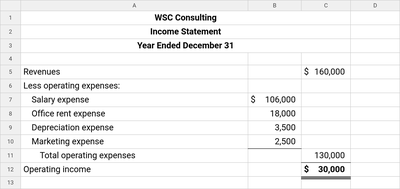
Service Company Income Statement
Service companies report revenues and operating expenses, with no cost of goods sold.
Merchandising Company Income Statement
Merchandising companies report sales revenue, cost of goods sold, gross profit, and operating expenses.
Inventory Systems
Perpetual Inventory System: Continuously updates inventory records with each sale.
Periodic Inventory System: Updates inventory records at the end of the period, accounting for breakage, theft, errors, and obsolescence.
Cost of Goods Sold Calculation
For merchandising companies:
Manufacturing Company Income Statement
Manufacturing companies calculate cost of goods sold through three steps:
Calculate cost of direct materials used
Calculate cost of goods manufactured
Calculate cost of goods sold
Relevant and Irrelevant Costs for Decision Making
Controllable vs. Uncontrollable Costs
Controllable costs can be influenced by management, while uncontrollable costs are fixed in the short run.
Relevant, Irrelevant, and Sunk Costs
Relevant Costs: Differ between alternatives (differential costs).
Irrelevant Costs: Do not differ among alternatives.
Sunk Costs: Already incurred and cannot be changed.
Cost Behavior: Fixed and Variable Costs
Fixed Costs
Fixed costs remain constant in total over a wide range of activity levels.
Variable Costs
Variable costs change in total in direct proportion to changes in volume.
Cost Behavior in Manufacturing
Manufacturing costs may be fixed or variable, affecting total and average costs at different production volumes.
Total Cost Formula
The total cost is calculated as:
Example: If fixed cost is $20,000,000, variable cost per unit is $5,000, and 10,000 units are produced:
Average Cost Formula
Average cost per unit is:
Example: $70,000,000 \div 10,000 = $7,000 per unit
Marginal Cost
Marginal cost is the cost of producing one additional unit. Fixed costs typically do not change unless capacity is reached.
Summary
This chapter provides foundational knowledge for managerial accounting, including business sector classification, value chain analysis, cost assignment, product and period cost identification, income statement preparation, and cost behavior analysis. Understanding these concepts is essential for effective internal decision-making and external financial reporting.
