 뒤로
뒤로Chapter 3: The Adjusting Process – Financial Accounting Study Notes
스터디 가이드 - 스마트 노트
 자료에 맞춘 맞춤형 노트, 핵심 정의, 예시, 맥락을 확장해 제공합니다.
Chapter 3: The Adjusting Process
Learning Objectives
Differentiate between cash basis and accrual basis accounting
Define and apply the time period concept, revenue recognition, and matching principles
Explain the purpose of and journalize and post adjusting entries for deferrals and accruals
Prepare an adjusted trial balance and identify the impact of adjusting entries on financial statements
Describe the accounting cycle and the use of a worksheet
Cash Basis vs. Accrual Basis Accounting
Definitions and Key Differences
Accounting systems can be based on either the cash basis or the accrual basis. Understanding the distinction is fundamental for accurate financial reporting.
Cash Basis Accounting: Revenues are recorded when cash is received, and expenses are recorded when cash is paid. This method is not permitted under GAAP and is generally used by small businesses due to its simplicity.
Accrual Basis Accounting: Revenues are recorded when earned, and expenses are recorded when incurred, regardless of when cash is exchanged. This method is required by GAAP and provides a more accurate picture of a business’s financial performance.
Example: If $1,200 is paid for six months of insurance on May 1:
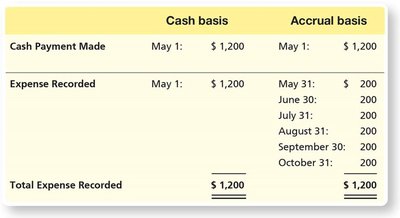
Under cash basis, the entire $1,200 is recorded as an expense on May 1. Under accrual basis, $200 is recorded each month as the insurance is used.
Example: If $600 is received on April 30 for services to be performed over six months:
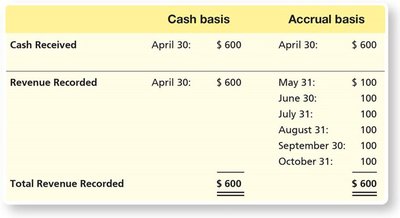
Under cash basis, the entire $600 is recorded as revenue on April 30. Under accrual basis, $100 is recorded each month as the service is performed.
The Time Period Concept, Revenue Recognition, and Matching Principles
The Time Period Concept
The time period concept divides business activities into specific periods (e.g., month, quarter, year) for reporting purposes. A fiscal year is any 12 consecutive months used for accounting purposes, which may or may not align with the calendar year.
The Revenue Recognition Principle
The revenue recognition principle determines when revenue should be recorded. It requires a five-step process:
Identify the contract with the customer.
Identify the performance obligations in the contract.
Determine the transaction price.
Allocate the transaction price to the performance obligations.
Recognize revenue when (or as) the entity satisfies each performance obligation.
Revenue is recognized when the customer obtains control of the good or service.
The Matching Principle
The matching principle ensures that all expenses are recorded in the period they are incurred and matched against the revenues of the same period. This principle is essential for accurately determining net income or loss.
Adjusting Entries: Deferrals and Accruals
Purpose of Adjusting Entries
Adjusting entries are made at the end of the accounting period to ensure that revenues and expenses are recorded in the correct period. They also update asset and liability accounts to reflect accurate balances.
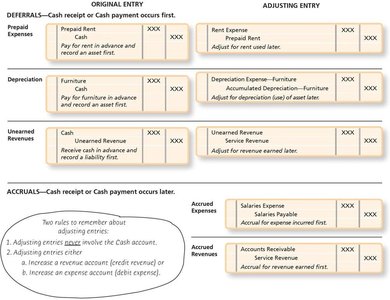
Deferrals: Recognition of revenue or expense is deferred to a future date after cash is received or paid.
Accruals: Expenses or revenues are recorded before cash is paid or received.
Deferrals
Deferred Expenses (Prepaid Expenses): Advance payments for future expenses, treated as assets until used. Examples include prepaid rent, office supplies, and depreciation.
Deferred Revenues (Unearned Revenues): Cash received before services are performed or goods delivered; recorded as liabilities until earned.
Example: Prepaid Rent
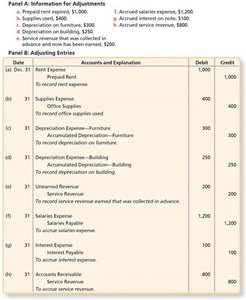
Smart Touch Learning prepaid three months’ office rent ($3,000) on December 1, 2025. At month-end, one month ($1,000) is recognized as rent expense.

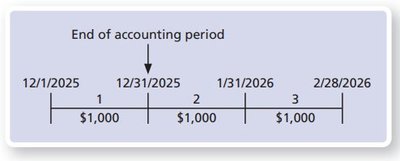
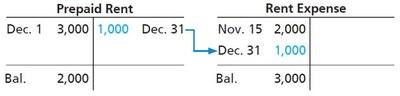
Example: Office Supplies
Purchased $500 of supplies; $100 remains at year-end. $400 is recognized as supplies expense.


Depreciation
Depreciation allocates the cost of long-lived assets (e.g., furniture, buildings) over their useful lives. The straight-line method is commonly used:
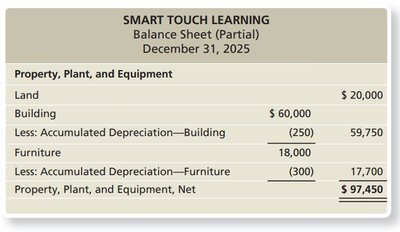
Example: Furniture valued at $18,000, useful life 5 years, no residual value. Monthly depreciation is $300.


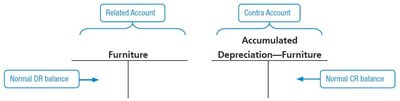
Book value is calculated as asset cost minus accumulated depreciation.
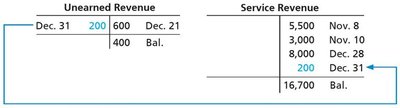
Deferred Revenues (Unearned Revenue)
Cash received in advance is recorded as a liability. As services are performed, revenue is recognized.

Accruals
Accrued Expenses: Expenses incurred but not yet paid (e.g., salaries, interest, utilities).
Accrued Revenues: Revenues earned but not yet received in cash.
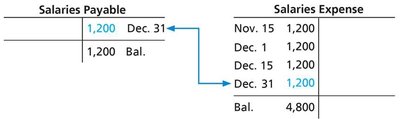
Example: Accrued Salaries Expense
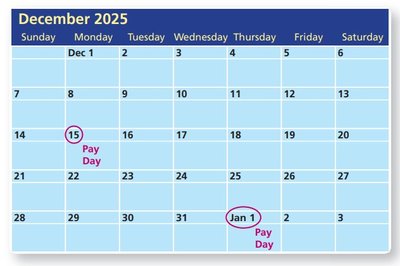
Employee paid $2,400 monthly, half on the 15th, half on the 1st of the next month. At year-end, $1,200 is accrued as a liability.
Example: Accrued Interest Expense
Interest on a $60,000 loan at 2% annual rate for one month:

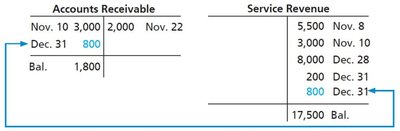
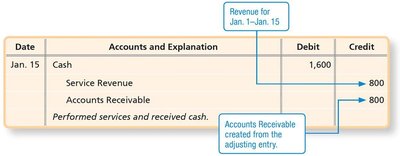
Example: Accrued Revenues
Services performed but not yet billed are recorded as accounts receivable and service revenue.
Summary Table: Deferral and Accrual Adjustments
The following table summarizes the types of adjusting entries and their effects:
Journalizing and Posting Adjusting Entries
Adjusting entries are journalized and posted to the ledger accounts. The process ensures that all accounts reflect the correct balances before preparing financial statements.
The Adjusted Trial Balance
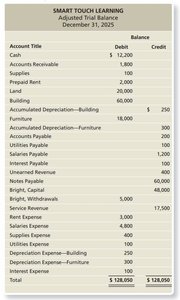
Purpose and Preparation
An adjusted trial balance lists all accounts with their adjusted balances after posting adjusting entries. Its main purpose is to verify that total debits equal total credits and to provide the basis for preparing financial statements.

Impact of Adjusting Entries on Financial Statements
Adjusting entries ensure that income statement and balance sheet accounts are properly valued. Failure to record adjustments leads to misstated financial statements.
Type of Adjusting Entry | Impact if Not Made |
|---|---|
Deferred Expenses | Expenses understated, net income overstated; assets overstated, equity overstated |
Deferred Revenues | Revenues understated, net income understated; liabilities overstated, equity understated |
Accrued Expenses | Expenses understated, net income overstated; liabilities understated, equity overstated |
Accrued Revenues | Revenues understated, net income understated; assets understated, equity understated |
The Accounting Cycle
The accounting cycle is a series of steps performed during each accounting period to keep records up to date and prepare financial statements. The first six steps are:
Start with the beginning account balances
Analyze and journalize transactions
Post journal entries to the ledger
Prepare the unadjusted trial balance
Journalize and post adjusting entries
Prepare the adjusted trial balance

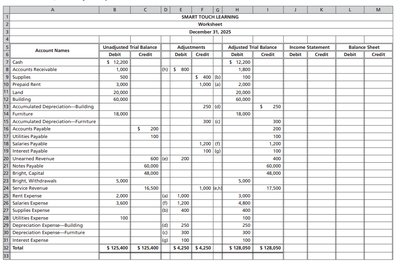
Worksheets in the Adjusting Process
A worksheet is an internal tool used to organize and summarize data for preparing financial statements. It typically includes:
Account names
Unadjusted trial balance
Adjustments
Adjusted trial balance
Additional info: These notes are based on Chapter 3 of Horngren’s Accounting, Fourteenth Edition, and are aligned with Financial Accounting college course objectives.
