 뒤로
뒤로Chapter 4: Completing the Accounting Cycle – Study Notes
스터디 가이드 - 스마트 노트
 자료에 맞춘 맞춤형 노트, 핵심 정의, 예시, 맥락을 확장해 제공합니다.
Completing the Accounting Cycle
Overview
Completing the accounting cycle is a fundamental process in financial accounting, ensuring that all financial transactions are properly recorded, summarized, and reported. This chapter covers the preparation of financial statements, closing entries, post-closing trial balance, the accounting cycle, and the use of ratios and worksheets for business evaluation.
Preparation of Financial Statements
Types of Financial Statements
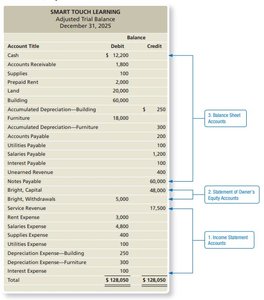
Financial statements are prepared from the adjusted trial balance and provide a summary of a business’s financial performance and position.
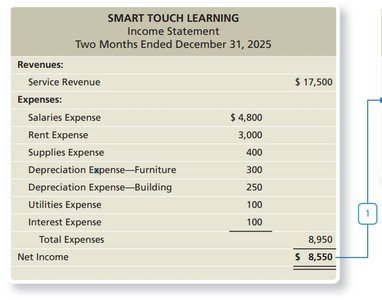
Income Statement: Reports revenues and expenses, calculating net income or net loss for the period.
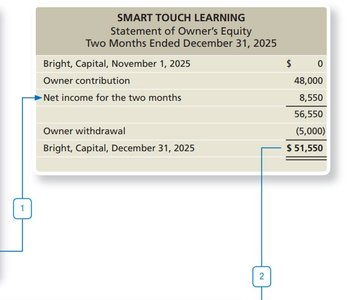
Statement of Owner’s Equity: Shows changes in owner’s equity due to contributions, net income (or net loss), and withdrawals.
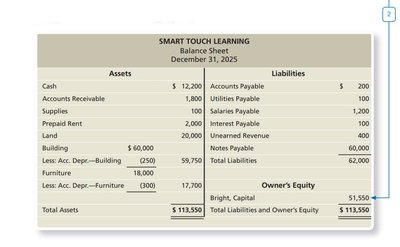
Balance Sheet: Reports assets, liabilities, and owner’s equity as of the period’s end.
Relationships Among Statements:
Net income or net loss from the income statement flows to the statement of owner’s equity.
Ending Owner, Capital from the statement of owner’s equity flows to the balance sheet.
Classified Balance Sheet
A classified balance sheet organizes assets and liabilities into specific categories, enhancing clarity and usefulness for decision-making.
Assets: Listed in order of liquidity.
Liabilities: Classified as current (due within one year) or long-term (due after one year).
Liquidity: Measures how quickly an asset can be converted to cash.
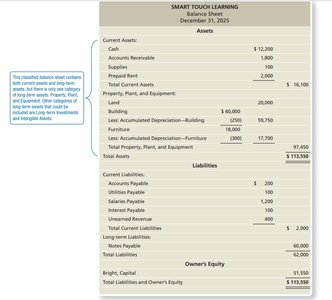
Asset Classification
Current Assets: Will be converted to cash, sold, or used up within the next 12 months or operating cycle.
Long-term Assets: Not converted to cash or used up within one year or operating cycle.
Long-term Investments: Investments held for more than one year.
Property, Plant, and Equipment: Long-lived, tangible assets used in operations.
Intangible Assets: Assets with no physical form but valuable due to special rights.
Liabilities Classification
Current Liabilities: Must be paid within one year or operating cycle (e.g., Accounts Payable, Salaries Payable, Unearned Revenue).
Long-term Liabilities: Not due within one year or operating cycle.
Owner’s Equity
Owner’s equity represents the owner’s claims to the assets after liabilities are paid. It includes contributions, net income or net loss, and withdrawals.
Closing Entries and the Closing Process
Purpose and Steps of Closing Entries
The closing process ensures that revenue and expense accounts are reset for the next period, allowing accurate measurement of net income for each period.
Temporary Accounts: Revenues, expenses, Income Summary, and Owner, Withdrawals accounts are closed at period end.
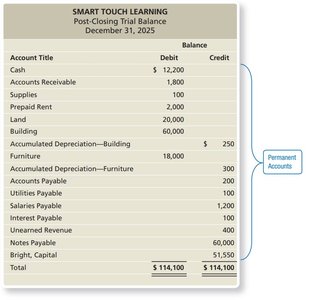
Permanent Accounts: Asset, liability, and Owner, Capital accounts are not closed.
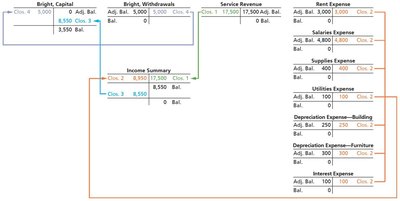
Steps in the closing process:
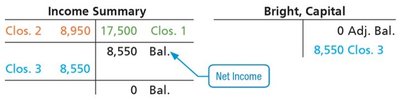
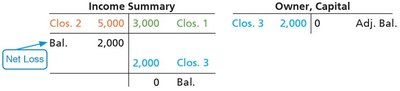
Close revenue accounts to Income Summary.
Close expense accounts to Income Summary.
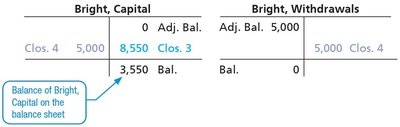
Close Income Summary to Owner, Capital.
Close Owner, Withdrawals to Owner, Capital.
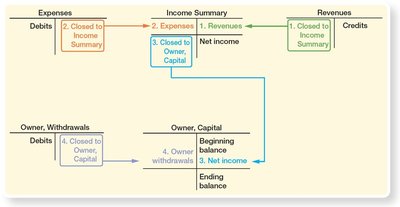
Journalizing Closing Entries
Closing entries transfer balances from temporary accounts to permanent accounts. Examples:
Close Service Revenue to Income Summary.
Close all expense accounts to Income Summary.
Close Income Summary to Owner, Capital.
Close Owner, Withdrawals to Owner, Capital.
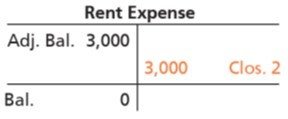
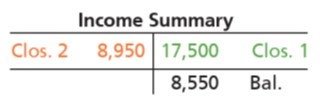
Post-Closing Trial Balance
Purpose and Preparation
The post-closing trial balance lists only permanent accounts and their balances after closing entries are posted. It ensures that debits and credits are balanced and that temporary accounts have zero balances.
The Accounting Cycle
Definition and Steps
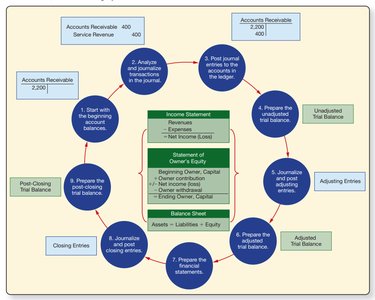
The accounting cycle is the sequence of steps followed to produce financial statements for a specific period. It begins with opening balances and ends with the post-closing trial balance.
Start with beginning balances
Analyze and journalize transactions
Post journal entries
Prepare unadjusted trial balance
Journalize and post adjusting entries
Prepare adjusted trial balance
Prepare financial statements
Journalize and post closing entries
Prepare post-closing trial balance
Current Ratio and Business Performance
Definition and Calculation
The current ratio measures a company’s ability to pay its current liabilities with its current assets. It is a key indicator of liquidity.
Formula:
A higher current ratio indicates better ability to pay debts.
Example: Pepsico’s current ratio for 2021 was 0.83, and for 2020 was 0.98, showing a decrease in liquidity.
Using Worksheets to Prepare Financial Statements
Worksheet Sections
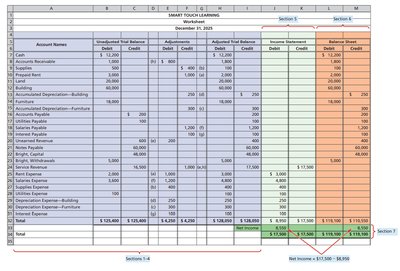
Worksheets help organize and prepare financial statements by grouping accounts and calculating net income or net loss.
Section 5: Income Statement (revenue and expense accounts)
Section 6: Balance Sheet (asset, liability, and equity accounts)
Section 7: Net Income or Net Loss (balancing amount for both sections)
Summary Table: Account Types and Closing Process
Account Type | Closed? | Example |
|---|---|---|
Revenue | Yes | Service Revenue |
Expense | Yes | Rent Expense, Salaries Expense |
Owner, Withdrawals | Yes | Bright, Withdrawals |
Income Summary | Yes | Temporary account for net income/loss |
Asset | No | Cash, Accounts Receivable |
Liability | No | Accounts Payable |
Owner, Capital | No | Bright, Capital |
Additional info: Academic context and examples have been expanded for clarity and completeness. All images included are directly relevant to the explanation of the adjacent paragraphs.
