 뒤로
뒤로Inventory and Cost of Goods Sold: Financial Accounting Study Notes (Ch. 6)
스터디 가이드 - 스마트 노트
 자료에 맞춘 맞춤형 노트, 핵심 정의, 예시, 맥락을 확장해 제공합니다.
Inventory and Cost of Goods Sold
Introduction
This chapter explores the accounting for inventory and cost of goods sold (COGS), focusing on the methods, principles, and calculations essential for merchandising companies. Understanding these concepts is crucial for accurate financial reporting and effective management decision-making.
Accounting for Inventory
Definition and Classification
Inventory refers to goods purchased for resale, distinct from supplies or equipment used internally.
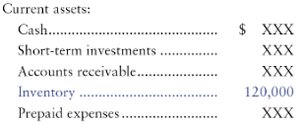
Inventory is classified as an asset on the balance sheet due to its future economic benefit.
Service vs. Merchandising Companies
Service companies do not hold inventory; merchandising companies do.
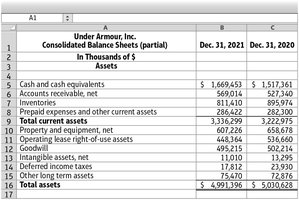
Merchandisers have two unique accounts: Inventory (balance sheet) and Cost of Goods Sold (income statement).
Inventory Flow and Financial Statements
Inventory on hand is reported as an asset; inventory sold is reported as an expense (COGS).
Key equation:
Sales Price vs. Cost of Inventory
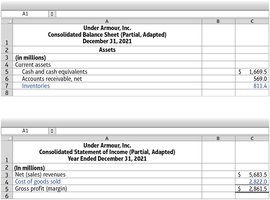
Sales revenue is based on the sale price of inventory sold.
COGS is based on the cost of inventory sold.
Gross profit (or gross margin) is the excess of sales revenue over COGS.
Determining Inventory Units
Physical count at year-end confirms inventory records.
Consigned goods: Inventory on consignment is included in the seller's records.
Goods in transit: Ownership depends on shipping terms (FOB Shipping Point vs. FOB Destination).
Cost per Unit and Inventory Systems
Unit costs may vary throughout the year, affecting COGS and ending inventory.
Perpetual system: Continuous tracking of inventory and COGS.
Periodic system: Inventory and COGS determined at period end by physical count.
Recording Inventory Transactions (Perpetual System)
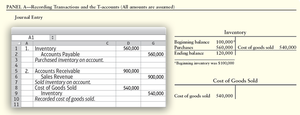
Purchases: Debit Inventory; Credit Cash/Accounts Payable.
Sales: Debit Cash/Accounts Receivable; Credit Sales Revenue. Also, Debit COGS; Credit Inventory.
Freight-in (buyer pays) increases inventory cost; freight-out (seller pays) is a selling expense.
Returns, allowances, and discounts reduce inventory cost.
Inventory Costing Methods
Overview
The choice of inventory costing method affects reported profits, taxes, and financial ratios.
Specific Identification: Assigns actual cost to each unique item (used for high-value, unique goods).
Average-Cost (Weighted-Average): Uses average cost for all units available for sale.
FIFO (First-In, First-Out): First costs in are the first costs assigned to COGS; ending inventory reflects recent costs.
LIFO (Last-In, First-Out): Last costs in are the first costs assigned to COGS; ending inventory reflects older costs.
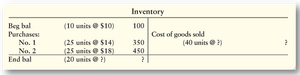
Effects of Costing Methods
When prices rise: LIFO yields lower taxable income and taxes; FIFO yields higher ending inventory values.
When prices fall: The effects reverse.
LIFO is not permitted under IFRS.
U.S. GAAP for Inventory
Key Principles
Disclosure: Financial statements must provide enough information for decision-making.
Representational Faithfulness: Inventory methods and material transactions must be properly disclosed.
Consistency: Use comparable methods across periods.
Lower-of-Cost-or-Market (LCM) Rule
Inventory is reported at the lower of historical cost or market value (net realizable value).
Write-downs are required if market value falls below cost; under U.S. GAAP, write-downs cannot be reversed.
IFRS allows reversal of some write-downs and does not permit LIFO.
ESG and Inventory Valuation
Environmental, social, and governance (ESG) factors can affect inventory value (e.g., declining demand for unsustainable products).
Inventory write-downs may be necessary if ESG factors reduce market value.
Gross Profit, Inventory Turnover, and DIO
Gross Profit Percentage
Indicates a company's ability to sell inventory at a profit.
Formula:
Gross Profit = Sales – COGS
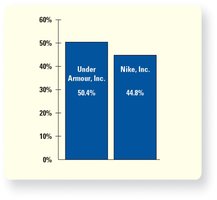
Inventory Turnover and Days Inventory Outstanding (DIO)
Inventory Turnover:
Indicates how quickly inventory is sold; higher is generally better.
DIO:
Shows average days inventory is held before sale.
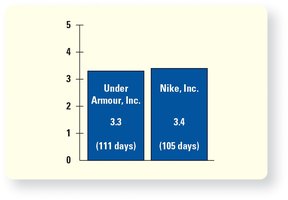
The Cost-of-Goods-Sold (COGS) Model
COGS Equation
Used to determine COGS in a periodic system:
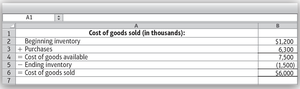
Budgeted Purchases
Managers can rearrange the COGS model to plan purchases:

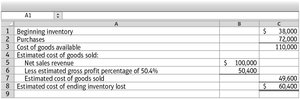
Gross Profit Method (Estimation)
Estimates ending inventory using gross profit percentage (not covered in detail in this class).
Analyzing Inventory Records with Excel
Using XLOOKUP
Inventory items are tracked using identifiers (SKU, UPC, serial numbers).
The XLOOKUP function in Excel helps match transaction data with inventory details for analysis.
Practice Questions and Applications
Sample Calculations
Gross profit plus COGS equals sales revenue.
Gross margin percentage:
COGS calculation:
Summary Table: Inventory Costing Methods
Method | COGS Assignment | Ending Inventory Assignment | Typical Use |
|---|---|---|---|
Specific Identification | Actual cost of each item sold | Actual cost of each item on hand | Unique, high-value items |
Average-Cost | Weighted average cost | Weighted average cost | Homogeneous goods |
FIFO | Oldest costs first | Most recent costs | Perishable goods |
LIFO | Newest costs first | Oldest costs | U.S. companies (not IFRS) |
Additional info: Some advanced topics (e.g., LIFO reserve, periodic system details, and gross profit estimation) are referenced but not covered in depth in this class.
