 뒤로
뒤로Job Costing: Concepts, Procedures, and Applications in Managerial Accounting
스터디 가이드 - 스마트 노트
 자료에 맞춘 맞춤형 노트, 핵심 정의, 예시, 맥락을 확장해 제공합니다.
Job Costing and Process Costing
Distinguishing Job Costing from Process Costing
Job costing and process costing are two fundamental methods used to assign costs to products in manufacturing and service industries. The choice between these methods depends on the nature of production and the type of products manufactured.
Job Costing: Used for unique, custom-ordered products or small batches. Each job is treated as a separate cost object, and costs are traced individually.
Process Costing: Used for mass production of identical units through uniform processes. Costs are averaged across all units produced.
Key Differences:
Job Costing | Process Costing |
|---|---|
Cost object: Job Outputs: Single units or small batches with large differences between jobs Extent of averaging: Less averaging—costs are averaged over the small number of units in a job | Cost object: Process Outputs: Large quantities of identical units Extent of averaging: More averaging—costs are averaged over thousands or millions of units |
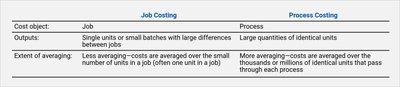
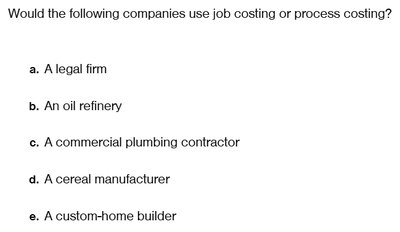
Examples: Boeing (airplanes), custom-home builders, high-end jewelers use job costing; oil refineries and cereal manufacturers use process costing.
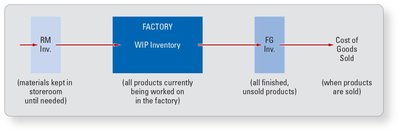
Flow of Production and Tracing Costs
Flow of Inventory Through a Manufacturing System
Manufacturing companies track inventory as it moves through various stages: raw materials, work in process, finished goods, and finally cost of goods sold.
Raw Materials Inventory (RM): Materials kept in storeroom until needed.
Work in Process Inventory (WIP): Products currently being worked on in the factory.
Finished Goods Inventory (FG): All finished, unsold products.
Cost of Goods Sold: When products are sold, their costs are transferred here.
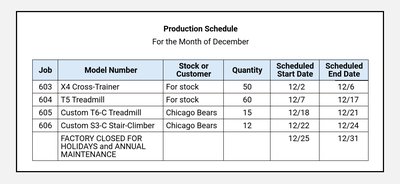
Production Scheduling
Production begins with management's decision to produce a batch of units, either for custom orders or stock inventory. The production schedule indicates the quantity and types of inventory scheduled for manufacture.
Bill of Materials and Raw Materials Record
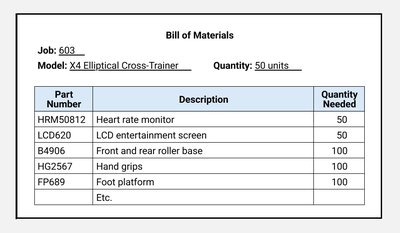
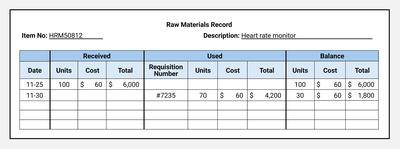
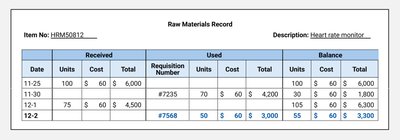
The bill of materials lists all raw materials needed for a job, while the raw materials record tracks each item in stock, including quantities received, used, and remaining.
Job Cost Record
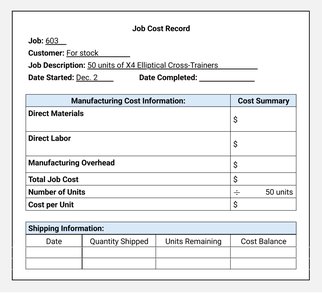
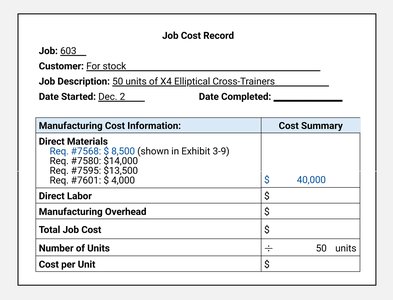
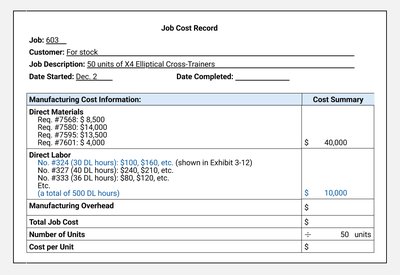
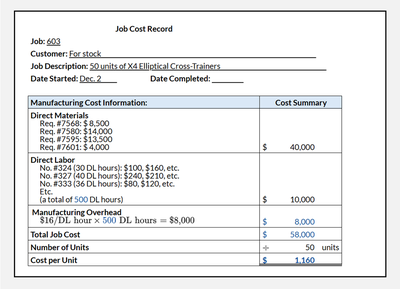
A job cost record tracks all direct materials, direct labor, and manufacturing overhead allocated to a job. It provides supporting detail for work in process and finished goods inventory accounts.
Tracing Direct Materials and Labor Costs
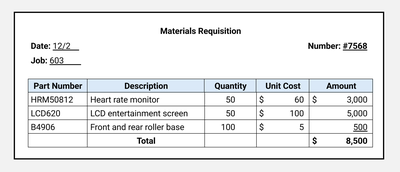
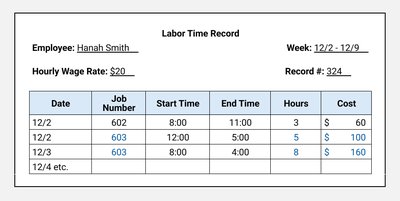
Direct materials are traced to jobs using materials requisition forms, and direct labor is traced using labor time records.
Calculating and Allocating Manufacturing Overhead
Predetermined Manufacturing Overhead Rate
Manufacturing overhead (MOH) includes indirect costs such as depreciation, utilities, property taxes, and supervisor salaries. These costs are allocated to jobs using a predetermined rate.
Step 1: Estimate total MOH costs for the coming year.
Step 2: Select an allocation base (e.g., direct labor hours, machine hours) and estimate its total usage.
Step 3: Calculate the predetermined MOH rate:
Formula:
Step 4: Allocate MOH to each job:
Example: Calculating MOH Rates
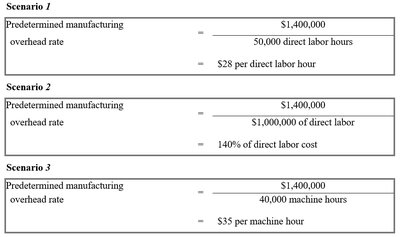
Suppose a company estimates $1,400,000 in MOH, 50,000 direct labor hours, $1,000,000 direct labor cost, and 40,000 machine hours. The MOH rates would be:
Direct labor hours: per DL hour
Direct labor cost: of direct labor cost
Machine hours: per machine hour

Determining Job Cost and Business Decisions
Job Cost Record Completion
After tracing direct materials and labor, and allocating MOH, the total job cost and cost per unit are determined. This information is used for pricing, profitability analysis, and financial reporting.
Management Uses of Job Cost Records
Reducing future job costs
Assessing and comparing profitability
Dealing with pricing pressure
Bidding for custom orders
Preparing financial statements
Overallocated and Underallocated Manufacturing Overhead
Concepts and Correction
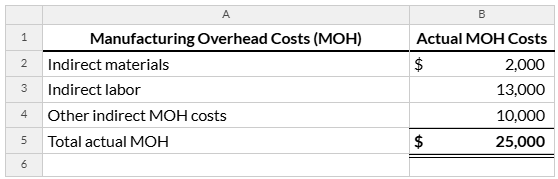
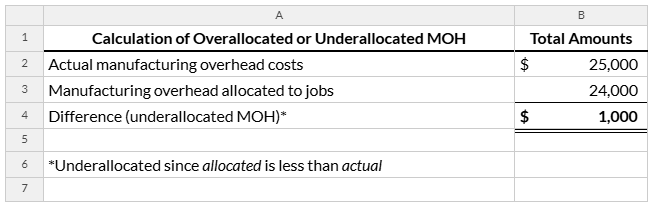
At the end of the period, actual MOH is compared to allocated MOH. If actual MOH exceeds allocated MOH, overhead is underallocated; if allocated exceeds actual, it is overallocated.
Underallocated MOH: Increase Cost of Goods Sold
Overallocated MOH: Decrease Cost of Goods Sold
Example Calculation
Suppose actual MOH is $25,000 and allocated MOH is $24,000. The difference ($1,000) is underallocated.

Journal Entries for Job Costing
Recording Transactions
Journal entries are used to record the purchase and use of materials, labor, overhead allocation, completion of jobs, and sales. Each entry affects inventory and expense accounts accordingly.
Job Costing in Service Firms
Assigning Costs to Client Jobs
Service firms use job costing to bill clients, adding a profit markup to the total job cost. Direct costs are professional labor and any client-specific expenses; indirect costs are general operating expenses allocated using a predetermined rate.
Direct Costs: Professional labor, client-specific expenses
Indirect Costs: Office rent, supplies, advertising
Formula for Indirect Cost Allocation Rate:
Indirect costs are then allocated to client jobs using:
Key Terms in Job Costing
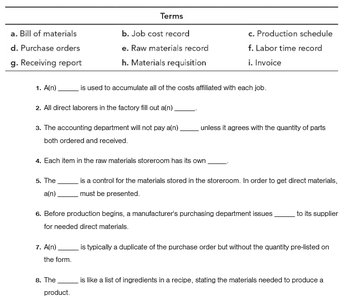
Bill of Materials: List of ingredients or parts needed for a job.
Job Cost Record: Accumulates all costs for a job.
Production Schedule: Indicates jobs scheduled for production.
Purchase Orders: Issued to suppliers for needed materials.
Raw Materials Record: Tracks materials in storeroom.
Materials Requisition: Requests materials for production.
Labor Time Record: Tracks employee hours on jobs.
Invoice: Bill from supplier.
Receiving Report: Documents materials received.
Additional info: These notes expand on the original slides and tables, providing definitions, formulas, and examples for clarity and completeness.
