Half-Life
- 작성 시간을 절약하려면 워크시트를 다운로드하세요
- 연습 문제를 풀기 시작해
- 막히면 영상 해답을 보세요
- 더 많은 인사이트를 원하시면 요약을 참고하세요

Half-Life
7 문제점
문제 2객관식
The first-order reaction of A molecules (gray spheres) occurs in three vessels, 1, 2, and 3, of equal volume.
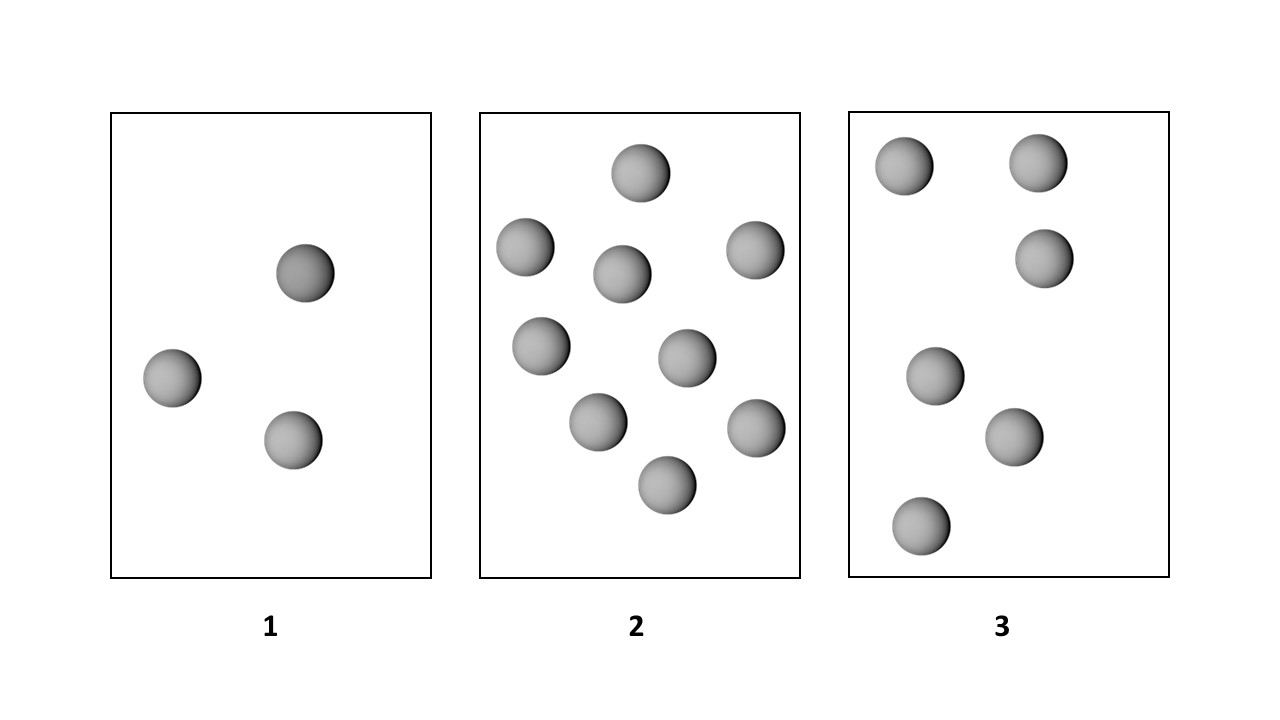 If the volume of each vessel is increased by a factor of 2, what will happen to the rates and half-lives of the reaction?
문제 4객관식
The hypothetical gas-phase isomerization of AB → BA at 425°C was observed, and the data below was gathered.

What are its rate constant and half-life if the reaction is follows the first-order kinetics?
문제 5객관식
The components of a reaction after 0 mins and 20 mins are shown below.

After 7 half-life periods, what fraction of reactant is still present if the reaction is first-order?