Skip to main content
General Chemistry
나의 코스
배우기
시험 준비
AI 튜터
학습 가이드
교과서적 해결책
플래시카드
탐험해 보세요
앱을 사용해 보세요
나의 코스
배우기
시험 준비
AI 튜터
학습 가이드
교과서적 해결책
플래시카드
탐험해 보세요
앱을 사용해 보세요
뒤로
Catalyst quiz
카드를 뒤집기 위해 탭할 수 있습니다.
What is a catalyst in a chemical reaction?
카드를 뒤집기 위해 탭할 수 있습니다.
👆
What is a catalyst in a chemical reaction?
A catalyst is a substance that increases the rate of a reaction by lowering the activation energy without being consumed in the process.
진행 상황 추적
컨트롤 버튼이 '내비게이션' 모드로 변경되었습니다.
1/15
관련 플래시카드
관련 실천
추천 영상
Catalyst definitions
Catalyst
10 용어
Catalyst quiz
Catalyst
13 용어
Catalyst quiz #1
Catalyst
38 용어
Catalyst
15. Chemical Kinetics
4 문제점
주제
Jules
Factors Influencing Rates
15. Chemical Kinetics
3 문제점
주제
Jules
15. Chemical Kinetics - Part 1 of 3
5 주제
12 문제점
장
Jules
15. Chemical Kinetics - Part 2 of 3
4 주제
11 문제점
장
Jules
15. Chemical Kinetics - Part 3 of 3
4 주제
11 문제점
장
Jules
VideoThumbView.guidedCourse
01:59
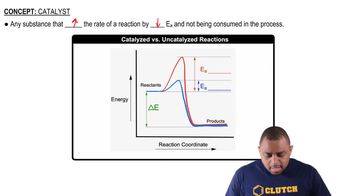
Catalyzed vs. Uncatalyzed Reactions
5465
views
59
rank
VideoThumbView.guidedCourse
04:10
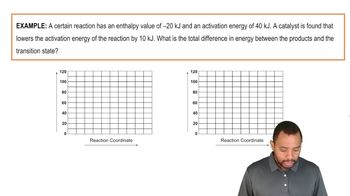
Catalyzed vs. Uncatalyzed Reactions Example
4811
views
36
rank
2
comments
이 집합의 용어 (15)
하이드의 정의
What is a catalyst in a chemical reaction?
A catalyst is a substance that increases the rate of a reaction by lowering the activation energy without being consumed in the process.
How does a catalyst affect the activation energy of a reaction?
A catalyst lowers the activation energy required for the reaction to proceed.
Does a catalyst get used up during a chemical reaction?
No, a catalyst is not consumed during the reaction and can be used repeatedly.
What does the energy diagram of a catalyzed reaction show compared to an uncatalyzed reaction?
The energy diagram shows a lower energy barrier (activation energy) for the catalyzed reaction compared to the uncatalyzed one.
What is represented by the difference between the reactant line and the transition state in an energy diagram?
The difference represents the activation energy of the reaction.
How does the height of the activation energy barrier relate to reaction speed?
A higher activation energy means a slower reaction, while a lower activation energy means a faster reaction.
What happens to the activation energy when a catalyst is added to a reaction?
The activation energy decreases when a catalyst is added.
Why do reactants convert to products more easily in a catalyzed reaction?
Because the activation energy is lower, making it easier for reactants to overcome the energy barrier.
What does the red curve typically represent in an energy diagram comparing catalyzed and uncatalyzed reactions?
The red curve represents the uncatalyzed reaction with higher activation energy.
What does the blue curve represent in the energy diagram discussed?
The blue curve represents the catalyzed reaction with lower activation energy.
What is the transition state in a chemical reaction energy diagram?
The transition state is the highest energy point between reactants and products on the energy diagram.
How does a catalyst influence the time it takes for reactants to become products?
A catalyst decreases the time needed by lowering the activation energy, allowing reactants to convert to products more quickly.
What is the overall change in energy of a chemical reaction shown in an energy diagram?
It is the difference between the energy of the reactants and the products.
Does the catalyst change the overall energy change (ΔE) of the reaction?
No, the catalyst does not change the overall energy change; it only lowers the activation energy.
Why is understanding catalysts important in chemistry?
Understanding catalysts is crucial because they make reactions faster and more efficient by lowering activation energy.
 뒤로
뒤로
 01:59
01:59