 뒤로
뒤로Acids and Bases: Definitions, Properties, and Calculations
스터디 가이드 - 스마트 노트
 자료에 맞춘 맞춤형 노트, 핵심 정의, 예시, 맥락을 확장해 제공합니다.
Chapter 16: Acids and Bases
Definitions of Acids and Bases
Acids and bases are fundamental chemical species with distinct definitions according to different theories:
Arrhenius Definition:
Acid: Produces H+ ions when dissolved in water.
Base: Produces OH- ions when dissolved in water.
Brønsted–Lowry Definition:
Acid: H+ donor.
Base: H+ acceptor.
Lewis Definition:
Acid: Electron-pair acceptor.
Base: Electron-pair donor.
Properties of Acids and Bases
Acids and bases exhibit characteristic physical and chemical properties:
Acids:
Sour taste
Ability to dissolve many metals
Neutralize bases
Turn blue litmus paper red
Bases:
Bitter taste
Slippery feel
Turn red litmus paper blue
Neutralize acids
Structures of Acids
Acids are classified based on their molecular structure:
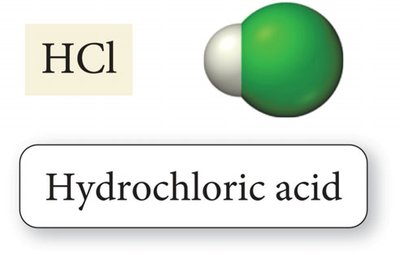
Binary Acids: Acid hydrogens attached to a nonmetal atom (e.g., HCl, HF).
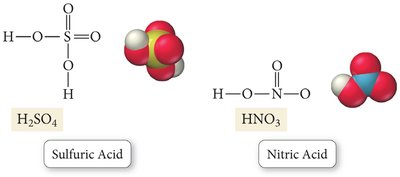
Oxyacids: Acid hydrogens attached to an oxygen atom (e.g., H2SO4, HNO3).
Problems with Arrhenius Theory
The Arrhenius theory is limited because it cannot explain:
Basic solutions from substances without OH- (e.g., NH3).
Acidic solutions from substances without H+ (e.g., CO2).
Acid–base reactions outside aqueous solutions.
Brønsted–Lowry Acid–Base Theory
This theory defines acids and bases based on proton transfer:
Acid: H+ donor
Base: H+ acceptor (must have a lone pair of electrons)
All Arrhenius acids and bases are also Brønsted–Lowry acids and bases.
Example reaction:
HCl(aq) + H2O(l) → Cl-(aq) + H3O+(aq)
Conjugate Acid–Base Pairs
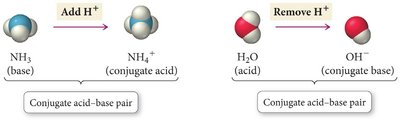
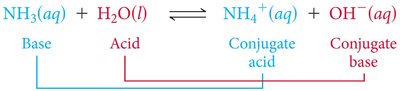
In Brønsted–Lowry reactions, each acid and base forms a conjugate pair:
A base accepts a proton and becomes a conjugate acid.
An acid donates a proton and becomes a conjugate base.
Strong and Weak Acids and Bases
Acids and bases are classified by their degree of ionization:
Strong Acid: Ionizes completely in water; strong electrolyte.
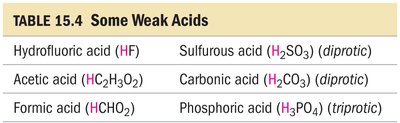
Weak Acid: Ionizes only partially; weak electrolyte.
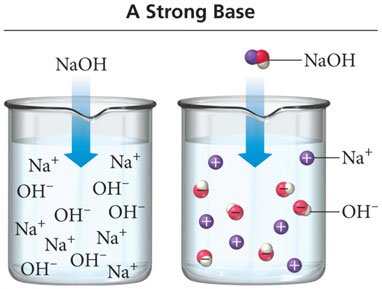
Strong Base: Forms OH- ions completely; strong electrolyte.
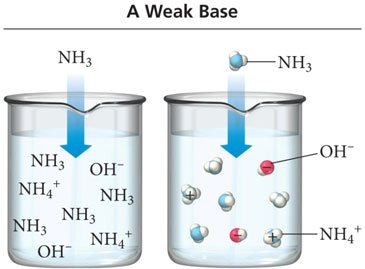
Weak Base: Forms OH- ions partially; weak electrolyte.
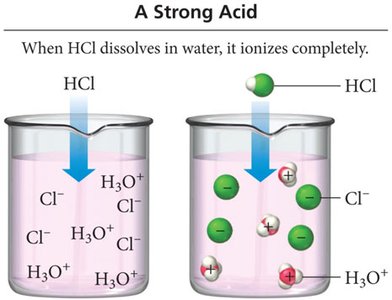
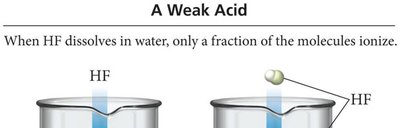
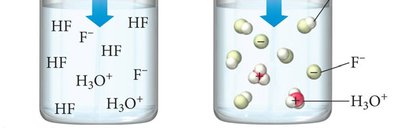
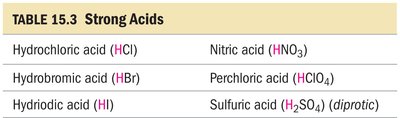
Examples of Strong and Weak Acids
Acid and Base Strength: Ionic Attraction
The strength of an acid or base depends on the equilibrium position of its reaction with water:
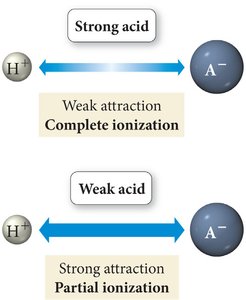
Strong acids have weak attraction between the base form and H+, leading to complete ionization.
Weak acids have strong attraction, resulting in partial ionization.
Acid Ionization Constant (Ka)
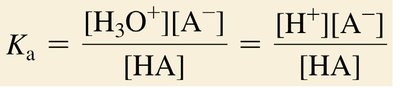
The acid ionization constant, Ka, measures acid strength:
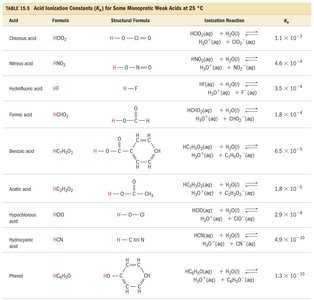
Larger Ka = stronger acid
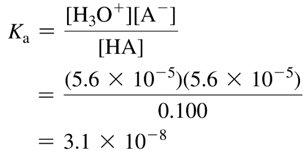
Ka is defined as:
Acidic, Basic, and Neutral Solutions
All aqueous solutions contain both H3O+ and OH- ions:
Neutral: [H3O+] = [OH-] = 1.00 × 10⁻⁷ M
Acidic: [H3O+] > [OH-]
Basic: [OH-] > [H3O+]
Measuring Acidity: pH and pOH
The acidity or basicity of a solution is quantified by pH and pOH:
pH:
pOH:
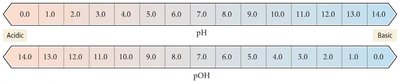
Relationship:
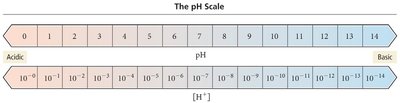
pH < 7: acidic; pH > 7: basic; pH = 7: neutral
Example Calculations
![pH calculation from [H3O+]](https://static.studychannel.pearsonprd.tech/study_guide_files/general-chemistry/sub_images/f08093b7_image_16.png)
![pH calculation from [OH-]](https://static.studychannel.pearsonprd.tech/study_guide_files/general-chemistry/sub_images/f08093b7_image_17.png)
![Calculating [H3O+] from pH](https://static.studychannel.pearsonprd.tech/study_guide_files/general-chemistry/sub_images/f08093b7_image_18.png)
pKa and pKb
Acid and base strength can also be expressed as pKa and pKb:
Smaller pKa or pKb indicates a stronger acid or base.
Finding pH of Strong and Weak Acid Solutions
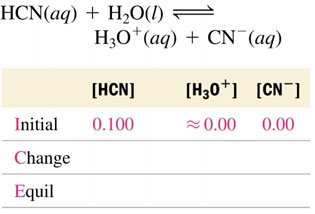
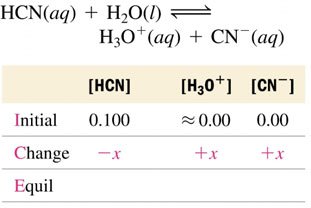
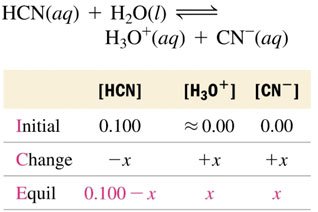
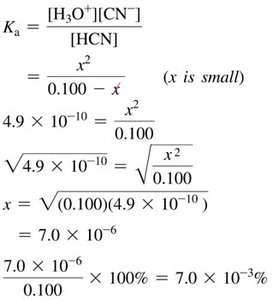
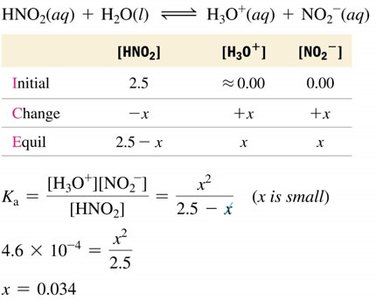
For strong acids, [H3O+] ≈ [acid]. For weak acids, equilibrium calculations are required:
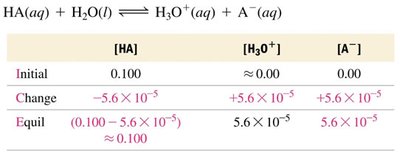
Use an ICE (Initial, Change, Equilibrium) table to solve for [H3O+].
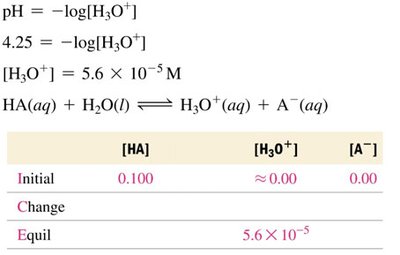
Finding the Equilibrium Constant from pH
Percent Ionization
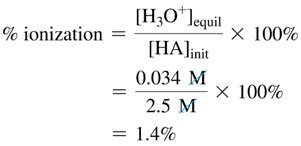
Percent ionization measures the fraction of acid molecules that ionize:

Strong and Weak Bases
Strong Bases: Completely dissociate in water (e.g., NaOH).
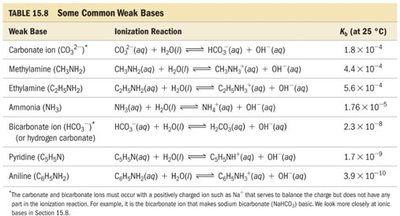
Weak Bases: Only partially accept H+ (e.g., NH3).
Base Ionization Constant (Kb)
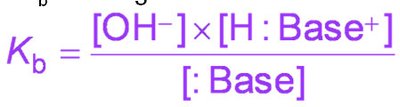
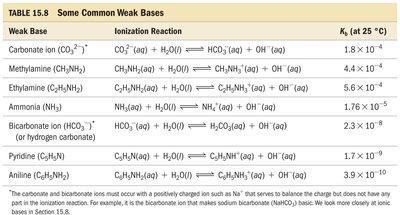
Base strength is measured by the base ionization constant, Kb:
Larger Kb = stronger base
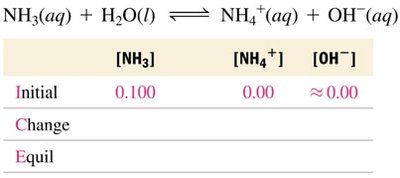
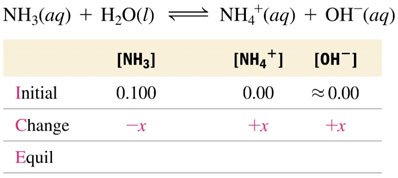
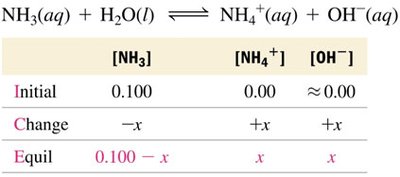
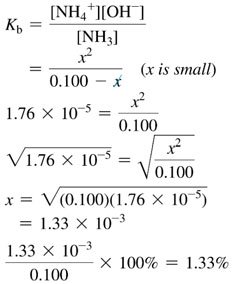
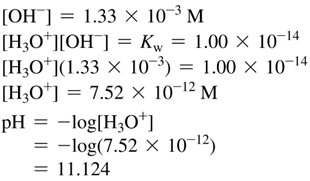
Finding the [OH-] and pH of a Weak Base Solution
Use an ICE table to solve for [OH-].
Calculate [H3O+] using Kw.
Find pH from [H3O+].
Relationship Between Ka and Kb
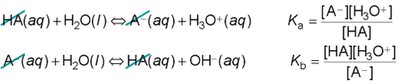
Ka and Kb for a conjugate acid–base pair are related:
For a given acid and its conjugate base:
Classifying Salt Solutions
Salt solutions can be acidic, basic, or neutral depending on the nature of their ions:
Neutral: Cation from strong base, anion from strong acid (e.g., NaCl).
Basic: Cation from strong base, anion from weak acid (e.g., NaF).
Acidic: Cation is conjugate acid of weak base, anion from strong acid (e.g., NH4Cl).
Acidic: Cation is highly charged metal ion, anion from strong acid (e.g., Al(NO3)3).
Depends: Both cation and anion are conjugates of weak acid/base (e.g., NH4F).
Strengths of Binary and Oxyacids
Binary acid strength increases across a period and down a group.
Oxyacid strength increases with electronegativity and oxidation number of the central atom.
More oxygens attached to the central atom increases acid strength.
Lewis Acid–Base Theory
Lewis theory focuses on electron pair transfer:
Lewis Base: Electron pair donor (nucleophile).
Lewis Acid: Electron pair acceptor (electrophile).
Does not require H atoms.
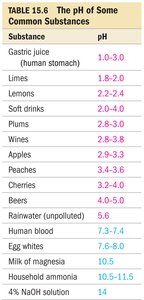
Summary Table: pH of Common Substances
Summary Table: Strong and Weak Acids and Bases
Summary Table: Acid Ionization Constants
Summary Table: pH Calculations
