 뒤로
뒤로Acids and Bases: Properties, Strength, and Reactions
스터디 가이드 - 스마트 노트
 자료에 맞춘 맞춤형 노트, 핵심 정의, 예시, 맥락을 확장해 제공합니다.
Chapter 17: Acids and Bases
Introduction to Acids and Bases
Acids and bases are fundamental classes of compounds in chemistry, playing crucial roles in chemical reactions, biological systems, and industrial processes. This chapter explores their properties, definitions, strengths, and the equilibria they establish in aqueous solutions.
Properties and Definitions
Properties of Acids
Sour taste (e.g., citric acid in lemons)
Ability to dissolve many metals (e.g., HCl dissolving Zn)
Ability to neutralize bases
Change blue litmus paper to red
Properties of Bases
Bitter taste (e.g., caffeine, quinine)
Slippery feel (e.g., soap)
Ability to neutralize acids
Turn red litmus paper blue
Common Acids and Bases
Acids and bases are found in many everyday substances. For example, hydrochloric acid (HCl) is found in stomach acid, while sodium hydroxide (NaOH) is a common base in drain cleaners.
Structures of Acids
Binary Acids
Binary acids consist of hydrogen and a nonmetal (e.g., HCl, HF). The acidic hydrogen is bonded directly to the nonmetal atom.
Oxyacids
Oxyacids have the acidic hydrogen attached to an oxygen atom (e.g., HNO3, H2SO4).
Carboxylic Acids
Carboxylic acids contain the –COOH group. Only the hydrogen in the –COOH group is acidic (e.g., acetic acid, CH3COOH).
Definitions of Acids and Bases
Arrhenius Definition
Acid: Produces H+ ions in aqueous solution.
Base: Produces OH− ions in aqueous solution.
Example: HCl(aq) → H+(aq) + Cl−(aq)
OH− ions from bases combine with H+ ions from acids to form water in neutralization reactions.
Brønsted-Lowry Definition
Acid: Proton (H+) donor
Base: Proton (H+) acceptor
This definition is broader and includes reactions not limited to aqueous solutions.
Amphoteric Substances
Substances like water can act as either an acid or a base, depending on the reaction partner.
Conjugate Acid-Base Pairs
In Brønsted-Lowry theory, acids and bases exist in conjugate pairs. When an acid donates a proton, it becomes its conjugate base; when a base accepts a proton, it becomes its conjugate acid.
Acid and Base Strength
Strong and Weak Acids/Bases
Strong acids/bases: Completely ionize in solution (strong electrolytes).
Weak acids/bases: Partially ionize in solution (weak electrolytes).
Acid Ionization Constant (Ka)
The strength of an acid is measured by its equilibrium constant for ionization in water:
Larger Ka means a stronger acid.
Base Ionization Constant (Kb)
The strength of a base is measured by its equilibrium constant for reaction with water:
Larger Kb means a stronger base.
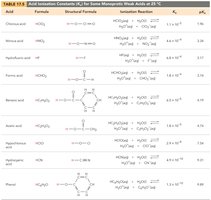
Examples of Weak Acids
Acid | Formula | Ionization Reaction | Ka |
|---|---|---|---|
Acetic acid | CH3COOH | CH3COOH + H2O ⇌ CH3COO− + H3O+ | 1.8 × 10⁻⁵ |
Formic acid | HCOOH | HCOOH + H2O ⇌ HCOO− + H3O+ | 1.8 × 10⁻⁴ |
Benzoic acid | C6H5COOH | C6H5COOH + H2O ⇌ C6H5COO− + H3O+ | 6.3 × 10⁻⁵ |
Hydrocyanic acid | HCN | HCN + H2O ⇌ CN− + H3O+ | 4.9 × 10⁻¹⁰ |
Phenol | C6H5OH | C6H5OH + H2O ⇌ C6H5O− + H3O+ | 1.3 × 10⁻¹⁰ |
Examples of Weak Bases
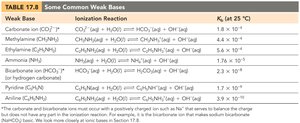
Weak Base | Ionization Reaction | Kb (at 25°C) |
|---|---|---|
Carbonate ion (CO32−) | CO32− + H2O ⇌ HCO3− + OH− | 1.8 × 10⁻⁴ |
Methylamine (CH3NH2) | CH3NH2 + H2O ⇌ CH3NH3+ + OH− | 4.4 × 10⁻⁴ |
Ammonia (NH3) | NH3 + H2O ⇌ NH4+ + OH− | 1.8 × 10⁻⁵ |
Bicarbonate ion (HCO3−) | HCO3− + H2O ⇌ H2CO3 + OH− | 2.3 × 10⁻⁸ |
Aniline (C6H5NH2) | C6H5NH2 + H2O ⇌ C6H5NH3+ + OH− | 3.9 × 10⁻¹⁰ |
Autoionization of Water and pH Scale
Autoionization of Water
Water can act as both an acid and a base, leading to the autoionization equilibrium:
The equilibrium constant for this process is called the ion product of water, :
at 25°C
pH and pOH
pH:
pOH:
Relationship: at 25°C
pH < 7 is acidic, pH > 7 is basic, and pH = 7 is neutral.
Acid–Base Equilibria and Calculations
Calculating pH of Strong and Weak Acids
Strong acids:
Weak acids: Use an ICE table and the expression to solve for
Percent Ionization
Percent ionization is the fraction of acid molecules that ionize in solution:
Higher percent ionization means a stronger acid.
Acid–Base Properties of Salts
Salts in Solution
Cations of strong bases and anions of strong acids are pH neutral.
Anions of weak acids are basic; cations of weak bases are acidic.
Small, highly charged metal cations are weakly acidic.
Classifying Salt Solutions
Neutral: Cation of strong base + anion of strong acid
Basic: Cation of strong base + anion of weak acid
Acidic: Cation of weak base + anion of strong acid
Depends: Cation of weak base + anion of weak acid (compare and )
Polyprotic Acids
Ionization Steps
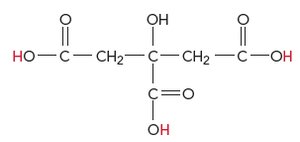
Polyprotic acids ionize in steps, each with its own . Usually, the first ionization is the most significant for pH calculations.
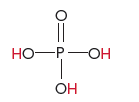
Examples of Polyprotic Acids
Sulfuric acid (H2SO4)
Phosphoric acid (H3PO4)
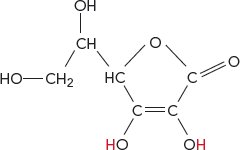
Factors Affecting Acid Strength
Binary Acids
Acid strength increases with bond polarity and decreases with bond strength.
Trends: Increases across a period and down a group.
Oxyacids
Acid strength increases with the electronegativity of the central atom and the number of oxygen atoms attached.
Higher oxidation number of the central atom increases acidity.
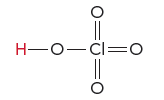
Lewis Acid–Base Theory
Lewis Acids and Bases
Lewis acid: Electron pair acceptor (often electron-deficient species)
Lewis base: Electron pair donor (must have a lone pair)
Lewis theory expands the definition of acids and bases beyond proton transfer to include electron pair transfer.
Summary Table: Key Concepts
Concept | Definition | Example |
|---|---|---|
Arrhenius Acid | Produces H+ in water | HCl |
Arrhenius Base | Produces OH− in water | NaOH |
Brønsted-Lowry Acid | Proton donor | H2SO4 |
Brønsted-Lowry Base | Proton acceptor | NH3 |
Lewis Acid | Electron pair acceptor | BF3 |
Lewis Base | Electron pair donor | NH3 |
Additional info: The images included above are directly relevant to the structures and tables discussed in the corresponding paragraphs, reinforcing the academic explanations of weak acids, weak bases, and polyprotic acids.
