뒤로
뒤로Analytical Chemistry 2BBF: Core Concepts and Study Guide
스터디 가이드 - 스마트 노트
 자료에 맞춘 맞춤형 노트, 핵심 정의, 예시, 맥락을 확장해 제공합니다.
Introduction to Analytical Chemistry
Overview of Analytical Chemistry
Analytical chemistry is a branch of chemistry focused on the qualitative and quantitative determination of the chemical components of substances. It applies principles from inorganic, organic, and physical chemistry, as well as mathematics and statistics, to solve real-world problems in industry, the environment, and society.
Key Focus: Understanding titration techniques, solution preparation, buffers, gravimetric analysis, chromatographic analysis, and spectroscopic analysis.
Prerequisites: Basic knowledge of chemical nomenclature, acids and bases, equilibrium, and chemical calculations.
Module Structure and Main Topics
Unit 1: Introduction to Analytical Chemistry
This unit introduces the foundational language and tools of analytical chemistry, emphasizing the importance of concentration and solution preparation.
Compound Nomenclature: Naming and writing chemical formulas for compounds.
Generalized Acid Reactions: Understanding acid-base reactions and balancing equations.
Redox Reactions: Balancing redox equations and identifying oxidation states.
Significant Figures: Applying significant figures in analytical calculations.
Expressions of Concentration: Molarity, molality, percent composition, and other units.
Solution Preparation and Dilution: Calculating and preparing solutions of desired concentrations.
Limiting Reagents: Identifying and calculating limiting reagents in reactions.
Reaction Calculations: Stoichiometry and quantitative analysis of reactions.
Unit 2: Chemistry of Aqueous Solutions
This unit explores the behavior of substances in water, focusing on acid-base chemistry, buffers, and equilibrium.
Acid and Base Strength: Differentiating strong and weak acids/bases.
Dissociation Constants: Understanding Ka and Kb values.
pH Calculations: Calculating pH for strong/weak acids and bases, and buffers.
Polyprotic Acids: Properties and calculations involving acids with more than one ionizable proton.
Buffers: Definition, preparation, and buffer capacity.
Unit 3: Titrimetric Methods of Analysis
This unit covers the theory and practice of titrations, including acid-base, precipitation, redox, and complexometric titrations.
Types of Titrations: Acid-base, precipitation, redox, and complexometric.
Indicators: Selection and function in titrations.
Titration Curves: Construction and interpretation for monoprotic and polyprotic systems.
Standard Solutions: Preparation and use in titrations.
Statistical Analysis: Precision, accuracy, and error analysis in titration data.
Unit 4: Gravimetric Methods of Analysis
Gravimetric analysis involves measuring the mass of a substance to determine its concentration. This unit covers precipitation and volatilization methods.
Precipitation Methods: Steps and calculations in gravimetric analysis by precipitation.
Volatilization Methods: Identifying compounds suitable for volatilization analysis.
Unit 5: Chromatography
Chromatography is a key technique for separating and analyzing components in mixtures. This unit covers gas, liquid, and planar chromatography.
Gas Chromatography (GC): Principles, instrumentation, and applications.
Liquid Chromatography (LC): High-performance liquid chromatography (HPLC) and its uses.
Planar Chromatography: Paper and thin-layer chromatography methods.
Chromatograms: Drawing and interpreting chromatograms for qualitative and quantitative analysis.
Unit 6: Spectroscopy
Spectroscopic methods use radiation to analyze substances. This unit covers UV-visible spectroscopy, atomic absorption spectroscopy (AAS), and flame emission spectroscopy (FES).
UV-Visible Spectroscopy: Principles, instrumentation, and quantitative analysis using the Beer-Lambert Law.
Atomic Absorption Spectroscopy (AAS): Instrument components and applications.
Flame Emission Spectroscopy (FES): Principles and quantitative analysis.
Calibration Curves: Construction and use in determining unknown concentrations.
Key Analytical Chemistry Skills and Outcomes
Apply fundamental theory and principles of analytical methods.
Calculate solution concentrations, pH, and perform stoichiometric calculations.
Interpret and construct titration and calibration curves.
Use scientific language and terminology relevant to analytical chemistry.
Analyze and solve quantitative and qualitative analytical problems.
Appendix: Action Verbs in Analytical Chemistry
Understanding action verbs is essential for mastering analytical chemistry tasks. Examples include: apply, calculate, classify, compare, convert, define, demonstrate, derive, describe, differentiate, discuss, distinguish, draw, explain, formulate, identify, illustrate, interpret, list, motivate, name, organize, predict, relate, solve, and summarize.
Appendix: Periodic Table (Extract)
The periodic table is a fundamental tool in chemistry, listing elements by atomic number and atomic weight. It is essential for writing chemical formulas, balancing equations, and understanding chemical properties.
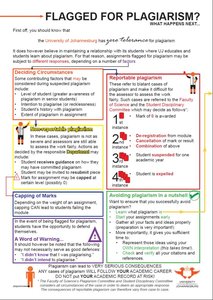
Academic Integrity and Plagiarism
Academic honesty is critical in all scientific work. Plagiarism, or the unacknowledged use of others' ideas or words, is a serious offense. Students must always cite sources and use their own words in assignments and reports.