 뒤로
뒤로Aqueous Ionic Equilibrium: Buffer Solutions and pH Calculations
스터디 가이드 - 스마트 노트
 자료에 맞춘 맞춤형 노트, 핵심 정의, 예시, 맥락을 확장해 제공합니다.
CH 18: Aqueous Ionic Equilibrium

Buffer Systems: Definition and Composition
Buffer systems are essential in maintaining the pH of solutions, especially in biological and chemical contexts. A buffer solution is a solution that resists changes in pH when small amounts of an acid or a base are added.
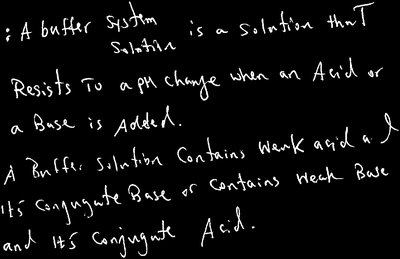
Definition: A buffer system is a solution that resists a pH change when an acid or a base is added.
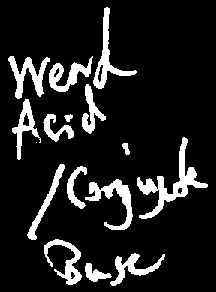
Composition: A buffer solution contains a weak acid and its conjugate base, or a weak base and its conjugate acid.
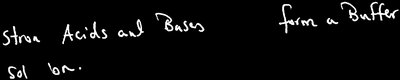
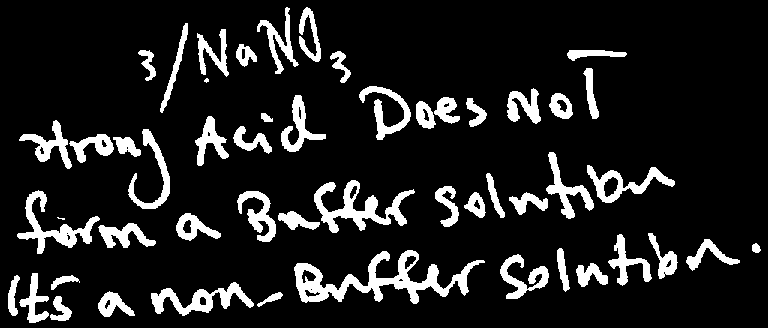
Key Point: Strong acids and bases do not form buffer solutions.
Properties and Function of Buffer Solutions
Buffer solutions are crucial for stabilizing the pH of various systems, such as blood. They work by neutralizing added acids or bases through the presence of both a weak acid and its conjugate base (or vice versa).
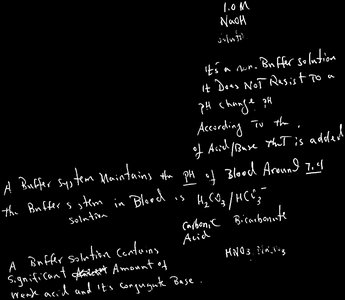
Non-buffer solutions: Solutions like 1.0 M NaOH do not resist pH changes and are not buffers.
Biological Example: The buffer system in blood maintains the pH around 7.4, primarily using the H2CO3/HCO3- (carbonic acid/bicarbonate) system.
Buffer Capacity: A buffer solution contains significant amounts of both the weak acid and its conjugate base.
What Does Not Form a Buffer Solution?
Not all acid-base combinations result in buffer solutions. Strong acids or strong bases, or their salts, do not form buffers.
Example: NaNO3 and a strong acid do not form a buffer solution.
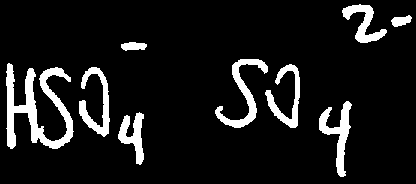
Strong Acids: HNO3, H2SO4, etc., do not form buffer solutions.
Strong Bases: NaOH, LiOH, etc., do not form buffer solutions.
How Buffers Work: Neutralization Mechanism
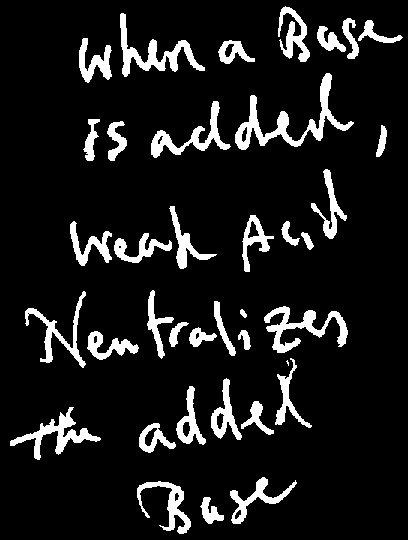
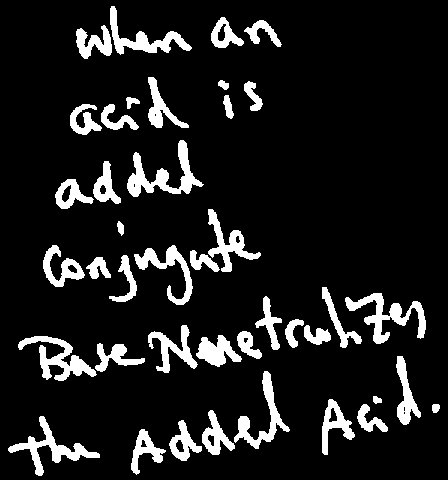
Buffers function by neutralizing added acids or bases, thus minimizing pH changes.
When a base is added: The weak acid in the buffer neutralizes the added base.
When an acid is added: The conjugate base in the buffer neutralizes the added acid.
Result: There is no significant change in pH when small amounts of acid or base are added to a buffer solution.

Examples of Buffer Systems
Buffer systems can be made from weak acids and their conjugate bases, or weak bases and their conjugate acids.
Acidic Buffer Example: Acetic acid (CH3COOH) and sodium acetate (CH3COONa).
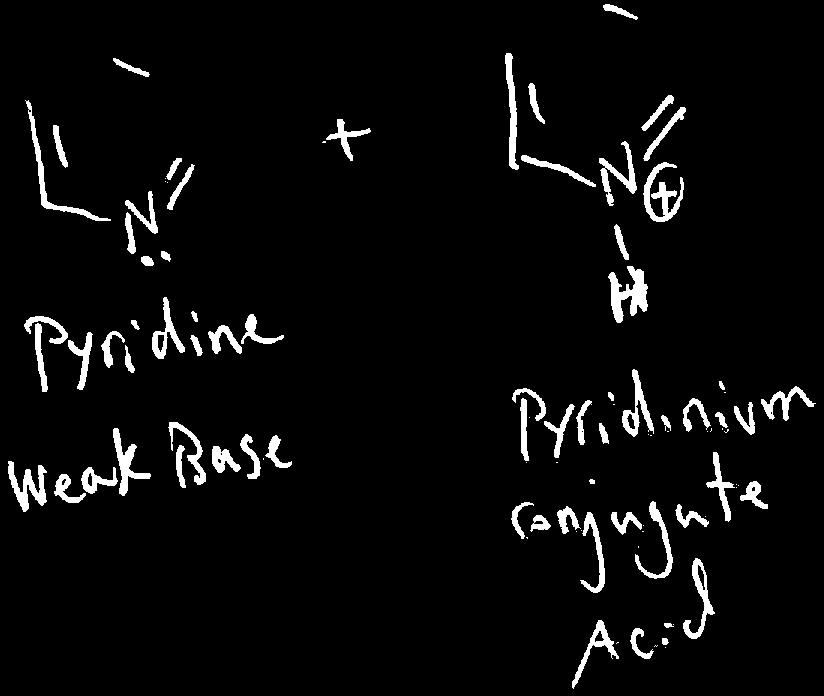
Basic Buffer Example: Pyridine (weak base) and pyridinium ion (conjugate acid).
pH Calculations for Buffer Solutions
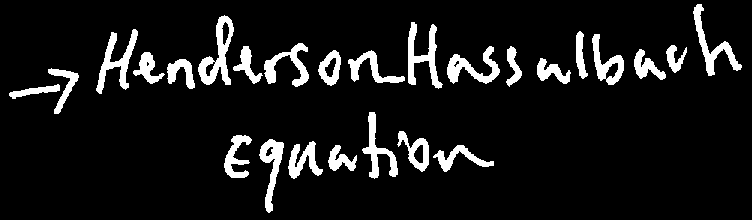
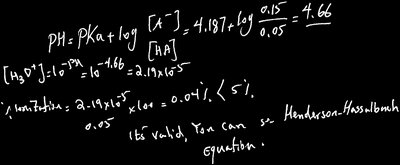
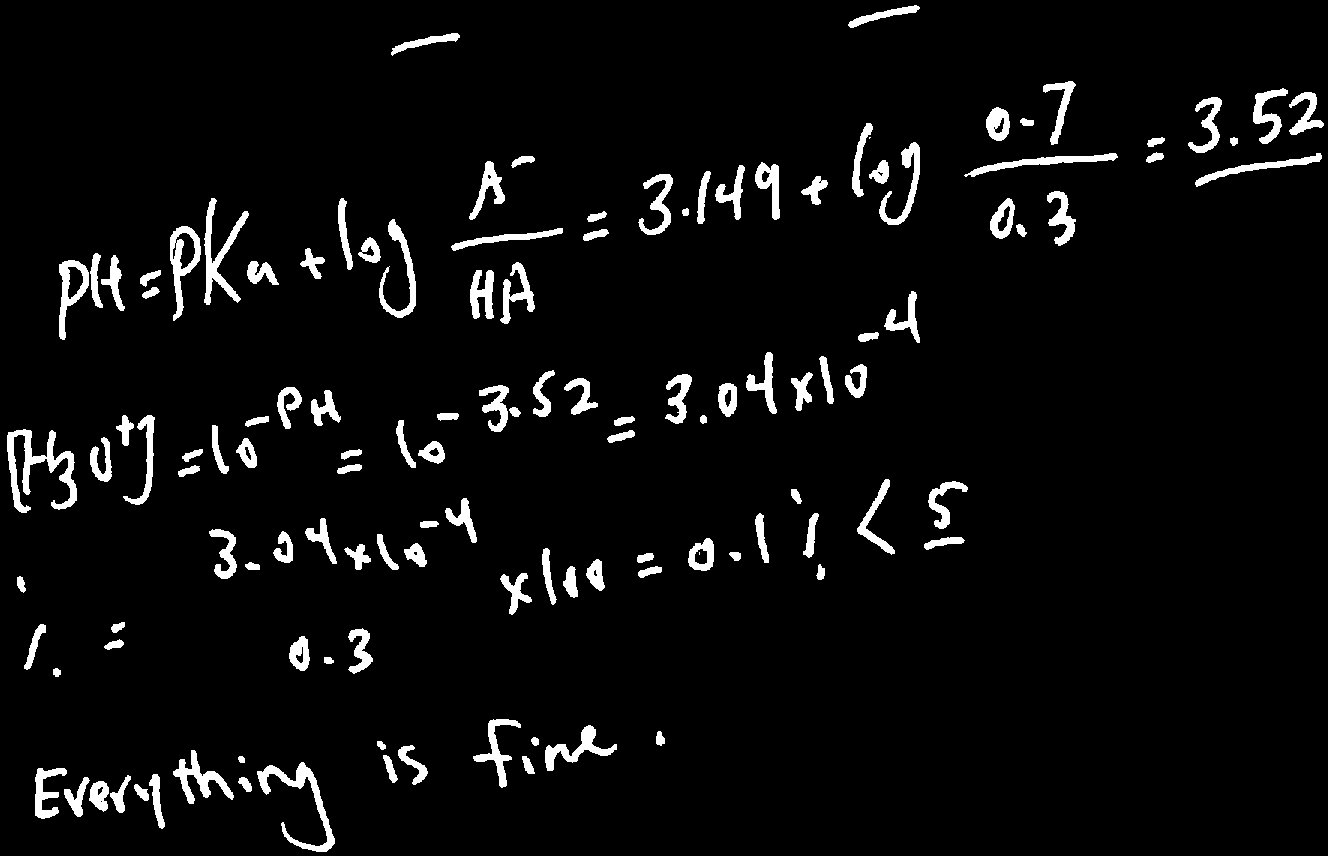
The pH of buffer solutions can be calculated using the Henderson-Hasselbalch equation or by using an ICE (Initial, Change, Equilibrium) table for equilibrium calculations.
Henderson-Hasselbalch Equation:
pKa Calculation:
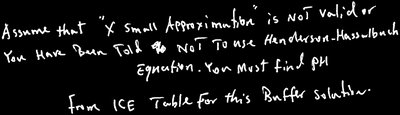
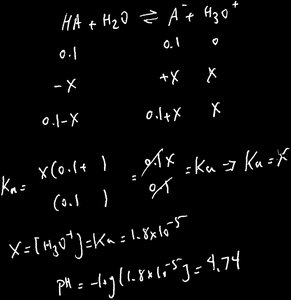
ICE Table: Used when the 'x is small' approximation is not valid.

Example: Calculating pH of a Weak Acid Solution
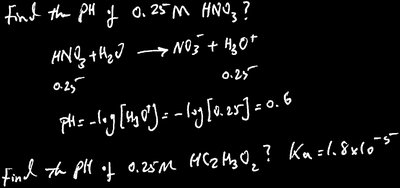
Given 0.25 M HNO3 (a strong acid):
HNO3 + H2O → NO3- + H3O+
[H3O+] = 0.25 M
pH = -log(0.25) = 0.6
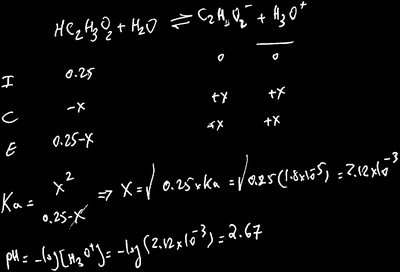
Example: Calculating pH of a Weak Acid (Acetic Acid) Solution
Given 0.25 M HC2H3O2, :
Set up ICE table for equilibrium calculation.
Solve for x (the [H3O+]):
pH = -log(2.12 × 10⁻³) = 2.67
When to Use the Henderson-Hasselbalch Equation
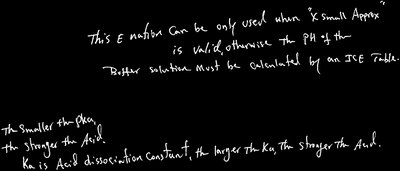
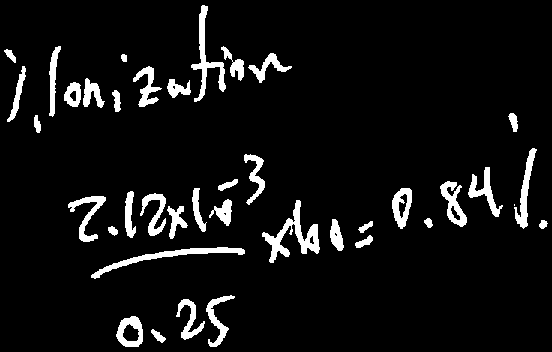
The Henderson-Hasselbalch equation can only be used when the 'x is small' approximation is valid (i.e., the change in concentration is less than 5%). Otherwise, use the ICE table method.
The smaller the pKa, the stronger the acid.
Ka is the acid dissociation constant; the larger the Ka, the stronger the acid.
Buffer Solution Calculations: Practice Problems
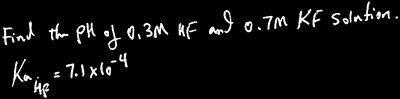
Several examples illustrate how to calculate the pH of buffer solutions using both the Henderson-Hasselbalch equation and ICE tables.
Given concentrations of weak acid (HA) and conjugate base (A-), and Ka, calculate pH.
Adjust concentrations after adding strong acid or base, then recalculate pH.


Effect of Adding Strong Acid or Base to a Buffer
When a strong acid or base is added to a buffer, the buffer components react to neutralize the added species, and the pH changes only slightly.
Calculate new concentrations after reaction.
Use the Henderson-Hasselbalch equation with updated concentrations.

Summary Table: Buffer Solution Characteristics
Type of Solution | Components | Buffer? |
|---|---|---|
Weak acid + conjugate base | e.g., CH3COOH/CH3COONa | Yes |
Weak base + conjugate acid | e.g., NH3/NH4Cl | Yes |
Strong acid or strong base only | e.g., HCl, NaOH | No |
Strong acid + salt of strong acid | e.g., HNO3/NaNO3 | No |
Key Equations
Practice Problems
Calculate the pH of buffer solutions before and after adding strong acid or base.
Use ICE tables when the 'x is small' approximation is not valid.
Additional info: For more detailed examples and step-by-step calculations, refer to the corresponding textbook chapter or lecture slides as indicated in the notes.
