 뒤로
뒤로CHEM 131 Chapter 2: Atoms and Elements: Foundations of Modern Atomic Theory
스터디 가이드 - 스마트 노트
 자료에 맞춘 맞춤형 노트, 핵심 정의, 예시, 맥락을 확장해 제공합니다.
Atoms and Elements
Laws Foundational to Modern Atomic Theory
The development of atomic theory is based on several fundamental laws that describe the behavior of matter during chemical changes. These laws provide the basis for understanding the structure and properties of atoms and elements.
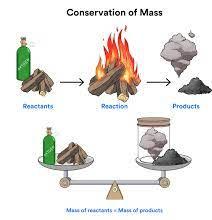
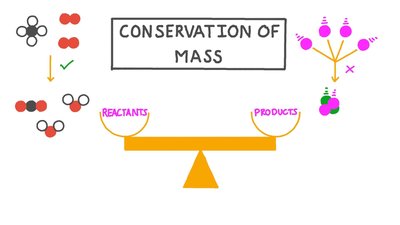
The Law of Conservation of Mass
Definition: In a chemical reaction, matter is neither created nor destroyed. The total mass of reactants equals the total mass of products.
Implication: This law supports the idea that matter is composed of small, indestructible particles (atoms).
Example: Burning wood in a closed system results in the mass of the reactants (wood and oxygen) equaling the mass of the products (ash, water vapor, and gases).
The Law of Definite Proportions (Constant Composition)
Definition: All samples of a given compound have the same proportions of their constituent elements, regardless of their source or preparation method.
Example: Water (H2O) always decomposes into hydrogen and oxygen in an 8:1 mass ratio (16.0 g O to 2.0 g H).

The Law of Multiple Proportions
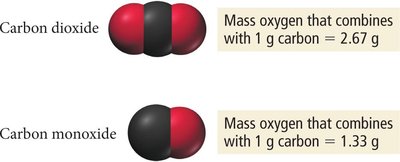
Definition: If two elements form more than one compound, the masses of one element that combine with a fixed mass of the other are in ratios of small whole numbers.
Example: Carbon and oxygen form both CO and CO2. The mass of oxygen that combines with 1 g of carbon is 1.33 g in CO and 2.67 g in CO2. The ratio (2.67/1.33) is 2:1.

Dalton's Atomic Theory
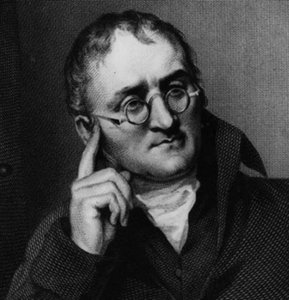
John Dalton formulated the first modern atomic theory, which explains the laws above and describes the nature of atoms.
Each element is composed of tiny, indestructible particles called atoms.
All atoms of a given element have the same mass and properties that distinguish them from atoms of other elements.
Atoms of one element cannot change into atoms of another element.
Atoms combine in simple, whole-number ratios to form compounds.
In chemical reactions, atoms only change the way they are bound together.
The Nuclear Theory of the Atom
The nuclear model of the atom describes the arrangement of subatomic particles:
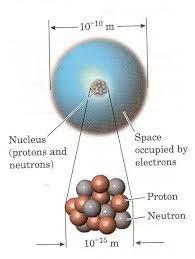
Most of the atom's mass and all its positive charge are in a small core called the nucleus.
Most of the atom's volume is empty space, with electrons dispersed throughout.
The number of electrons equals the number of protons, making atoms electrically neutral.
Protons have a positive charge; electrons have an equal but opposite negative charge; neutrons are neutral and have a mass similar to protons.
Subatomic Particles
Particle | Relative Mass (kg) | Charge |
|---|---|---|
Proton | 1.67262 × 10⁻²⁷ | +1 |
Neutron | 1.67493 × 10⁻²⁷ | 0 |
Electron | 9.109 × 10⁻³¹ | -1 |
Atomic Mass Unit (amu)
1 amu is defined as 1/12 the mass of a carbon-12 atom.
1 amu = 1.66 × 10⁻²⁴ grams.
Used to express atomic and molecular weights.
Elements, Isotopes, and Ions
Atomic Number and Mass Number
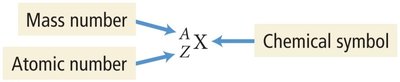
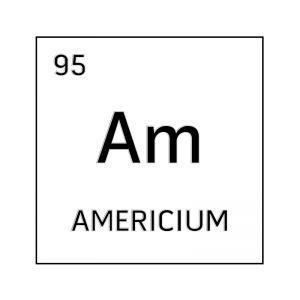
The atomic number (Z) is the number of protons in the nucleus and defines the element.
The mass number (A) is the sum of protons and neutrons:
Isotopes are atoms of the same element with different numbers of neutrons.

Isotopes
Isotopes have the same chemical properties but different physical properties due to mass differences.
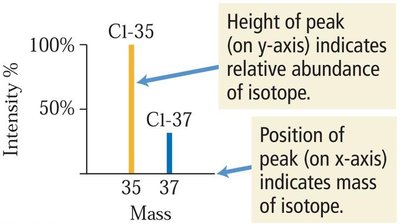
Example: Chlorine has two main isotopes, Cl-35 and Cl-37.
Natural Abundance and Atomic Mass
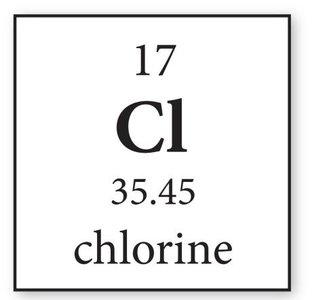
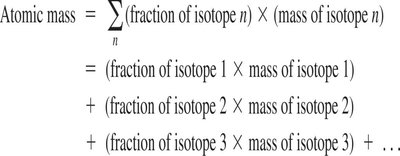
The atomic mass of an element is the weighted average of the masses of its isotopes, based on their natural abundance.
Formula:
Ions: Cations and Anions
Atoms can gain or lose electrons to form ions.
Cations are positively charged (loss of electrons, typical for metals).
Anions are negatively charged (gain of electrons, typical for nonmetals).
Mass Spectrometry
Mass spectrometry is a technique used to measure the masses of atoms and the percent abundances of isotopes by separating particles according to their mass-to-charge ratio.
The Periodic Table and Periodic Law
The Periodic Law
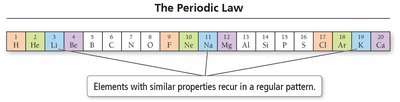
When elements are arranged in order of increasing atomic number, certain sets of properties recur periodically.
The periodic table organizes elements into periods (rows) and groups (columns) based on recurring chemical properties.
The Modern Periodic Table
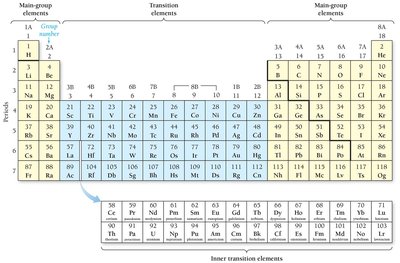
Elements are listed in order of increasing atomic number.
Groups (columns) contain elements with similar properties.
Main-group elements (A groups) have predictable properties; transition and inner transition elements (B groups) have less predictable properties.
Ions and the Periodic Table
Main-group metals tend to lose electrons to form cations with the same number of electrons as the nearest noble gas.
Main-group nonmetals tend to gain electrons to form anions with the same number of electrons as the nearest noble gas.

The Mole Concept
Definition and Avogadro's Number
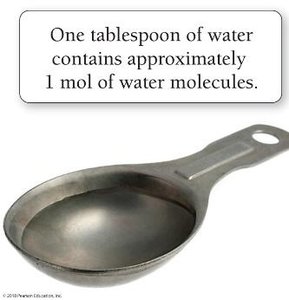
A mole (mol) is the amount of substance that contains as many entities (atoms, molecules, ions) as there are atoms in exactly 12 grams of carbon-12.
Avogadro's number (): entities per mole.
Mole Conversions
To convert between mass, moles, and number of particles, use the following relationships:
Number of particles Moles:
Moles Mass:
For compounds, the molar mass is the sum of the atomic masses of all atoms in the molecule.
Sample Problem
How many helium atoms are in a 536 kg helium balloon?
Plan: kg He → g He → mol He → atoms He
Conversion factors: , ,
Answer: atoms He
Appendix: Key Equations
Atomic Mass Calculation:
Mole-Particle Conversion:
Mole-Mass Conversion:
