 뒤로
뒤로CHEM 131 Chapter 16: Chemical Equilibrium – Structured Study Notes
스터디 가이드 - 스마트 노트
 자료에 맞춘 맞춤형 노트, 핵심 정의, 예시, 맥락을 확장해 제공합니다.
Chemical Equilibrium
Introduction to Chemical Equilibrium
Chemical equilibrium is a fundamental concept in chemistry describing the state in which the rates of the forward and reverse reactions are equal, resulting in constant concentrations of reactants and products. This chapter explores the dynamic nature of equilibrium, the equilibrium constant, and how systems respond to disturbances.
Chemical Kinetics and Reaction Rates
Chemical kinetics studies the factors affecting reaction rates and mechanisms. The reaction rate is the speed at which reactants are converted to products, defined as:
Rate = –Δ[reactant]/Δ[time]
Rate = +Δ[product]/Δ[time]
Rates are always positive, regardless of direction.
Dynamic Equilibrium
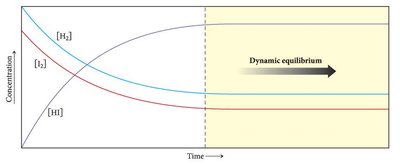
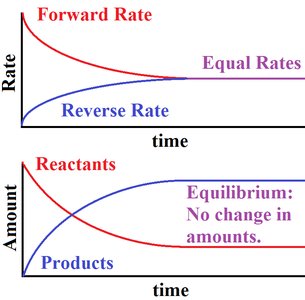
Dynamic equilibrium occurs when the rate of the forward reaction equals the rate of the reverse reaction. Although concentrations of reactants and products remain constant, they are not necessarily equal. This balance is dynamic, as molecules continue to react but with no net change in concentration.
Forward reaction slows as products accumulate.
Reverse reaction accelerates as products increase.
At equilibrium, both rates are equal and concentrations are constant.
Equilibrium Constant (K)
The Law of Mass Action
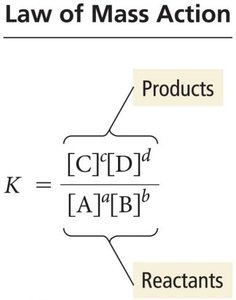
The equilibrium constant, K, quantifies the ratio of product concentrations to reactant concentrations at equilibrium, each raised to the power of their coefficients in the balanced equation. The law of mass action is expressed as:
K = [Products]/[Reactants] at equilibrium
K is unitless and can be expressed in terms of concentration (Kc) or partial pressure (Kp).
Writing Equilibrium Constant Expressions
For a general reaction: aA + bB ⇌ cC + dD, the equilibrium constant expression is:
Coefficients become exponents in the expression.
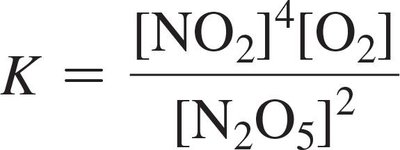
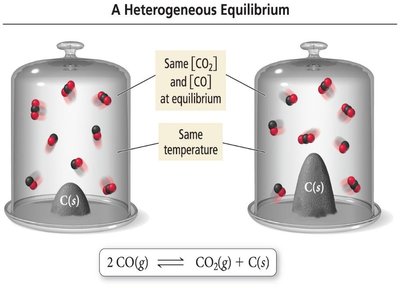
Heterogeneous Equilibria
In heterogeneous equilibria, solids and liquids are omitted from the equilibrium constant expression because their concentrations are constant.
Only gases and aqueous species are included.
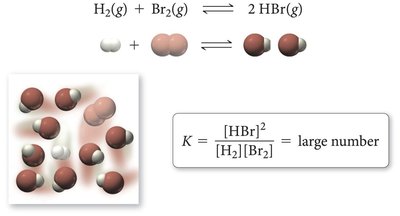
Interpreting K Values
K > 1: Product-Favored Equilibrium
If K is greater than 1, the equilibrium favors products, meaning more product molecules are present at equilibrium.
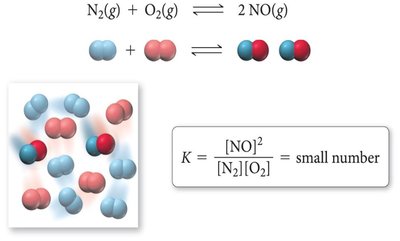
K < 1: Reactant-Favored Equilibrium
If K is less than 1, the equilibrium favors reactants, meaning more reactant molecules are present at equilibrium.
Example: Solubility Product
For sparingly soluble salts, the equilibrium constant (Ksp) is often very small, indicating a reactant-favored equilibrium.
Relationships Between K and Chemical Equations
Reversing and Scaling Equations
Reversing a reaction inverts the equilibrium constant:
Multiplying coefficients by a factor raises K to that power:
Adding equations multiplies their equilibrium constants:
Calculating Keq from Measured Equilibrium Concentrations
ICE Tables
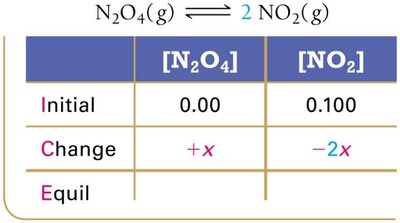
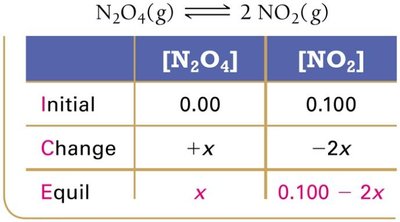
ICE tables (Initial, Change, Equilibrium) are used to organize and solve equilibrium problems. They help track changes in concentrations and calculate equilibrium values.
Initial: Starting concentrations
Change: Amounts gained or lost
Equilibrium: Final concentrations
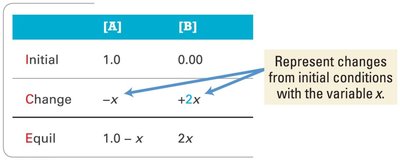
Example: ICE Table for N2O4 ⇌ 2 NO2
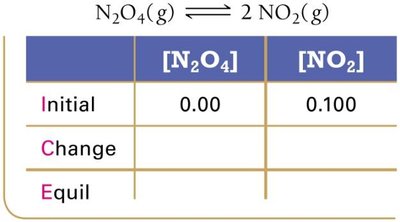
Solving Quadratic Equations in Equilibrium Calculations
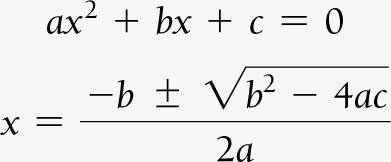
When equilibrium calculations lead to a quadratic equation, use the quadratic formula:
Reaction Quotient (Q) and Predicting Direction
Comparing Q and K
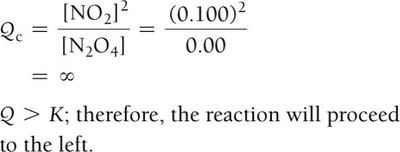
The reaction quotient, Q, is calculated the same way as K but with current concentrations. Comparing Q to K predicts the direction the reaction will proceed:
Q > K: Reaction shifts left (reverse)
Q < K: Reaction shifts right (forward)
Q = K: System is at equilibrium
Le Châtelier’s Principle
Disturbing and Restoring Equilibrium
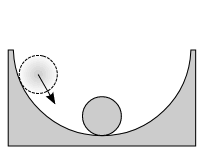
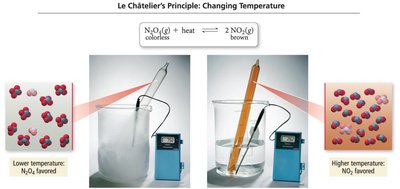
Le Châtelier’s principle states that if a system at equilibrium is disturbed, it will shift to minimize the disturbance. Common disturbances include changes in concentration, volume, pressure, and temperature.
Adding reactants: shifts equilibrium right
Removing reactants: shifts equilibrium left
Adding products: shifts equilibrium left
Removing products: shifts equilibrium right
Decreasing volume (for gases): shifts to side with fewer gas molecules
Increasing temperature (exothermic): shifts left; (endothermic): shifts right
The Effect of Catalysts
Catalysts and Equilibrium
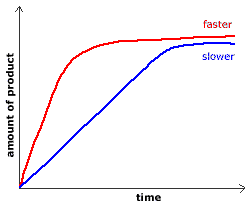
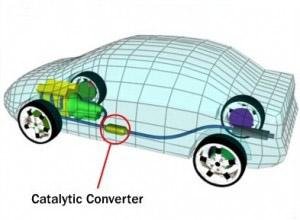
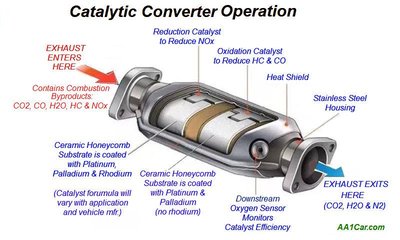
Catalysts increase the rate of both forward and reverse reactions equally, but do not affect the position of equilibrium or the value of K. They simply help the system reach equilibrium faster.
Self-Assessment Quiz: Key Points
At equilibrium, the rates of forward and reverse reactions are equal.
At equilibrium, concentrations of products and reactants are constant but not necessarily equal.
Keq represents the law of mass action.
Keq expression for 2HI(g) ⇌ I2(g) + H2(g):
