 뒤로
뒤로Chapter 3 Study Guide: Molecules, Compounds, and Chemical Equations
스터디 가이드 - 스마트 노트
 자료에 맞춘 맞춤형 노트, 핵심 정의, 예시, 맥락을 확장해 제공합니다.
Chapter 3: Molecules, Compounds, and Chemical Equations
Formula Mass and Percent Composition
The formula mass (also called molecular mass or molecular weight) is the sum of the atomic masses of all atoms in a molecule or formula unit. This value is essential for calculating percent composition and for stoichiometric calculations in chemical reactions.
Formula Mass Calculation: Add the products of the number of atoms of each element and their respective atomic masses.
Percent Composition: The percentage by mass of each element in a compound, calculated using the formula mass.
Example: For H2O: (2 × 1.01 amu for H) + (1 × 16.00 amu for O) = 18.02 amu

Empirical and Molecular Formulas
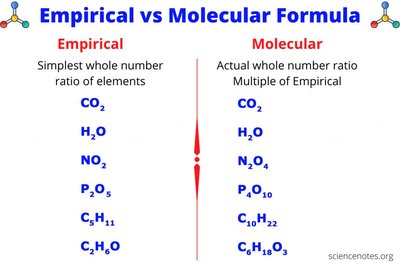
Chemical formulas can be represented as empirical formulas (the simplest whole-number ratio of elements) or molecular formulas (the actual number of atoms in a molecule, which is a multiple of the empirical formula).
Empirical Formula: Determined from experimental data such as percent composition or combustion analysis.
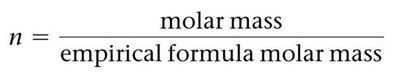
Molecular Formula: Obtained by scaling the empirical formula by a whole number, n.
Formula: $ n = \frac{\text{molar mass}}{\text{empirical formula molar mass}} $
Example: Empirical formula CH2, molar mass 14 g/mol; actual molar mass 70 g/mol. $ n = \frac{70}{14} = 5 $; molecular formula = C5H10
Combustion Analysis
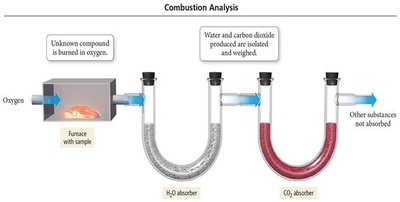
Combustion analysis is a technique used to determine the empirical formula of compounds, especially organic compounds containing C, H, and O. The process involves burning a known mass of compound and measuring the masses of the products (CO2 and H2O).
Steps:
Burn a known mass of compound in oxygen.
Isolate and weigh the water and carbon dioxide produced.
Calculate the mass of each element in the original sample.
Determine the empirical formula from the element masses.
Application: Commonly used for organic compounds.
Mass Spectrometry
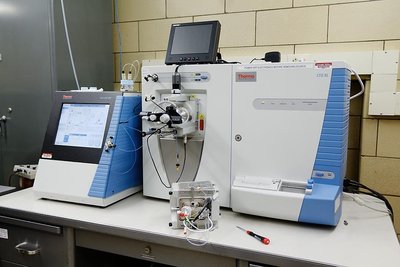
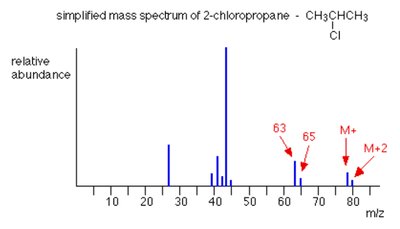
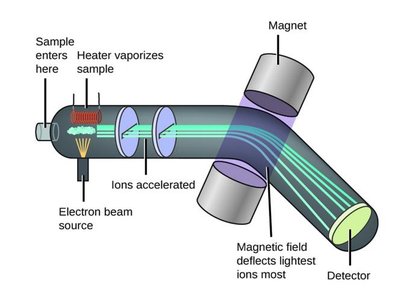
Mass spectrometry is a sensitive technique used to determine the masses of atoms and molecules, including isotopic variations. It is essential for identifying molecular formulas and detecting isotopes.
Principle: Molecules are ionized and separated based on their mass-to-charge ratio (m/z).
Example: 2-chloropropane shows peaks at 78 (main isotope) and 80 (due to 37-Cl isotope).
Application: Used to confirm molar mass and isotopic composition.
Balancing Chemical Equations
Evidence of a Chemical Reaction
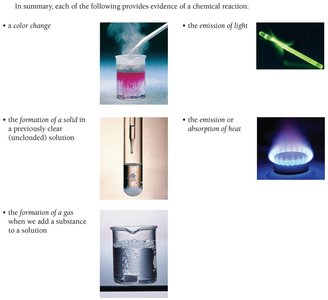
Chemical reactions are indicated by observable changes such as color change, formation of a solid or gas, emission of light, or heat transfer.
Key Evidence:
Color change
Formation of a solid (precipitate)
Formation of a gas
Emission of light
Emission or absorption of heat
Chemical vs Physical Change
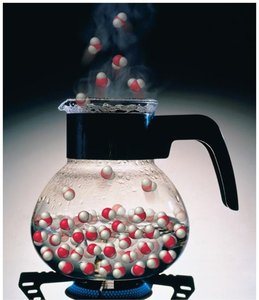
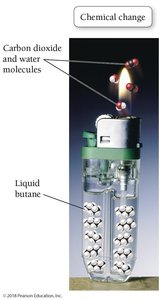
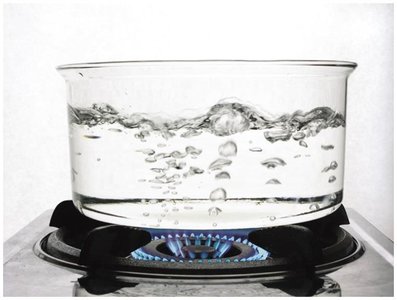
A chemical change results in the formation of new substances, while a physical change does not alter the chemical identity of the substance.
Example: Boiling water is a physical change (H2O(l) → H2O(g)), while burning butane is a chemical change (butane + O2 → CO2 + H2O).
Expressing States of Matter in Chemical Equations
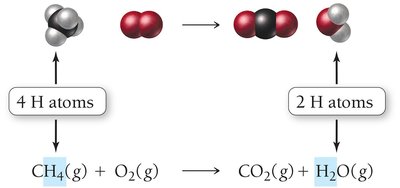
States of matter are indicated in chemical equations using abbreviations: (g) for gas, (l) for liquid, (s) for solid, and (aq) for aqueous (dissolved in water).
Abbreviation | State |
|---|---|
(g) | gas |
(l) | liquid |
(s) | solid |
(aq) | aqueous (water solution) |
Balancing Chemical Equations
Balancing chemical equations ensures the conservation of mass and atoms. Only coefficients are changed, never subscripts.
Steps:
Write a skeletal equation with correct formulas.
Balance elements that appear in only one compound on each side first.
Balance free elements last.
Convert fractional coefficients to whole numbers.
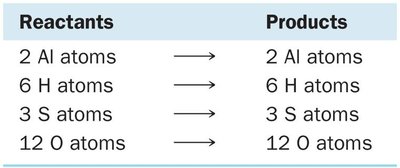
Check atom balance on both sides.
Example: 2 Al(s) + 3 H2SO4(aq) → Al2(SO4)3(aq) + 3 H2(g)
Reactants | Products |
|---|---|
2 Al atoms | 2 Al atoms |
6 H atoms | 6 H atoms |
3 S atoms | 3 S atoms |
12 O atoms | 12 O atoms |
Nomenclature Review: Oxyacids
Naming Oxyacids
Oxyacids are acids containing hydrogen and a polyatomic oxyanion. The naming pattern depends on the suffix of the oxyanion.
-ate ion: Change ending to -ic acid (e.g., SO42− → sulfuric acid)
-ite ion: Change ending to -ous acid (e.g., SO32− → sulfurous acid)
Prefixes: 'per-' for one more O, 'hypo-' for one less O
Example: HClO4 (perchloric acid), HClO3 (chloric acid), HClO2 (chlorous acid), HClO (hypochlorous acid)
Organic Nomenclature
Hydrocarbons and Functional Groups
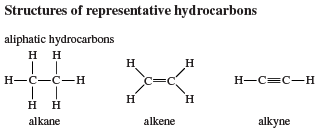
Hydrocarbons are compounds composed only of carbon and hydrogen. The base name indicates the number of carbons, and the suffix indicates the type of bonds.
-ane: All single bonds (alkanes)
-ene: At least one double bond (alkenes)
-yne: At least one triple bond (alkynes)
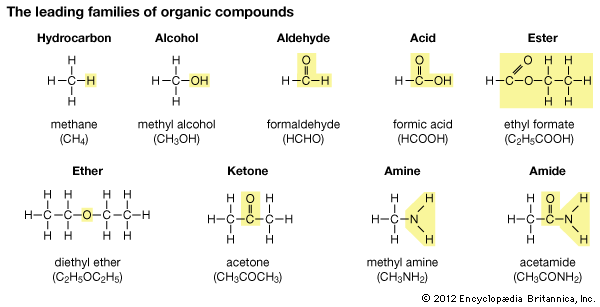
Functional Groups: Groups of atoms that impart specific chemical properties (e.g., alcohol, aldehyde, acid, ester, ether, ketone, amine, amide)
Naming Straight-Chain Alkanes
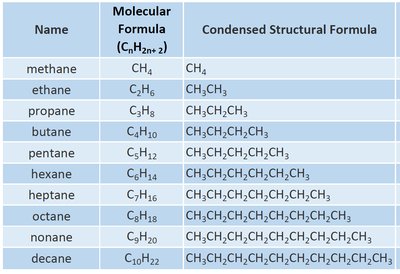
To name straight-chain alkanes, count the number of carbons in the longest chain and match to the root name. Add the suffix for the bond type.
Roots: meth- (1), eth- (2), prop- (3), but- (4), pent- (5), hex- (6), hept- (7), oct- (8), non- (9), dec- (10)
Suffixes: -ane (single), -ene (double), -yne (triple)
Example: 5 carbons, all single bonds → pentane (C5H12)
Functional Groups in Organic Nomenclature
Functional groups change the ending or add a prefix to the base name. For example, -OH (alcohol) changes the ending to -ol, as in ethanol.
Example: Isopropyl alcohol and ethanol are named based on these rules.
Additional info: The notes include clinical connections and quick checks for practice, reinforcing the importance of nomenclature in real-world applications.
