 뒤로
뒤로CHEM1643: General Chemistry I – Organic and Physical Chemistry Study Notes
스터디 가이드 - 스마트 노트
 자료에 맞춘 맞춤형 노트, 핵심 정의, 예시, 맥락을 확장해 제공합니다.
Introduction to General Chemistry
Overview of the CHEM1643 Module
This module, CHEM1643, covers foundational concepts in both Organic and Physical Chemistry, providing students with the knowledge and skills necessary to understand the structure, properties, and behavior of matter. The course is structured to develop critical thinking, problem-solving, and written communication skills essential for scientific inquiry and professional development.
Critical Thinking: Comprehensive exploration of chemical concepts and data analysis.
Problem Solving: Application of strategies to answer open-ended questions and achieve scientific goals.
Written Communication: Development of clear, concise, and effective scientific writing.


Atoms & Elements
Atomic Structure and Electron Configuration
Atoms are composed of a nucleus (protons and neutrons) and electrons in atomic orbitals. The arrangement of electrons determines the chemical properties of an element.
Electron Configuration of Carbon: In its ground state, carbon has the configuration 1s2 2s2 2p2. Upon excitation, one 2s electron is promoted to a 2p orbital, resulting in four unpaired electrons available for bonding.
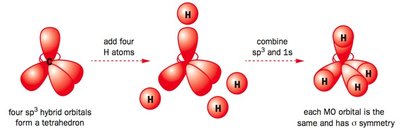
Hybridization: Carbon forms four equivalent sp3 hybrid orbitals, each capable of forming a sigma (σ) bond.
Bonding & Molecular Structure
Covalent Bonding and Hybridization
Covalent bonds result from the sharing of electron pairs between atoms. The overlap of atomic orbitals forms molecular orbitals, which are lower in energy and stabilize the molecule.
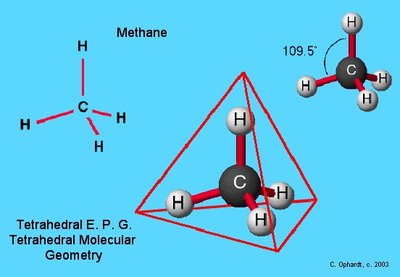
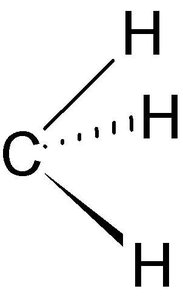
sp3 Hybridization: The combination of one s and three p orbitals forms four sp3 hybrid orbitals arranged tetrahedrally (109.5° bond angles).
Example: Methane (CH4) is a classic example of sp3 hybridization, with four identical C–H bonds.

Bonding in Alkanes
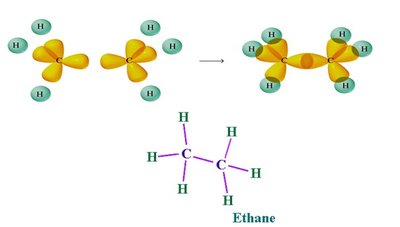
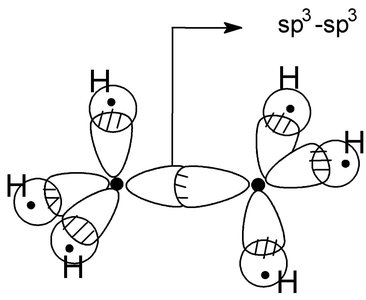
Alkanes are saturated hydrocarbons with only single bonds. The C–C and C–H bonds are strong due to effective sp3–sp3 and sp3–1s overlap, respectively.
Bond Length: The C–C bond length in ethane is approximately 1.53 Å (0.153 nm).
Structural Representation: Alkanes can be represented in various ways, including full structural formulas, condensed formulas, and line-angle formulas.
Chemical Reactions
Bond Cleavage and Formation
Chemical reactions involve the breaking and forming of bonds. There are two primary types of bond cleavage:
Homolytic Cleavage: Each atom retains one electron from the bond, forming free radicals.
Heterolytic Cleavage: Both electrons go to one atom, forming ions (carbocations and carbanions).
Bond formation can also occur via homolytic or heterolytic mechanisms, depending on the nature of the reactants.
Electrophiles and Nucleophiles
Species involved in organic reactions are classified as:
Electrophiles: Electron-deficient species that seek electrons (e.g., carbocations, radicals).
Nucleophiles: Electron-rich species that donate electron pairs (e.g., carbanions, molecules with lone pairs).
Organic Chemistry: Stereochemistry
Chirality and Optical Activity
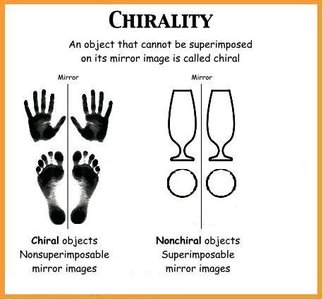
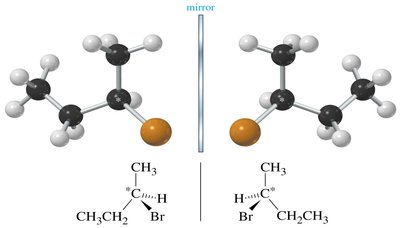
Stereochemistry deals with the three-dimensional arrangement of atoms in molecules. Chirality is a property where a molecule is not superimposable on its mirror image.
Chiral Center: A carbon atom bonded to four different groups.
Enantiomers: Non-superimposable mirror images of a chiral molecule.
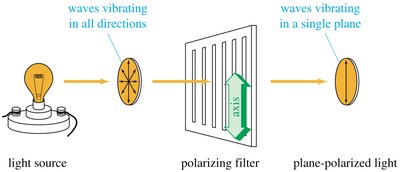
Optical Activity: Enantiomers rotate plane-polarized light in opposite directions (dextrorotatory and levorotatory).
Alkanes and Cycloalkanes
Nomenclature and Isomerism
Alkanes and cycloalkanes are named according to IUPAC rules, using prefixes to indicate the number of carbons and suffixes for functional groups.
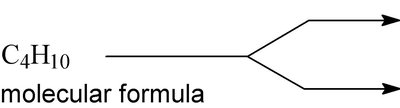
Structural Isomerism: Compounds with the same molecular formula but different connectivity.
Example: C4H10 can be n-butane or isobutane (2-methylpropane).
Chemical Behavior
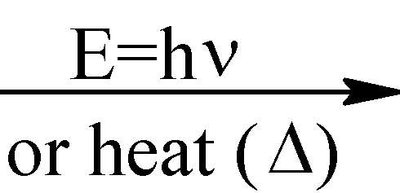
Alkanes and cycloalkanes are generally inert due to strong C–C and C–H bonds. Two important reactions are:
Oxidation (Combustion): Produces CO2 and H2O with energy release.
Halogenation: Substitution of hydrogen by halogen, often via a radical mechanism.
Bonding & Molecular Structure: Visual Summary
sp3 Hybridization and Molecular Geometry
Tetrahedral Geometry: sp3 hybrid orbitals arrange themselves to minimize repulsion, resulting in a tetrahedral shape (109.5° bond angles).
Examples: Methane (CH4), ethane (C2H6).
Summary Table: Key Concepts in Organic Chemistry
Concept | Description | Example |
|---|---|---|
Hybridization | Mixing of atomic orbitals to form new hybrid orbitals | sp3 in CH4 |
Isomerism | Same molecular formula, different structure | n-butane vs. isobutane |
Chirality | Non-superimposable mirror images | 2-bromobutane enantiomers |
Electrophile | Electron-deficient species | Carbocation |
Nucleophile | Electron-rich species | Hydroxide ion |
Additional info:
Some images and icons included above (such as those representing critical thinking, problem solving, and written communication) are used to visually reinforce the graduate attributes and learning outcomes emphasized in the CHEM1643 module. The molecular orbital and hybridization diagrams are directly relevant to the explanation of bonding and molecular structure in organic chemistry.
