 뒤로
뒤로CHEM 131 Chapter 11 Pt. 1: Chemical Bonding II: Molecular Shapes, VSEPR, and Molecular Polarity
스터디 가이드 - 스마트 노트
 자료에 맞춘 맞춤형 노트, 핵심 정의, 예시, 맥락을 확장해 제공합니다.
Chemical Bonding II: Molecular Shapes, VSEPR, and Molecular Polarity
Introduction to Molecular Structure and Bonding
The properties of molecular substances are determined by the three-dimensional structure of their molecules. Understanding molecular geometry is essential for predicting reactivity, polarity, and physical properties. This chapter covers the Valence Shell Electron Pair Repulsion (VSEPR) theory, molecular shapes, and the relationship between structure and polarity.
VSEPR Theory and Electron Group Geometry
Basic Principles of VSEPR Theory
VSEPR Theory states that electron groups around a central atom arrange themselves to minimize repulsion, resulting in specific molecular geometries.
Electron groups include both bonding pairs (single, double, or triple bonds) and lone pairs of electrons.
The arrangement of these groups determines the electron group geometry and, ultimately, the molecular geometry.
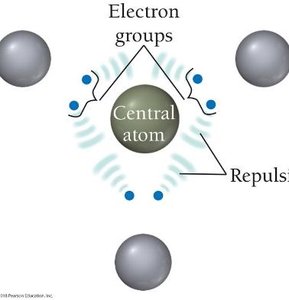
Counting Electron Groups
Each lone pair on the central atom counts as one electron group.
Each bond (single, double, or triple) also counts as one electron group.
Example: In NO2–, the central N atom has three electron groups: one lone pair, one single bond, and one double bond.
Five Basic Electron Group Geometries
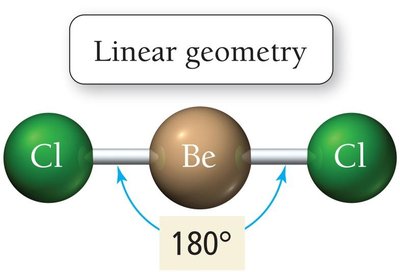
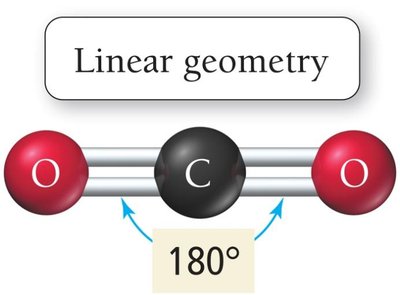
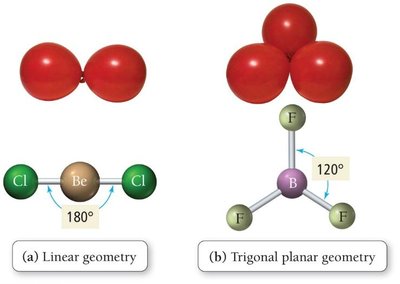
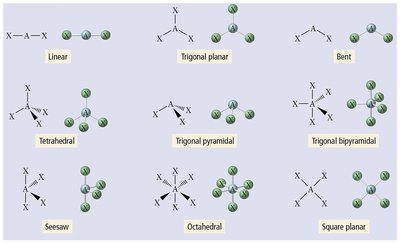
Linear: 2 electron groups, 180° bond angle
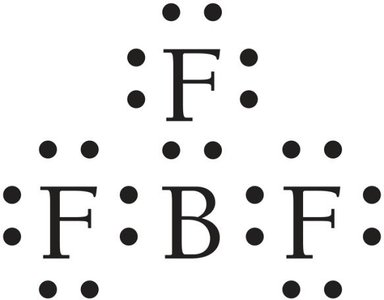
Trigonal Planar: 3 electron groups, 120° bond angle
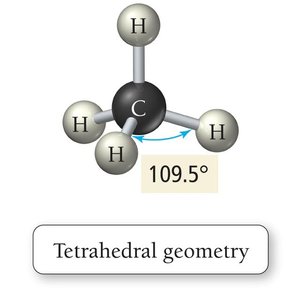
Tetrahedral: 4 electron groups, 109.5° bond angle
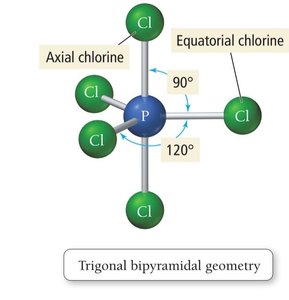
Trigonal Bipyramidal: 5 electron groups, 90° and 120° bond angles
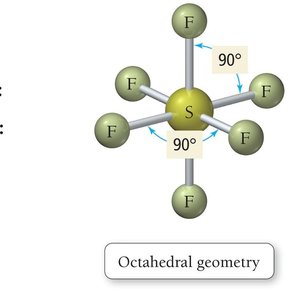
Octahedral: 6 electron groups, 90° bond angle
Linear Electron Geometry
When two electron groups are present, they arrange themselves on opposite sides of the central atom, resulting in a linear geometry with a bond angle of 180°.
Trigonal Planar Electron Geometry
Three electron groups form a planar triangle around the central atom, with bond angles of 120°.
Tetrahedral Electron Geometry
Four electron groups arrange themselves in a tetrahedral shape, with bond angles of 109.5°.
Trigonal Bipyramidal Electron Geometry
Five electron groups form a trigonal bipyramidal geometry, with three equatorial positions (120° apart) and two axial positions (90° from equatorial).
Octahedral Electron Geometry
Six electron groups form an octahedral geometry, with all positions equivalent and bond angles of 90°.
Electron Pair Geometry vs. Molecular Geometry
Distinction and Effects of Lone Pairs
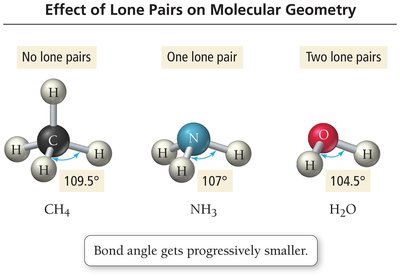
Electron pair geometry considers all electron groups (bonds and lone pairs).
Molecular geometry considers only the positions of atoms (ignoring lone pairs).
Lone pairs occupy more space and compress bond angles between atoms, distorting the ideal geometry.
Examples: Five and Six Electron Groups with Lone Pairs
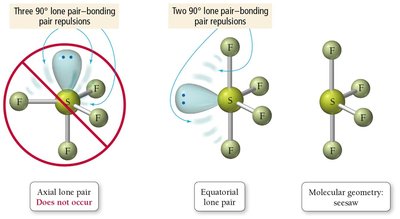
Five electron groups, one lone pair: Seesaw geometry
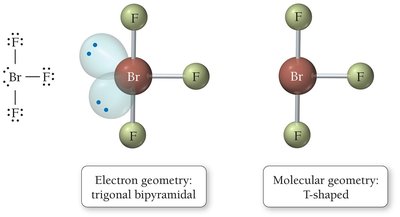
Five electron groups, two lone pairs: T-shaped geometry
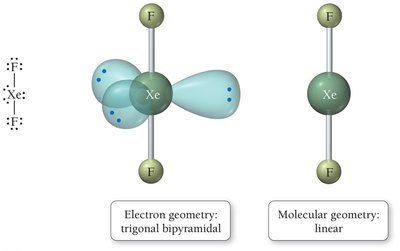
Five electron groups, three lone pairs: Linear geometry
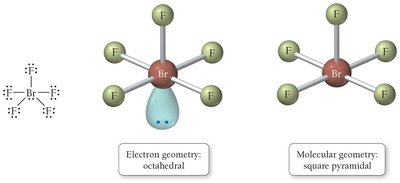
Six electron groups, one lone pair: Square pyramidal geometry
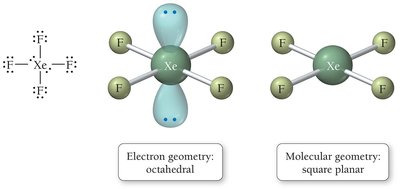
Six electron groups, two lone pairs: Square planar geometry
Molecules with Multiple Central Atoms
Assigning Geometries to Each Center
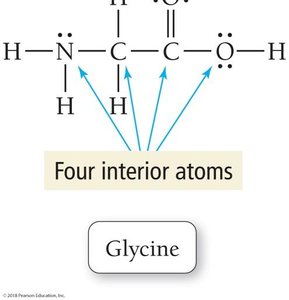
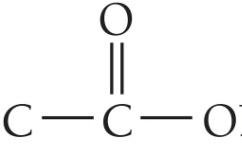
Large molecules may have several interior (central) atoms, each with its own geometry. For example, in glycine (NH2CH2COOH), each non-terminal atom is considered a central atom for geometry assignment.
Molecular Polarity
Criteria for Molecular Polarity
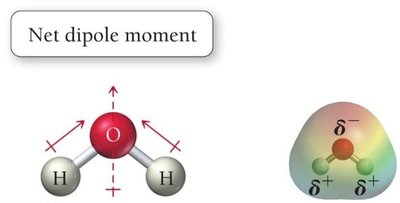
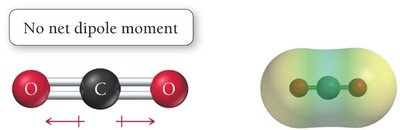
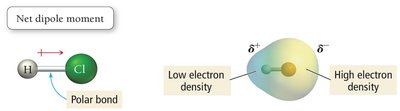
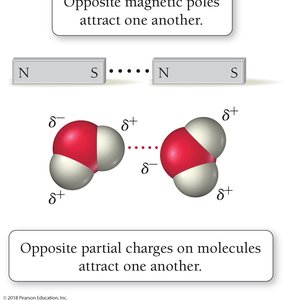
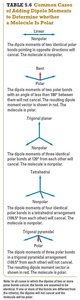
A molecule is polar if it contains polar bonds (difference in electronegativity) and has an unsymmetrical shape, resulting in a net dipole moment.
Polarity is determined by vector addition of bond dipoles.
Effect of Polarity on Solubility
Polar molecules dissolve in polar solvents (like water); nonpolar molecules dissolve in nonpolar solvents (like fats).
Some molecules, such as soaps, have both polar and nonpolar regions, allowing them to interact with both types of substances.
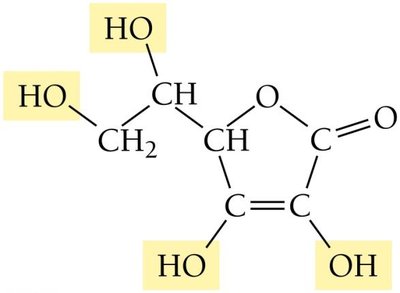
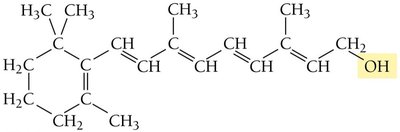
Examples: Vitamin Solubility
Vitamin A: Nonpolar, fat-soluble due to many C–C and C–H bonds.
Vitamin C: Polar, water-soluble due to multiple O–H bonds capable of hydrogen bonding.
Representing Three-Dimensional Shapes on Paper
3-D Notations and Conventions
Central atom is placed in the plane of the paper.
Atoms in the plane: straight line; atoms in front: solid wedge; atoms behind: hatched wedge.

Vector Addition in Molecular Polarity
Adding Vectors in One and Multiple Dimensions
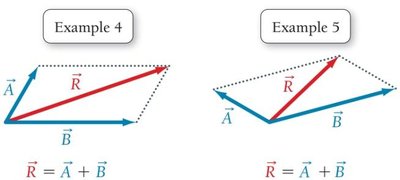
In one dimension, assign positive and negative directions to add vectors.
In two or more dimensions, use the parallelogram method to find the resultant vector.
Using VSEPR to Predict Molecular Geometry and Polarity
Steps for Predicting Geometry
Draw the Lewis structure.
Determine the total number of valence electrons.
Assign electrons to atoms according to the Lewis model.
Count the number of electron groups around the central atom.
Classify each group as bonding or lone pair.
Remember: multiple bonds count as one group.
Use the electron group count to determine geometry and bond angles.
Steps for Predicting Polarity
Draw the Lewis structure and determine molecular geometry.
Identify polar bonds based on electronegativity differences.
Represent each polar bond as a vector pointing toward the more electronegative atom.
Sum the vectors to determine if a net dipole moment exists.
If the vectors cancel, the molecule is nonpolar; if not, it is polar.
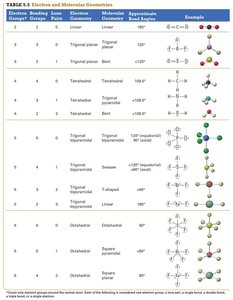
Summary Table: Electron and Molecular Geometries
Electron Groups | Lone Pairs | Electron Geometry | Molecular Geometry | Bond Angles | Example |
|---|---|---|---|---|---|
2 | 0 | Linear | Linear | 180° | CO2 |
3 | 0 | Trigonal Planar | Trigonal Planar | 120° | BF3 |
3 | 1 | Trigonal Planar | Bent | ~120° | SO2 |
4 | 0 | Tetrahedral | Tetrahedral | 109.5° | CH4 |
4 | 1 | Tetrahedral | Trigonal Pyramidal | ~107° | NH3 |
4 | 2 | Tetrahedral | Bent | ~104.5° | H2O |
5 | 0 | Trigonal Bipyramidal | Trigonal Bipyramidal | 90°, 120° | PCl5 |
5 | 1 | Trigonal Bipyramidal | Seesaw | ~90°, ~120° | SF4 |
5 | 2 | Trigonal Bipyramidal | T-shaped | ~90° | ClF3 |
5 | 3 | Trigonal Bipyramidal | Linear | 180° | XeF2 |
6 | 0 | Octahedral | Octahedral | 90° | SF6 |
6 | 1 | Octahedral | Square Pyramidal | ~90° | BrF5 |
6 | 2 | Octahedral | Square Planar | 90° | XeF4 |
