 뒤로
뒤로CHEM 131 Chapter 11 Pt. 2: Chemical Bonding II: Valence Bond Theory and Molecular Orbital Theory
스터디 가이드 - 스마트 노트
 자료에 맞춘 맞춤형 노트, 핵심 정의, 예시, 맥락을 확장해 제공합니다.
Chemical Bonding II: Valence Bond Theory and Molecular Orbital Theory
Summarizing VSEPR Theory
The Valence Shell Electron Pair Repulsion (VSEPR) theory is used to predict the geometry of molecules based on the repulsions between electron groups around a central atom. The arrangement of these groups determines the molecular shape and bond angles.
Electron Groups: Lone pairs, single, double, triple bonds, and single electrons each count as one electron group.
Repulsion Hierarchy: Lone pair-lone pair > lone pair-bonding pair > bonding pair-bonding pair.
Bond Angles: Lone pairs and multiple bonds occupy more space, reducing bond angles from ideal values.
Key Principle: The shape of a molecule is determined by repulsions among all electron groups on the central atom.
Determining Molecular Polarity
Molecular polarity is determined by the distribution of polar bonds and the overall geometry of the molecule.
Draw the Lewis structure and determine molecular geometry.
Identify polar bonds and represent them with vectors pointing toward the more electronegative atom.
Sum the vectors: If they cancel, the molecule is nonpolar; if not, it is polar.
Valence Bond Theory: Orbital Overlap and Chemical Bond
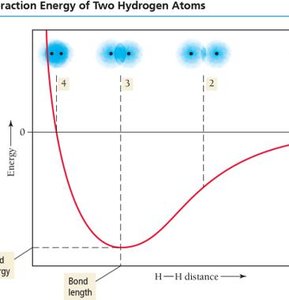
Valence Bond (VB) Theory explains chemical bonding as the overlap of atomic orbitals from two atoms, allowing electrons to pair and form a bond. The type and orientation of overlapping orbitals determine the bond's characteristics.
Bond Formation: Occurs when half-filled atomic orbitals overlap and electrons pair.
Orbital Alignment: Can be along the axis (sigma bonds) or parallel/perpendicular (pi bonds).

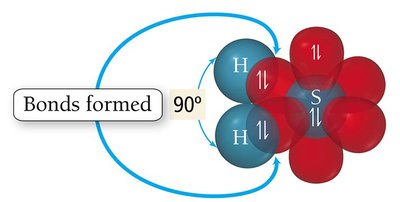
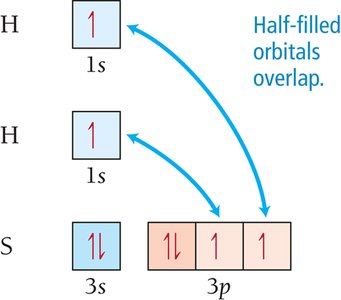
Orbital Diagram for the Formation of H2S
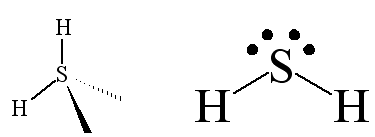
The formation of H2S involves the overlap of hydrogen 1s orbitals with sulfur's 3p orbitals, resulting in bond angles close to 92.1° due to lone pair repulsions.
Valence Bond Theory: Main Concepts
VB theory describes the localization of electrons in atomic or hybrid orbitals and the formation of bonds through orbital overlap.
Atomic Orbitals: s, p, d, f, and hybrid orbitals (sp, sp2, sp3, etc.).
Bond Formation: Overlap of half-filled orbitals and spin pairing, or overlap of filled and empty orbitals.
Geometry: Determined by the spatial arrangement of overlapping orbitals.
Hybrid Orbitals
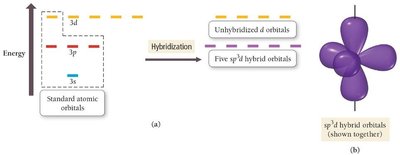
Hybridization is the mixing of atomic orbitals to form new, degenerate orbitals that maximize bonding and stability.
Types: sp, sp2, sp3, sp3d, sp3d2.
Hybridization Maximizes Bonding: More bonds lead to greater stability and lower energy.
Number of Orbitals: The number of hybrid orbitals formed equals the number of atomic orbitals combined.
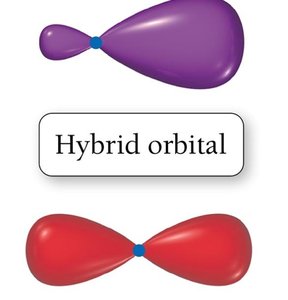
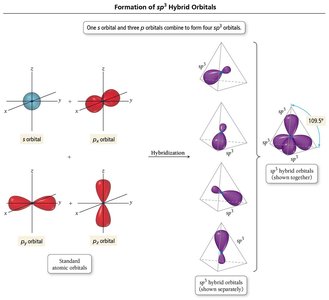
sp3 Hybridization
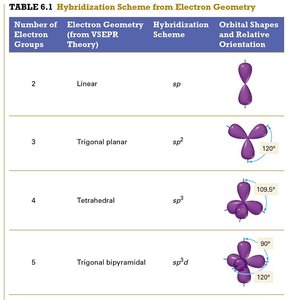
Atoms with four electron groups undergo sp3 hybridization, resulting in tetrahedral geometry with bond angles of 109.5°.
Example: Methane (CH4) and ammonia (NH3).
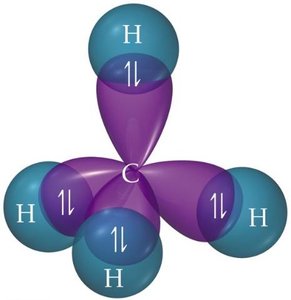
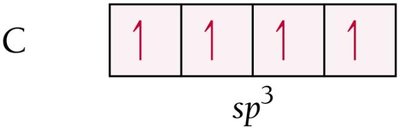
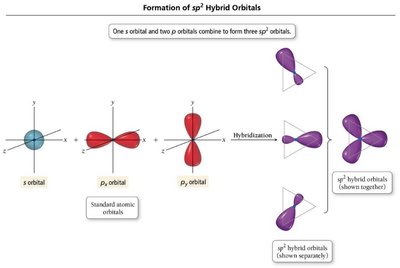
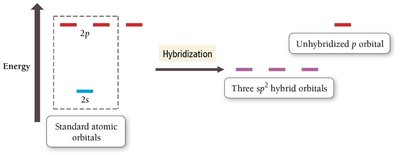
sp2 Hybridization
Atoms with three electron groups undergo sp2 hybridization, resulting in trigonal planar geometry with 120° bond angles. The unhybridized p orbital forms a π bond.
Types of Bonds: Sigma (σ) and Pi (π) Bonds
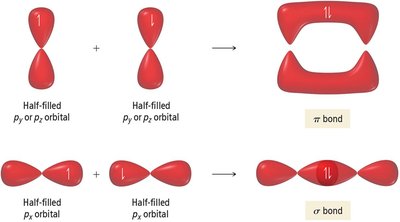
Sigma bonds are formed by direct overlap along the axis between atoms, while pi bonds are formed by side-to-side overlap of p orbitals.
Single Bond: One sigma bond.
Double Bond: One sigma and one pi bond.
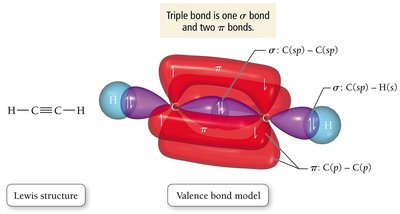
Triple Bond: One sigma and two pi bonds.
Bond Rotation and Isomerism
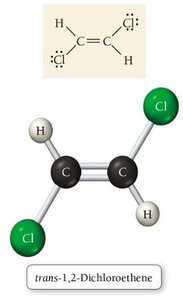
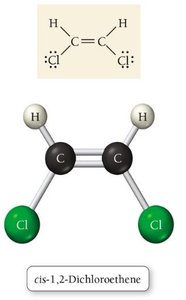
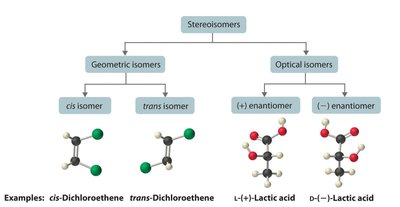
Rotation about sigma bonds is unrestricted, while rotation about pi bonds is restricted, leading to geometric isomerism.
Geometric Isomers: cis and trans forms.
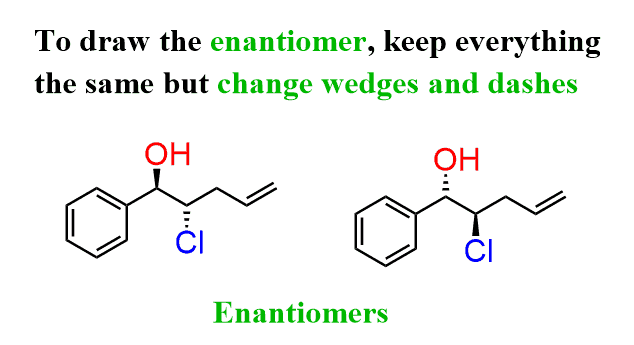
Optical Isomers: Enantiomers, non-superimposable mirror images.
sp Hybridization and Triple Bonds
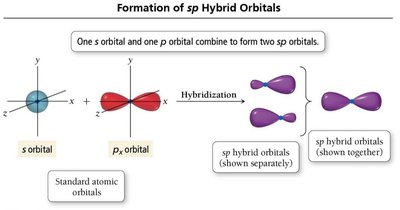
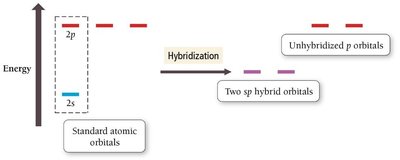
Atoms with two electron groups undergo sp hybridization, resulting in linear geometry with 180° bond angles. Triple bonds consist of one sigma and two pi bonds.
sp3d and sp3d2 Hybridization
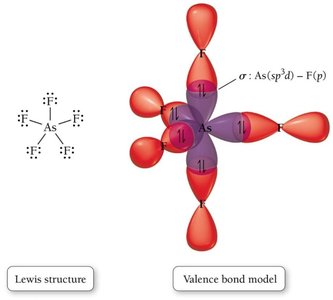
Atoms with five or six electron groups undergo sp3d or sp3d2 hybridization, resulting in trigonal bipyramidal or octahedral geometries, respectively.
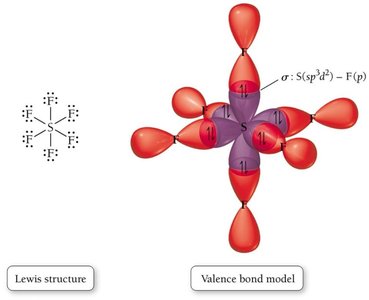
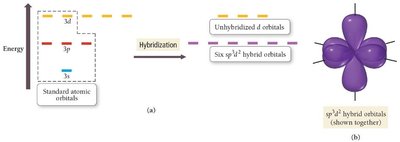
Predicting Hybridization and Bonding Scheme
To predict hybridization and bonding:
Draw the Lewis structure.
Use VSEPR theory to determine electron group geometry.
Match the hybridization scheme to the geometry.
Sketch atomic and hybrid orbitals, showing overlap.
Label bonds as sigma or pi.
Valence Bond Theory vs. Molecular Orbital Theory
Valence Bond Theory assumes electrons are localized in atomic orbitals, while Molecular Orbital Theory treats electrons as delocalized over the entire molecule.
VB Theory: Predicts bonding schemes, strengths, and lengths, but not magnetic properties.
MO Theory: Uses Schrödinger's equation to calculate molecular orbitals, which belong to the whole molecule.
LCAO: Linear Combination of Atomic Orbitals
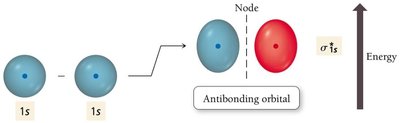
Molecular orbitals are formed by combining atomic orbitals using the LCAO method. Constructive combination forms bonding orbitals; destructive combination forms antibonding orbitals.
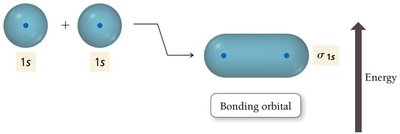
Summarizing LCAO–MO Theory
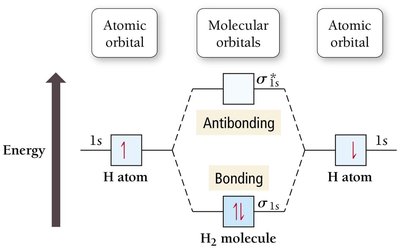
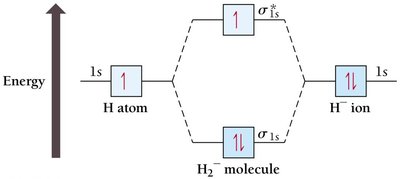
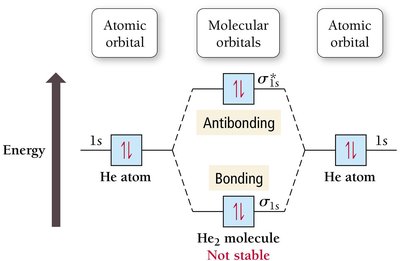
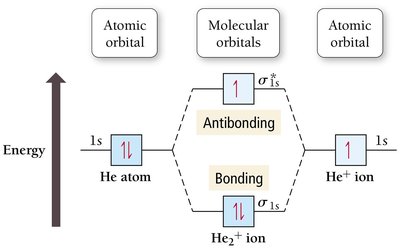
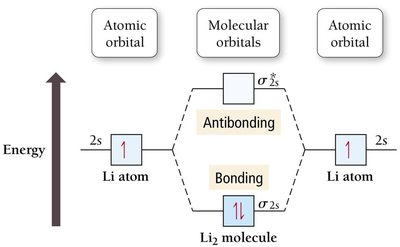
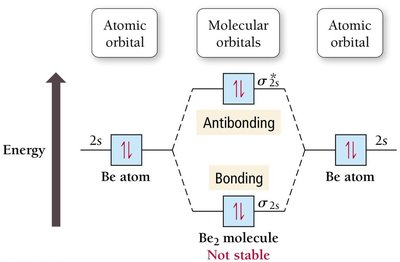
The number of molecular orbitals equals the number of atomic orbitals combined. Bonding MOs are lower in energy and filled first; antibonding MOs are higher in energy. Hund's rule applies to filling degenerate orbitals.
Bond Order Formula:
Stable Bonds: Require positive bond order.
MO and Properties
Bond order determines bond strength and length. Unpaired electrons in MO diagrams indicate paramagnetism; paired electrons indicate diamagnetism.
Example: H2 bond order = 1; He2 bond order = 0 (unstable).
Interaction of p Orbitals and Molecular Orbital Energy Ordering
Second-period homonuclear diatomic molecules exhibit specific MO energy ordering, with p orbital interactions leading to different bonding and antibonding combinations.
MO and Polyatomic Molecules
Molecular Orbital Theory provides more accurate predictions of molecular properties, including magnetism and bond order, than Lewis or Valence Bond theories.
Additional info: These notes cover advanced chemical bonding concepts, including hybridization, sigma and pi bonds, isomerism, and molecular orbital theory, as required for General Chemistry college courses.
