 뒤로
뒤로Deviations from Raoult’s Law: Nonideal Solutions and Their Thermodynamic Behavior
스터디 가이드 - 스마트 노트
 자료에 맞춘 맞춤형 노트, 핵심 정의, 예시, 맥락을 확장해 제공합니다.
Solutions and Deviations from Raoult’s Law
Introduction to Nonideal Solutions
In real chemical systems, solutions often deviate from the behavior predicted by Raoult’s Law. Such solutions are termed nonideal or real solutions. These deviations arise due to differences in molecular size, shape, and intermolecular forces between the components of the mixture.
Positive Deviations from Raoult’s Law
Definition and Explanation
Positive deviations occur when the vapor pressure of a solution is higher than predicted by Raoult’s Law. This happens when the intermolecular forces between unlike molecules (A-B) are weaker than those between like molecules (A-A or B-B), leading to easier escape of molecules into the vapor phase.
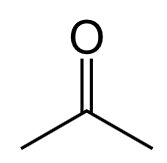
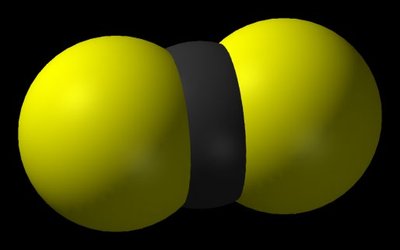
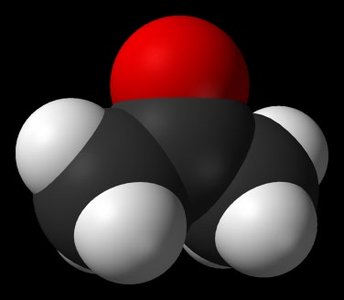
Example: A mixture of acetone and carbon disulphide (CS2) exhibits positive deviations.
Both acetone and CS2 are miscible liquids over the entire composition range.
Intermolecular forces: Acetone has dipole-dipole and London dispersion forces, while CS2 has only London dispersion forces. Mixing disrupts the stronger acetone-acetone interactions, destabilizing the mixture relative to the pure liquids.
Graphical Representation
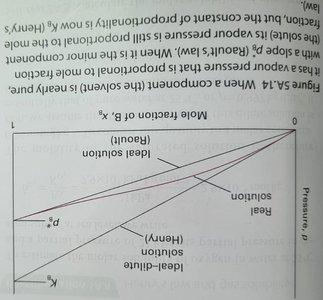
When plotting partial pressure versus mole fraction, a solution that obeys Raoult’s Law forms a straight line. Positive deviations are shown as curves above this line.
Raoult’s Law (for component i):
Total vapor pressure:
Henry’s Law and Raoult’s Law in Dilute Solutions
Behavior in Dilute Solutions
In sufficiently dilute solutions, the minor component (solute) obeys Henry’s Law:
Henry’s Law:
The major component (solvent) continues to obey Raoult’s Law:
Negative Deviations from Raoult’s Law
Definition and Explanation
Negative deviations occur when the vapor pressure of a solution is lower than predicted by Raoult’s Law. This is due to stronger intermolecular attractions between unlike molecules, which stabilize the mixture and reduce the tendency of molecules to escape into the vapor phase.
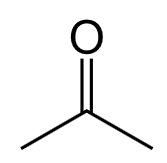
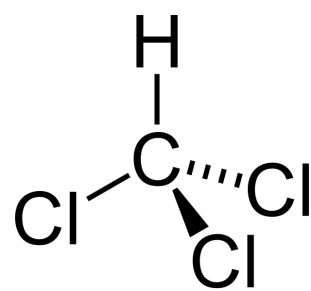
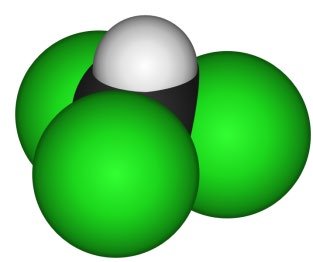
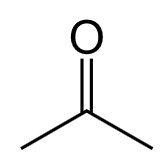
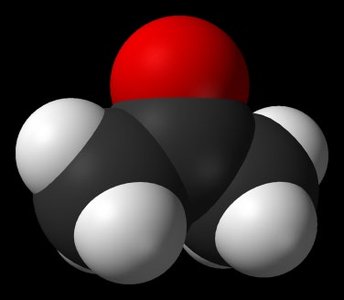
Example: A mixture of acetone and chloroform (CHCl3) exhibits negative deviations.
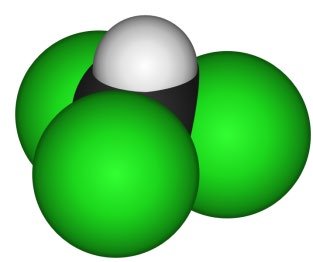
Acetone and chloroform interact via hydrogen bonding (between the carbonyl oxygen of acetone and the hydrogen of chloroform), in addition to London dispersion forces.
This strong interaction stabilizes the mixture relative to the pure liquids.
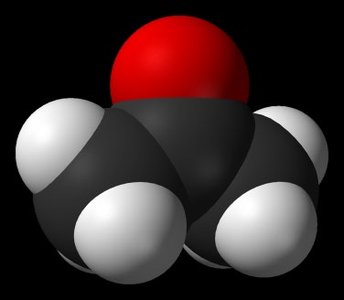
Graphical Representation
Negative deviations are shown as curves below the straight line predicted by Raoult’s Law in a plot of partial pressure versus mole fraction.
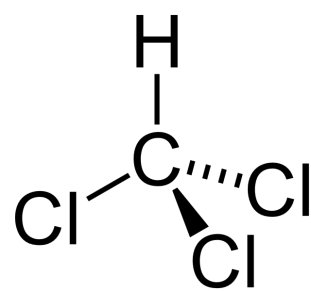
Intermolecular Forces in Negative Deviations
Acetone: Dipole-dipole and London dispersion forces.
Chloroform: London dispersion forces and hydrogen bonding with acetone.
Mixture: Stabilized by hydrogen bonding and London forces, leading to lower vapor pressure.
Ideally Dilute Solutions
Definition and Distinction
An ideally dilute solution is one in which the solvent obeys Raoult’s Law and the solute obeys Henry’s Law. This is distinct from an ideal solution, where both components obey Raoult’s Law across all compositions.
Raoult’s Law (solvent):
Henry’s Law (solute):
Note: Ideally dilute solutions are common in practice, especially when the solute is present in very small amounts.
Summary Table: Types of Deviations from Raoult’s Law
Type of Deviation | Intermolecular Forces | Vapor Pressure Behavior | Example |
|---|---|---|---|
Positive | Weaker A-B than A-A or B-B | Above Raoult’s Law prediction | Acetone + CS2 |
Negative | Stronger A-B than A-A or B-B | Below Raoult’s Law prediction | Acetone + CHCl3 |
Ideal | A-B ≈ A-A ≈ B-B | Follows Raoult’s Law | n-Hexane + n-Heptane |
Key Equations
Raoult’s Law:
Henry’s Law:
Total Vapor Pressure:
Additional info: The concepts of positive and negative deviations are crucial for understanding azeotropes, distillation, and the design of separation processes in chemical engineering and physical chemistry.
