 뒤로
뒤로General Chemistry Exam #1 Study Guide – Step-by-Step Guidance
스터디 가이드 - 스마트 노트
 자료에 맞춘 맞춤형 노트, 핵심 정의, 예시, 맥락을 확장해 제공합니다.
Q1. What property of rubbing alcohol is a chemical property?
Background
Topic: Physical vs. Chemical Properties
This question tests your understanding of the difference between physical and chemical properties of substances.
Key Terms:
Physical Property: A characteristic that can be observed or measured without changing the substance's identity (e.g., density, melting point, boiling point).
Chemical Property: A characteristic that describes a substance's ability to undergo a chemical change (e.g., flammability, reactivity).
Step-by-Step Guidance
Review the definitions of physical and chemical properties.
Examine each option: density, flammability, boiling point, melting point.
Identify which property involves a change in the substance's chemical identity.
Try solving on your own before revealing the answer!
Q2. Perform the calculation to correct the number of significant figures: (43.900 x 0.00550) / 2.002
Background
Topic: Significant Figures in Calculations
This question tests your ability to apply rules for significant figures in multiplication, division, and reporting the final result.
Key Terms and Rules:
Significant Figures: Digits in a measurement that are known with certainty plus one estimated digit.
Multiplication/Division Rule: The result should have the same number of significant figures as the measurement with the fewest significant figures.
Step-by-Step Guidance
Identify the number of significant figures in each value: 43.900, 0.00550, 2.002.
Perform the multiplication: .
Divide the result by 2.002.
Determine which value has the fewest significant figures and round your answer accordingly.
Try solving on your own before revealing the answer!
Q3. Which idea came out of Rutherford’s gold foil experiment?
Background
Topic: Atomic Structure and Historical Experiments
This question tests your knowledge of the discoveries made from Rutherford's gold foil experiment and their impact on atomic theory.
Key Terms:
Gold Foil Experiment: An experiment that led to the discovery of the atomic nucleus.
Atomic Theory: The scientific theory that matter is composed of atoms.
Step-by-Step Guidance
Recall the setup and observations of Rutherford's gold foil experiment.
Identify which idea(s) directly resulted from the experiment (e.g., atoms are mostly empty space, existence of a dense nucleus).
Review each answer choice and match it to the experiment's findings.
Try solving on your own before revealing the answer!
Q4. Determine the number of atoms in 1.92 mL of mercury (Density of mercury is 13.5 g/mL)
Background
Topic: Mole Concept and Density
This question tests your ability to use density to convert volume to mass, then use molar mass and Avogadro's number to find the number of atoms.
Key Terms and Formulas:
Density:
Molar Mass of Hg: Find from the periodic table.
Avogadro's Number: atoms/mol
Step-by-Step Guidance
Calculate the mass of mercury using density and volume: .
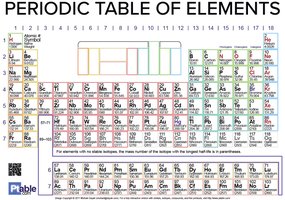
Find the molar mass of mercury from the periodic table.
Convert mass to moles: .
Calculate the number of atoms: .
Try solving on your own before revealing the answer!
Q5. Name the following compounds:
a) SrI
b) P2I4
c) HNO2
Background
Topic: Chemical Nomenclature
This question tests your ability to name ionic, covalent, and acid compounds using proper rules.
Key Terms:
Ionic Compound: Metal + nonmetal, use element names and proper endings.
Covalent Compound: Nonmetal + nonmetal, use prefixes for number of atoms.
Acid: Naming depends on the anion present.
Step-by-Step Guidance
Identify the type of compound (ionic, covalent, acid) for each formula.
Apply the appropriate naming rules for each type.
Write the systematic name for each compound, using prefixes or acid naming conventions as needed.
Try solving on your own before revealing the answer!
Q6. From the given empirical formula and molar mass, find the molecular formula of the two following compounds:
a) C4H9, 114.22 g/mol
b) CCl, 284.77 g/mol
Background
Topic: Empirical and Molecular Formulas
This question tests your ability to use the empirical formula and molar mass to determine the molecular formula.
Key Terms and Formulas:
Empirical Formula: The simplest whole-number ratio of atoms in a compound.
Molecular Formula: The actual number of atoms in a molecule.
Formula:
Step-by-Step Guidance
Calculate the mass of the empirical formula for each compound.
Divide the given molar mass by the empirical formula mass to find .
Multiply the empirical formula by to get the molecular formula.
Try solving on your own before revealing the answer!
Q7. Balance the following reaction: PCl3(l) + H2O(l) → H3PO4(aq) + HCl(aq)
Background
Topic: Chemical Equations and Balancing
This question tests your ability to balance chemical equations by ensuring the same number of atoms of each element on both sides.
Key Terms:
Reactants: Substances present before the reaction.
Products: Substances formed after the reaction.
Balancing: Adjusting coefficients to conserve mass.
Step-by-Step Guidance
Write the unbalanced equation.
Count the number of atoms of each element on both sides.
Adjust coefficients to balance one element at a time, starting with the most complex molecule.
Check all elements to ensure balance.
Try solving on your own before revealing the answer!
Q8. Solid potassium chlorate decomposes into potassium chloride and oxygen when heated. How many moles of oxygen form when 50.8 g potassium chlorate completely decomposes?
Background
Topic: Stoichiometry and Chemical Reactions
This question tests your ability to use stoichiometry to relate mass of reactant to moles of product.
Key Terms and Formulas:
Stoichiometry: The calculation of reactants and products in chemical reactions.
Molar Mass: Find from the periodic table.
Balanced Equation: Needed to determine mole ratios.
Step-by-Step Guidance
Write the balanced equation for the decomposition of potassium chlorate.
Find the molar mass of potassium chlorate (KClO3).
Convert mass of KClO3 to moles.
Use the mole ratio from the balanced equation to find moles of oxygen produced.
Try solving on your own before revealing the answer!
Q9. What volume of a 1.53 M HCl solution should you use to prepare 3.00 L of a 0.100 M HCl solution?
Background
Topic: Solution Dilution
This question tests your ability to use the dilution equation to calculate volumes and concentrations.
Key Terms and Formula:
Concentration (M): Moles of solute per liter of solution.
Dilution Equation:
Step-by-Step Guidance
Identify the initial and final concentrations and volumes.
Set up the dilution equation: .
Solve for the unknown volume .
Try solving on your own before revealing the answer!
Q10. What is the net ionic equation for the reaction that occurs when aqueous solutions of KHCO3 and HBr are mixed?
Background
Topic: Ionic Equations and Reactions in Solution
This question tests your ability to write net ionic equations by removing spectator ions and showing only the species that change.
Key Terms:
Net Ionic Equation: Shows only the ions and molecules directly involved in the reaction.
Spectator Ions: Ions that do not participate in the reaction.
Step-by-Step Guidance
Write the balanced molecular equation for the reaction.
Write the complete ionic equation, showing all soluble substances as ions.
Identify and remove spectator ions to write the net ionic equation.
Try solving on your own before revealing the answer!
Q11. A potassium bromide solution is 3.55% potassium bromide by mass, and its density is 1.03 g/mL. What mass of potassium bromide is contained in 35.8 mL of the solution?
Background
Topic: Solution Concentration and Density
This question tests your ability to use percent by mass and density to calculate the mass of solute in a given volume of solution.
Key Terms and Formulas:
Percent by Mass:
Density:
Step-by-Step Guidance
Calculate the mass of the solution using density and volume.
Use the percent by mass to find the mass of potassium bromide in the solution.
Try solving on your own before revealing the answer!
Q12. A water sample is found to contain the pollutant chlorobenzene with a concentration of 15 ppb (by mass). What volume of this water contains 5.00 x 10² mg of chlorobenzene? (Assume a density of 1.00 g/mL).
Background
Topic: Solution Concentration (ppb) and Density
This question tests your ability to use parts per billion (ppb) and density to calculate the volume of solution containing a given mass of solute.
Key Terms and Formulas:
ppb (parts per billion):
Density:
Step-by-Step Guidance
Convert the mass of chlorobenzene to grams if needed.
Set up the ppb equation to relate mass of solute and mass of solution.
Use density to convert mass of solution to volume.
Try solving on your own before revealing the answer!
