 뒤로
뒤로General Chemistry Study Notes: Quantum Mechanics, Atomic Structure, and Chemical Bonding (Chapters 8–11)
스터디 가이드 - 스마트 노트
 자료에 맞춘 맞춤형 노트, 핵심 정의, 예시, 맥락을 확장해 제공합니다.
Electromagnetic Radiation and the Nature of Light
Wavelength, Frequency, and the Electromagnetic Spectrum
Electromagnetic radiation is a form of energy that exhibits wave-like behavior as it travels through space. The main characteristics of electromagnetic waves are wavelength (λ), the distance between successive peaks, and frequency (ν), the number of cycles per second. The speed of light (c) in a vacuum is a constant, and the relationship between wavelength and frequency is given by:
Wavelength (λ): Distance light travels in one cycle (measured in meters, nanometers, etc.).
Frequency (ν): Number of wave cycles per second (measured in s-1 or Hz).
Relationship:
Speed of light (c): m/s
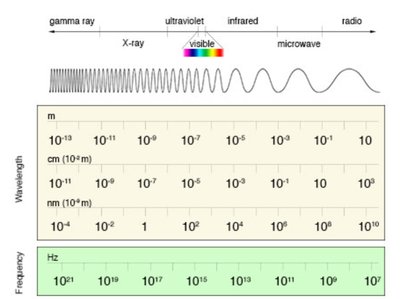
The electromagnetic spectrum ranges from gamma rays (shortest wavelength, highest frequency) to radio waves (longest wavelength, lowest frequency). Visible light is a small portion of this spectrum.
Photons and the Particle Nature of Light
Light can also behave as a stream of particles called photons. Each photon carries a quantum of energy, given by:
Photon energy:
Planck's constant (h): J·s
Amplitude: Height of the wave, related to intensity (brightness) of light.
Wavelength and amplitude are independent properties.
The Photoelectric Effect
Photoelectric Effect and Threshold Frequency
The photoelectric effect is the phenomenon where electrons are ejected from a metal surface when it is exposed to light of sufficient frequency. The energy of the incoming photon must be greater than the binding energy (work function, φ) of the electron in the metal for ejection to occur. The kinetic energy (KE) of the ejected electron is given by:
Threshold frequency condition:
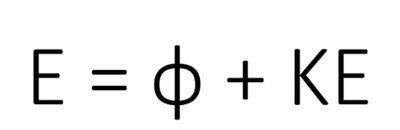
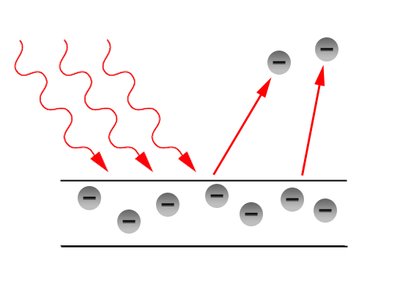
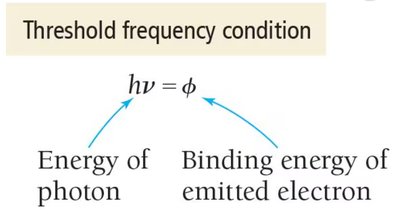
If the photon's energy is less than the work function, no electrons are emitted. If it is greater, the excess energy is transferred as kinetic energy to the electron.
Atomic Structure: Bohr Model and Spectroscopy
Energy Levels and Electron Transitions
Electrons in atoms occupy discrete energy levels. When an electron absorbs energy, it moves to a higher energy level (excitation). When it falls back to a lower energy level, it emits a photon of light (emission). The energy difference between levels determines the wavelength of the emitted or absorbed light.
Energy of hydrogen atom levels: J
Energy difference:
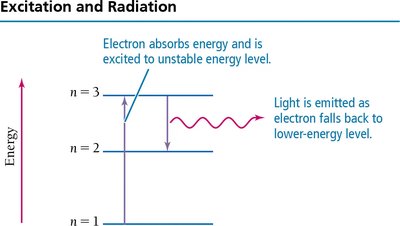
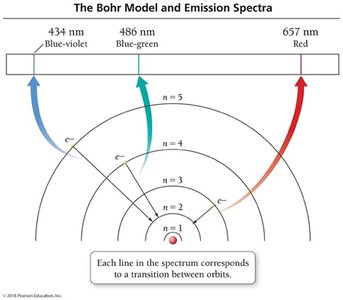
Each line in the emission spectrum corresponds to a transition between specific energy levels.
Hydrogen Atom Energy Levels
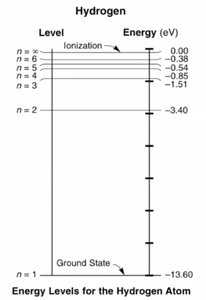
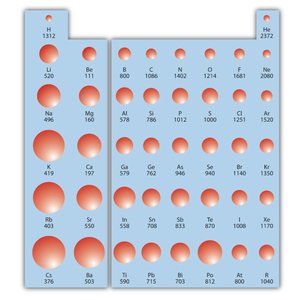
The energy levels of the hydrogen atom are quantized. The ground state is the lowest energy level (n=1), and higher values of n correspond to higher energy levels. The energy required to remove an electron from the ground state is called the ionization energy.
Quantum Numbers and Atomic Orbitals
Wave Functions and Quantum Numbers
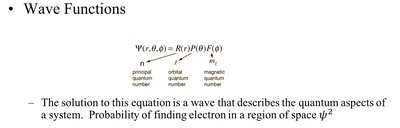
The quantum mechanical model describes electrons as wave functions (ψ), with the probability of finding an electron in a region of space given by . Four quantum numbers describe the properties of atomic orbitals:
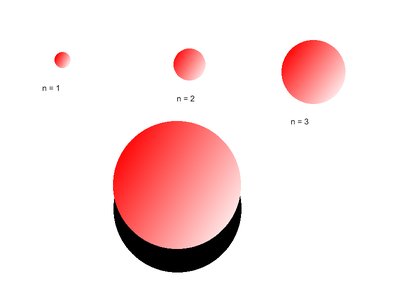
Principal quantum number (n): Energy level/shell (n = 1, 2, 3, ...)
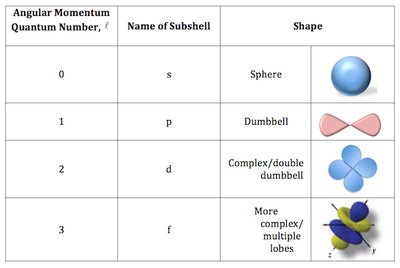
Angular momentum quantum number (l): Shape of the orbital (l = 0 to n-1)
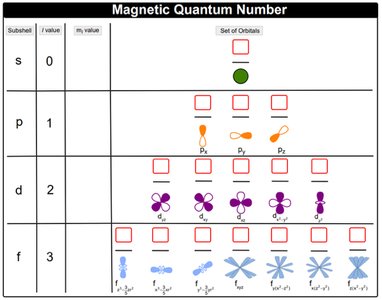
Magnetic quantum number (ml): Orientation of the orbital (ml = -l to +l)
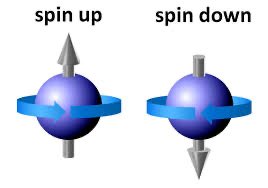
Spin quantum number (ms): Spin of the electron (+1/2 or -1/2)
Shapes and Sizes of Orbitals
The size of an orbital increases with increasing n. The shape is determined by l:
s orbitals (l=0): spherical
p orbitals (l=1): dumbbell-shaped
d orbitals (l=2): cloverleaf-shaped
f orbitals (l=3): complex shapes
Electron Configuration and the Periodic Table
Aufbau Principle, Pauli Exclusion Principle, and Hund's Rule
Electron configuration describes the arrangement of electrons in an atom. The Aufbau principle states that electrons fill the lowest energy orbitals first. The Pauli exclusion principle states that no two electrons in an atom can have the same set of four quantum numbers. Hund's rule states that electrons fill degenerate orbitals singly before pairing up.
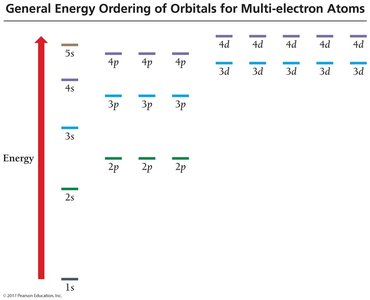
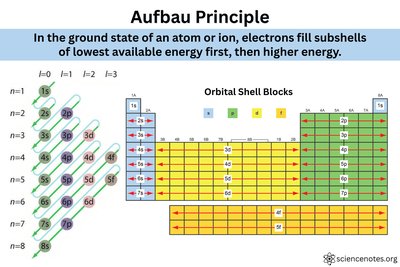
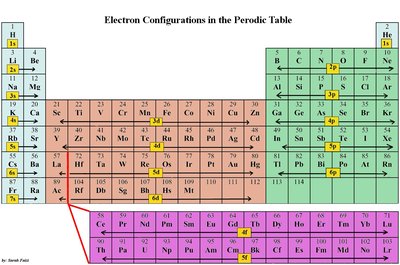
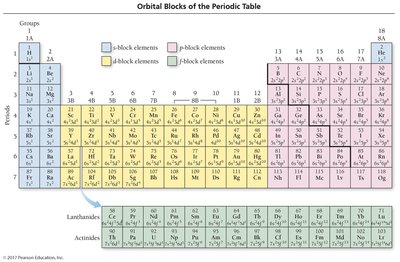
Periodic Table and Electron Configurations
The periodic table is organized by electron configurations. Elements in the same group have similar valence electron configurations, which explains their similar chemical properties.
Periodic Trends
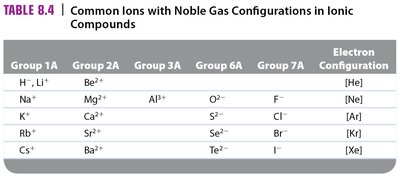
Atomic and Ionic Radii
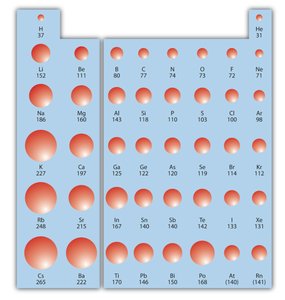
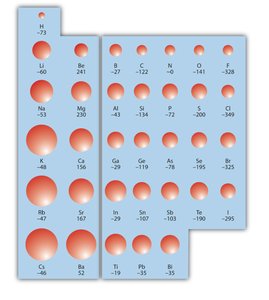
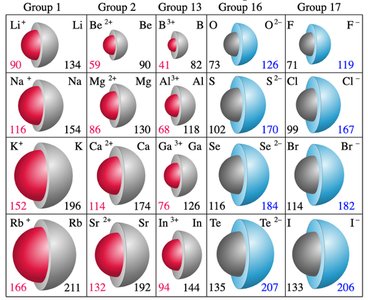
Atomic radius increases down a group and decreases across a period due to increasing nuclear charge. Ionic radius depends on the charge and electron configuration of the ion.
Chemical Bonding
Types of Chemical Bonds
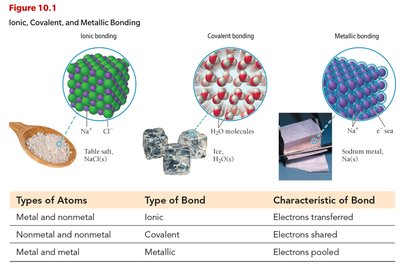
Chemical bonds are forces that hold atoms together. The main types are:
Ionic bonds: Transfer of electrons from metal to nonmetal, forming ions.
Covalent bonds: Sharing of electrons between nonmetals.
Metallic bonds: Pooling of electrons among metal atoms.
Lattice Energy and Coulomb's Law
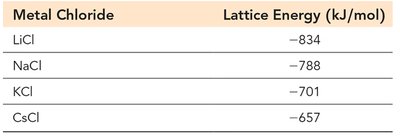
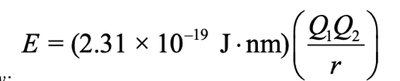
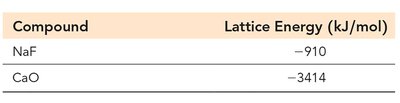
Lattice energy is the energy required to separate one mole of an ionic solid into gaseous ions. It is a measure of the strength of the ionic bond and can be estimated using Coulomb's Law:
Lattice energy increases with higher ion charge and decreases with larger ion radius.
Lewis Dot Structures and the Octet Rule
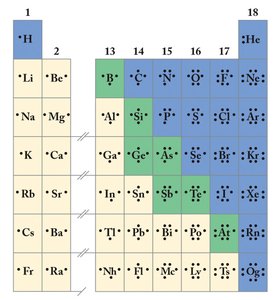
The Lewis model uses dots to represent valence electrons. Atoms tend to gain, lose, or share electrons to achieve a stable octet (eight valence electrons), similar to noble gases. Exceptions include hydrogen (stable with two electrons) and elements in period 3 and beyond, which can have expanded octets.
Bond Order, Bond Strength, and Bond Length
Bond order is the number of shared electron pairs between two atoms. Higher bond order means stronger and shorter bonds. Breaking bonds is endothermic (absorbs energy), while forming bonds is exothermic (releases energy).
VSEPR Theory and Molecular Geometry
Valence Shell Electron Pair Repulsion (VSEPR) Theory
VSEPR theory predicts the shapes of molecules based on the repulsion between electron groups (bonding and lone pairs) around a central atom. Electron groups arrange themselves as far apart as possible to minimize repulsion, determining the molecular geometry and bond angles.
Valence Bond Theory: Sigma and Pi Bonds
Hybridization and Bond Types
Valence Bond Theory explains covalent bonding as the overlap of atomic orbitals. Hybridization is the mixing of atomic orbitals to form new hybrid orbitals suitable for the pairing of electrons. The two main types of covalent bonds are:
Sigma (σ) bonds: Formed by head-on overlap of orbitals; all single bonds are sigma bonds.
Pi (π) bonds: Formed by side-by-side overlap of unhybridized p orbitals; present in double and triple bonds.
Molecular Polarity and Dipole Moments
Polar and Nonpolar Molecules
A molecule is polar if it has a net dipole moment, resulting from the vector sum of individual bond dipoles. Polarity depends on both the difference in electronegativity between atoms and the molecular geometry. Symmetrical molecules with polar bonds can be nonpolar if the dipoles cancel out.
Summary Table: Key Quantum Numbers
Quantum Number | Symbol | Allowed Values | Physical Meaning |
|---|---|---|---|
Principal | n | 1, 2, 3, ... | Energy level/shell |
Angular Momentum | l | 0 to n-1 | Orbital shape (s, p, d, f) |
Magnetic | ml | -l to +l | Orbital orientation |
Spin | ms | +1/2, -1/2 | Electron spin direction |
Summary Table: Types of Chemical Bonds
Type of Bond | Type of Atoms | Characteristic |
|---|---|---|
Ionic | Metal + Nonmetal | Electrons transferred |
Covalent | Nonmetal + Nonmetal | Electrons shared |
Metallic | Metal + Metal | Electrons pooled |
Additional info: This guide covers foundational quantum mechanics, atomic structure, periodic trends, and chemical bonding, providing a comprehensive overview for General Chemistry students preparing for exams.
