 뒤로
뒤로Liquids and Intermolecular Forces: Chapter 11 Study Guide
스터디 가이드 - 스마트 노트
 자료에 맞춘 맞춤형 노트, 핵심 정의, 예시, 맥락을 확장해 제공합니다.
Liquids and Intermolecular Forces
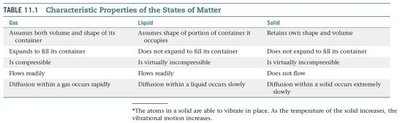
States of Matter and Their Properties
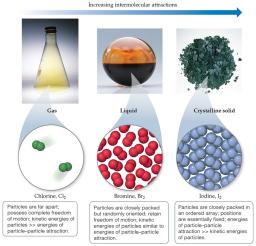
The three primary states of matter—gas, liquid, and solid—are distinguished by their physical properties and the strength of intermolecular forces. These forces determine how particles interact and arrange themselves in each state.
Gas: Assumes both the volume and shape of its container, is compressible, flows easily, and diffuses rapidly.
Liquid: Assumes the shape of the portion of the container it occupies, is virtually incompressible, flows readily, and diffuses slowly.
Solid: Retains its own shape and volume, is virtually incompressible, does not flow, and diffuses extremely slowly.
Intermolecular vs Intramolecular Forces
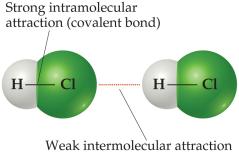
Intermolecular forces are the attractions between molecules, while intramolecular forces (bonds) hold atoms together within a molecule. Intermolecular forces are generally much weaker than intramolecular forces, but they significantly affect physical properties such as boiling and melting points, viscosity, surface tension, and capillary action.
Intramolecular Forces: Include ionic, covalent, and metallic bonds.
Intermolecular Forces: Include dispersion forces, dipole-dipole interactions, hydrogen bonding, and ion-dipole forces.
Types of Intermolecular Forces
Intermolecular forces vary in strength and arise from different types of interactions:
Dispersion Forces (London Forces): Present in all molecules, especially nonpolar ones. Caused by temporary dipoles due to electron movement.
Dipole-Dipole Forces: Occur between polar molecules with permanent dipoles.
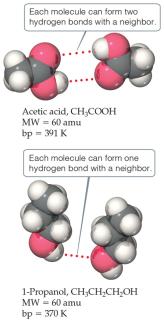
Hydrogen Bonding: A special, strong type of dipole-dipole interaction involving H bonded to N, O, or F.
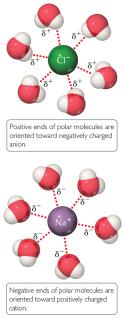
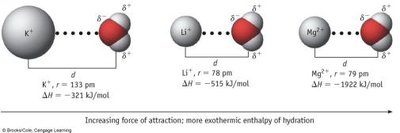
Ion-Dipole Forces: Occur between ions and polar molecules, important in solutions.
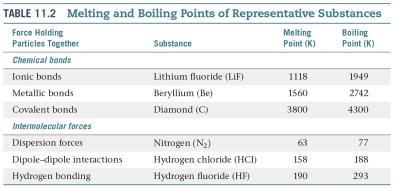
Dispersion Forces (London Forces)
Dispersion forces arise from temporary fluctuations in electron distribution, creating instantaneous dipoles. These forces increase with molecular size and mass, and are the only intermolecular forces present in nonpolar molecules.
Polarizability: The ease with which the electron cloud can be distorted, increasing with molecular size.
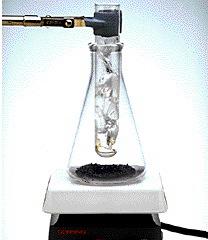
Example: Iodine (I2) molecules exhibit weak dispersion forces, leading to sublimation rather than melting.
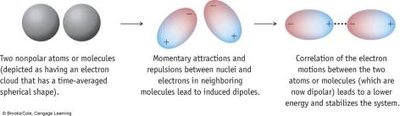
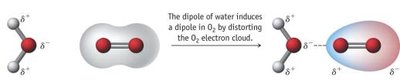
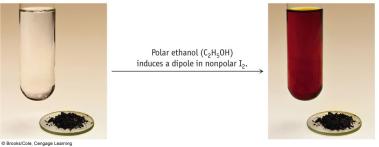
Dipole-Dipole Forces
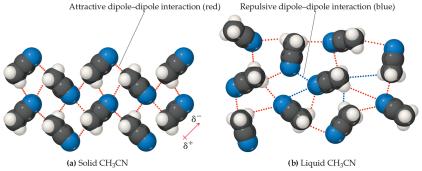
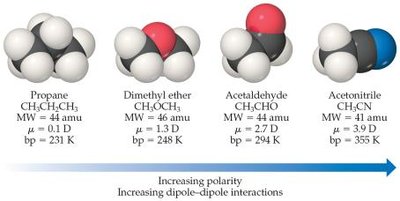
Dipole-dipole forces occur between polar molecules, where the positive end of one molecule attracts the negative end of another. The strength of these forces depends on the polarity and proximity of the molecules.
Boiling Point: For molecules of similar mass, higher polarity leads to higher boiling points.
Example: Hydrogen chloride (HCl) exhibits dipole-dipole interactions.
Hydrogen Bonding
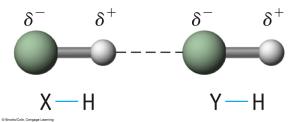
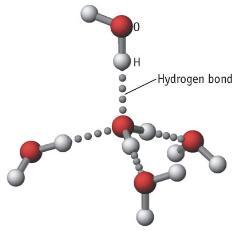
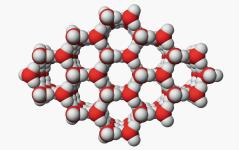
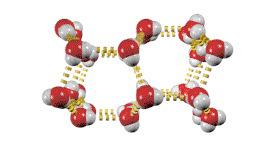
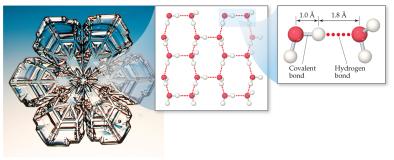
Hydrogen bonding is a particularly strong type of dipole-dipole interaction, occurring when hydrogen is bonded to highly electronegative atoms (N, O, or F). This results in unique properties, especially in water.
Requirements: H must be bonded to N, O, or F, and interact with a lone pair on another N, O, or F atom.
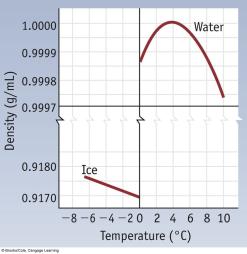
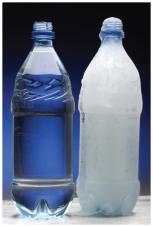
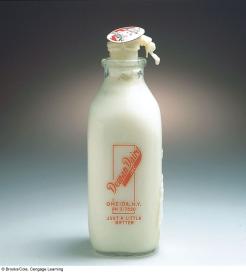
Effects: High boiling and melting points, high specific heat capacity, and lower density of ice compared to liquid water.
Example: Water (H2O) and hydrogen fluoride (HF) exhibit strong hydrogen bonding.



Ion-Dipole Forces
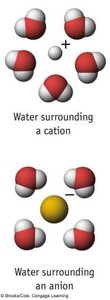
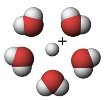
Ion-dipole forces are important in solutions where ions interact with polar molecules, such as water. These forces enable ionic compounds to dissolve in polar solvents.
Strength: Depends on the charge and size of the ion and the dipole moment of the solvent.
Example: Sodium chloride (NaCl) dissolving in water.
Summary Table of Intermolecular Forces
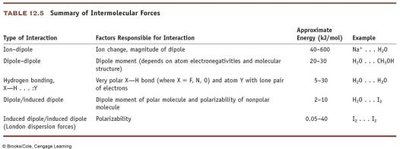
The following table summarizes the types, factors, and energies of intermolecular forces:
Type of Interaction | Factors Responsible | Approximate Energy (kJ/mol) | Example |
|---|---|---|---|
Ion-dipole | Ion charge, magnitude of dipole | 40–600 | Na+ in H2O |
Dipole-dipole | Dipole moment | 20–80 | CH3OH |
Hydrogen bonding | Very polar X–H bond (X = F, N, O) | 5–30 | H2O |
Dipole-induced dipole | Dipole moment of polar molecule | 2–10 | H2O, I2 |
Induced dipole-induced dipole | Polarizability | 0.05–40 | I2, Ar |
Physical Properties Affected by Intermolecular Forces
Intermolecular forces influence several key properties of liquids:
Boiling Point: Higher IM forces lead to higher boiling points.
Melting Point: Higher IM forces lead to higher melting points.
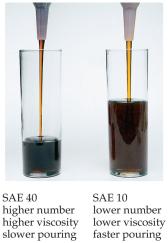
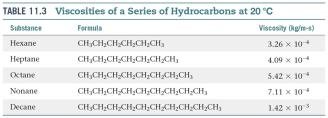
Viscosity: Resistance to flow; higher IM forces increase viscosity.
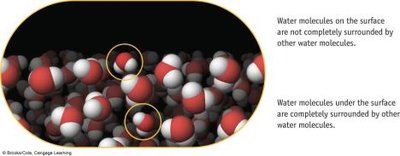
Surface Tension: Energy required to break surface attraction; higher IM forces increase surface tension.
Capillary Action: Movement of liquid in narrow spaces due to IM forces.
Phase Changes and Energy
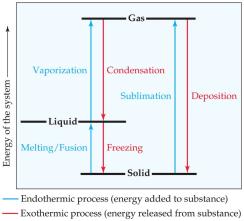
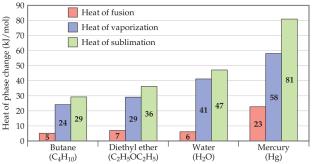
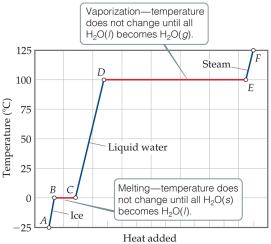
Phase changes involve the conversion between states of matter, requiring energy input or release. The main phase changes are melting, freezing, vaporization, condensation, sublimation, and deposition.
Heat of Fusion (ΔHfus): Energy required to melt a solid.
Heat of Vaporization (ΔHvap): Energy required to vaporize a liquid.
Heat of Sublimation (ΔHsub): Energy required to sublime a solid.
Vapor Pressure and Boiling Point
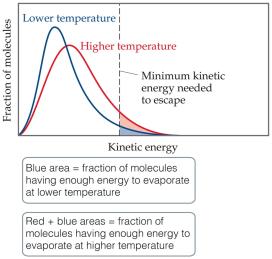
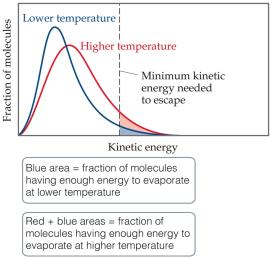
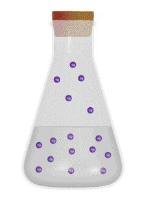
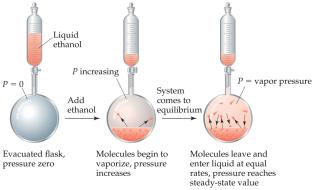
Vapor pressure is the pressure exerted by a vapor in equilibrium with its liquid. The boiling point is the temperature at which vapor pressure equals atmospheric pressure. Intermolecular forces strongly influence vapor pressure and boiling point.
Equilibrium Vapor Pressure: Achieved when the rate of evaporation equals the rate of condensation.
Normal Boiling Point: The boiling point at 1 atm (760 torr).
Clausius–Clapeyron Equation
The Clausius–Clapeyron equation relates vapor pressure and temperature, allowing calculation of the enthalpy of vaporization:
Equation:
Variables: = vapor pressure, = enthalpy of vaporization, = gas constant, = temperature in Kelvin, = constant.
Applications: Used to determine or predict vapor pressure at different temperatures.
Phase Diagrams
Phase diagrams graphically represent the states of matter under varying temperature and pressure, showing regions of solid, liquid, and gas, as well as the triple point and critical point.
Triple Point: The unique set of conditions where all three phases coexist.
Critical Point: The temperature and pressure above which a gas cannot be liquefied.
Supercritical Fluid: Exists above the critical point, with properties of both liquids and gases.
Liquid Crystals (FYI Only)
Liquid crystals are intermediate phases between solid and liquid, exhibiting some order and unique properties. Types include nematic, smectic, and cholesteric liquid crystals.
Summary Table: Types of Intermolecular Interactions
Type of Interaction | Atoms | Nonpolar Molecules | Polar Molecules (no OH, NH, HF) | Polar Molecules (with OH, NH, HF) | Ionic Solids in Polar Liquids |
|---|---|---|---|---|---|
Dispersion Forces | ✓ | ✓ | ✓ | ✓ | |
Dipole-Dipole | ✓ | ✓ | |||
Hydrogen Bonding | ✓ | ||||
Ion-Dipole | ✓ |
Additional info: The notes above expand on the original content by providing definitions, examples, and academic context for each type of intermolecular force and their effects on physical properties. All included images directly reinforce the explanations and tables provided.
