뒤로
뒤로Mass Relationships in Chemical Reactions: Atomic Mass, Mole Concept, and Stoichiometry
스터디 가이드 - 스마트 노트
 자료에 맞춘 맞춤형 노트, 핵심 정의, 예시, 맥락을 확장해 제공합니다.
Mass Relationships in Chemical Reactions
Atomic Mass and Atomic Mass Unit (amu)
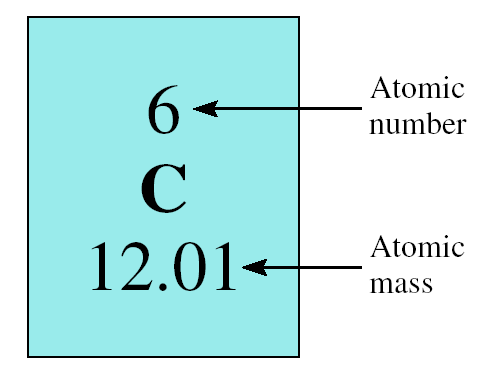
The atomic mass unit (amu) is a standard unit for expressing the mass of atoms and molecules. It is defined as exactly 1/12 the mass of a carbon-12 (12C) atom. Atomic mass is the mass of an atom in amu, and is often found on the periodic table.
Definition: 1 amu = 1.66 × 10⁻²⁴ g
Example: The atomic mass of oxygen (16O) is 16.00 amu.
Application: Atomic mass is used to calculate molar mass and to relate microscopic and macroscopic quantities.
Average Atomic Mass and Isotopes
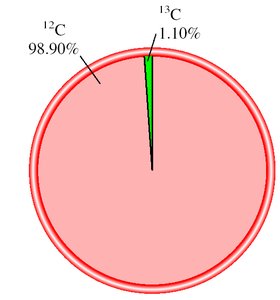
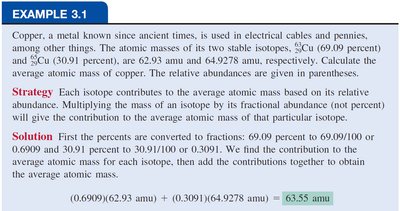
The average atomic mass of an element is the weighted average of the masses of its naturally occurring isotopes. Each isotope's contribution is based on its fractional abundance.
Formula:
Example: For carbon: amu
The Mole and Avogadro's Number
The mole (mol) is a fundamental unit in chemistry for counting particles. One mole contains Avogadro's number () of entities, which is .
Definition: 1 mol = particles
Application: Used to relate mass, number of particles, and volume in chemical calculations.

Molar Mass
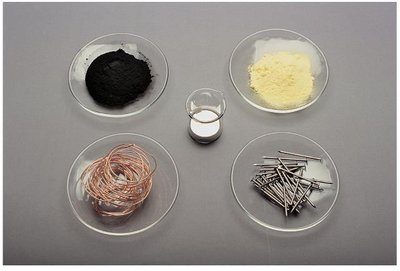
Molar mass is the mass of one mole of a substance, expressed in grams per mole (g/mol). For elements, the molar mass is numerically equal to the atomic mass in amu.
Formula: in grams per mole
Example: 1 mol of carbon-12 = 12.00 g
Conversions Between Mass, Moles, and Atoms
To convert between mass, moles, and number of atoms, use the molar mass and Avogadro's number as conversion factors.
Mass to moles:
Moles to atoms:
Example: How many atoms are in 0.551 g of potassium (K)?

Molecular Mass and Formula Mass
Molecular mass (or molecular weight) is the sum of the atomic masses in a molecule. Formula mass is the sum of atomic masses in a formula unit of an ionic compound.
Formula:
Example: SO2: amu
Formula mass for NaCl: amu


Percent Composition
Percent composition expresses the mass percent of each element in a compound.
Formula:
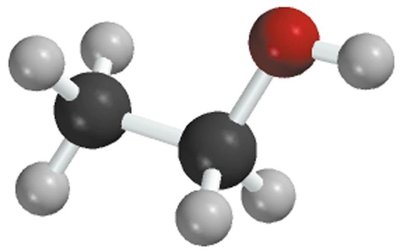
Example: For C2H6O: %C = 52.14%, %H = 13.13%, %O = 34.73%
Empirical and Molecular Formulas
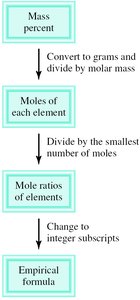
The empirical formula is the simplest whole-number ratio of elements in a compound. The molecular formula is a multiple of the empirical formula, based on the compound's molar mass.
Steps to determine empirical formula:
Convert mass percent to grams.
Divide by molar mass to get moles.
Divide by the smallest number of moles.
Change to integer subscripts.
Example: KMnO4 from percent composition.
Stoichiometry and Chemical Equations
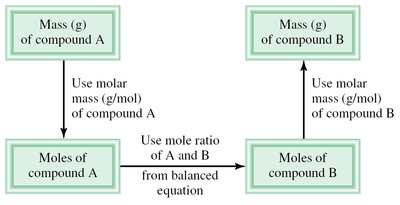
Stoichiometry is the calculation of reactants and products in chemical reactions using balanced chemical equations.
Steps:
Write balanced chemical equation.
Convert known quantities to moles.
Use coefficients to find moles of sought quantity.
Convert moles to desired units.
Example: Combustion of methanol: 209 g CH3OH produces 235 g H2O.
Limiting Reagent and Reaction Yield
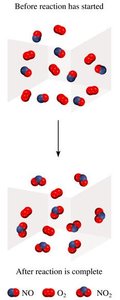
The limiting reagent is the reactant that is completely consumed first, limiting the amount of product formed. Theoretical yield is the maximum possible product, while actual yield is what is obtained experimentally. Percent yield compares actual to theoretical yield.
Formula:
Example: If 803 g CaO is produced, % yield = 33.8%.
Worked Examples and Applications
Numerous worked examples illustrate the application of mass relationships, mole concept, and stoichiometry in real-world and laboratory settings.
Example: Calculation of moles, atoms, empirical and molecular formulas, and percent composition for various compounds.
Application: Used in industrial processes, laboratory analysis, and chemical manufacturing.