 뒤로
뒤로CHEM 131 Chapter 3: Molecules and Compounds: Structure, Nomenclature, and Calculations
스터디 가이드 - 스마트 노트
 자료에 맞춘 맞춤형 노트, 핵심 정의, 예시, 맥락을 확장해 제공합니다.
Chapter 3: Molecules and Compounds
Introduction to Molecules and Compounds
Molecules and compounds are foundational concepts in chemistry, describing how atoms combine to form substances with unique properties. Understanding their structure, types of bonding, and nomenclature is essential for mastering chemical language and calculations.
Types of Chemical Bonds
Ionic, Covalent, and Metallic Bonds
Ionic Bonds: Formed between metals and nonmetals through the transfer of electrons, resulting in cations and anions held together by electrostatic forces.
Covalent Bonds: Formed between nonmetals by sharing electrons, resulting in discrete molecules.
Metallic Bonds: Involve a 'sea' of delocalized electrons shared among a lattice of metal atoms.
Classification of Elements and Compounds
Atomic and Molecular Elements; Molecular and Ionic Compounds
Elements can exist as single atoms (atomic elements) or as molecules (molecular elements). Compounds can be molecular (composed of molecules) or ionic (composed of ions).
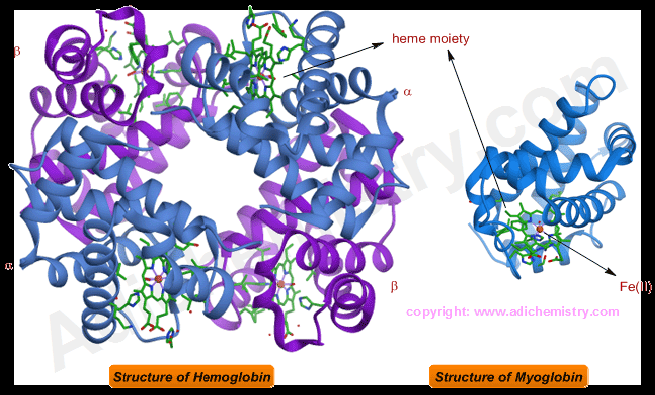
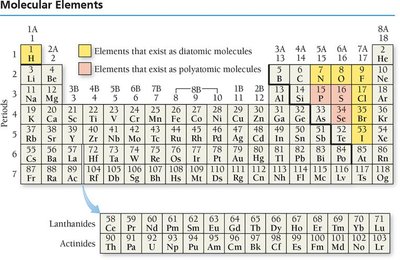
Molecular Elements
Some elements exist naturally as molecules rather than single atoms. The most common diatomic elements are H2, N2, O2, F2, Cl2, Br2, and I2.
Representing Compounds
Chemical Formulas and Molecular Models
Empirical Formula: Simplest whole-number ratio of elements in a compound (e.g., CH for benzene).
Molecular Formula: Actual number of atoms of each element in a molecule (e.g., C6H6 for benzene).
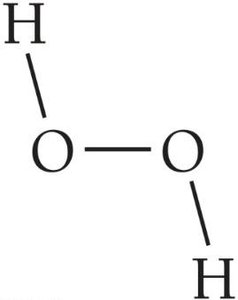
Structural Formula: Shows how atoms are connected.
Molecular Models: Ball-and-stick and space-filling models provide 3D representations of molecules.
Nomenclature of Inorganic Compounds
Overview of Inorganic Nomenclature
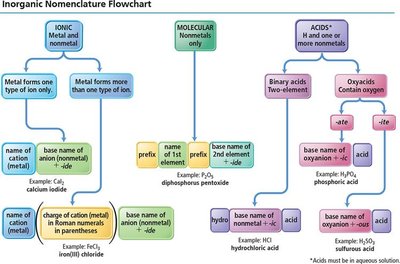
Naming inorganic compounds follows systematic rules based on the types of elements and ions present. The process distinguishes between ionic, molecular, and acid compounds.
Naming Ionic Compounds
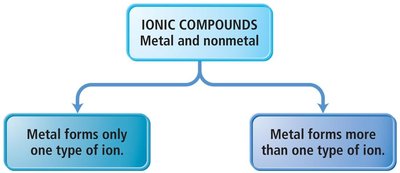
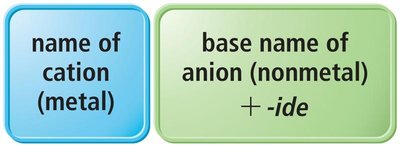
Type I (Invariant Charge): Metal forms only one type of ion. Name = cation name + base name of anion + -ide (e.g., NaCl: sodium chloride).
Type II (Variable Charge): Metal forms more than one type of ion. Name = cation name + (charge in Roman numerals) + base name of anion + -ide (e.g., FeCl2: iron(II) chloride).
Naming Compounds with Polyatomic Ions
Polyatomic ions are charged groups of covalently bonded atoms. Their names are used directly in compound names (e.g., NaNO3: sodium nitrate).
Naming Molecular (Covalent) Compounds
Composed of two or more nonmetals.
Prefixes indicate the number of each atom (mono-, di-, tri-, etc.).
The first element is named fully; the second element uses the base name + -ide.
Example: P2O5 is diphosphorus pentoxide.
Nomenclature of Acids
Binary Acids
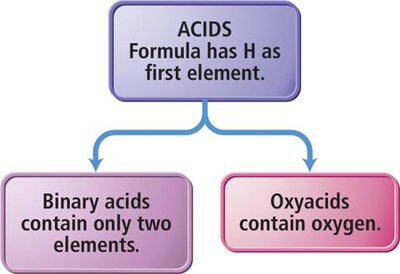
Binary acids consist of hydrogen and one other nonmetal. Naming: hydro- + base name of nonmetal + -ic + acid (e.g., HCl: hydrochloric acid).
Oxyacids
Oxyacids contain hydrogen, oxygen, and another element (usually a nonmetal). Naming depends on the polyatomic ion:
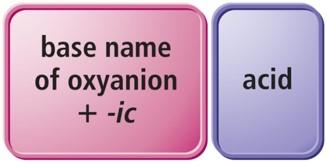
If the ion ends in -ate: base name + -ic + acid (e.g., H2SO4: sulfuric acid).
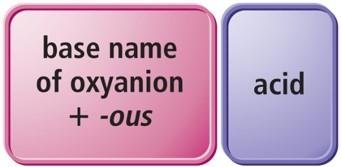
If the ion ends in -ite: base name + -ous + acid (e.g., H2SO3: sulfurous acid).
Families of Organic Compounds
Functional Groups and Examples
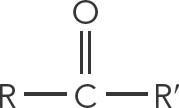
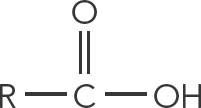
Organic compounds are classified by functional groups, which determine their chemical properties and reactivity. Each family has a characteristic structure and naming convention.
Family | General Formula | Example Name | Occurrence/Use |
|---|---|---|---|
Alcohols | R-OH | Ethanol | Alcohol in beverages |
Ethers | R-O-R' | Diethyl ether | Laboratory solvent |
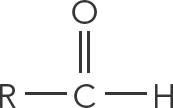
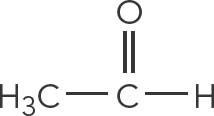
Aldehydes | R-CHO | Ethanal | Perfumes, flavors |
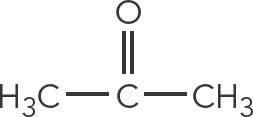
Ketones | R-CO-R' | Propanone | Nail polish remover |
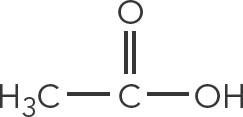
Carboxylic acids | R-COOH | Acetic acid | Vinegar |
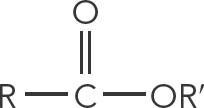
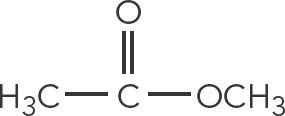
Esters | R-COOR' | Methyl acetate | Solvent |
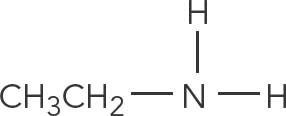
Amines | R-NH2 | Ethyl amine | Odor of fish |
Calculations Involving Compounds
Formula Mass and Molar Mass
Formula Mass: Sum of atomic masses of all atoms in a chemical formula (in amu).
Molar Mass: Mass of one mole of a compound (in g/mol), numerically equal to formula mass in amu.
Example: For glucose (C6H12O6): amu
Percent Composition by Mass
The percent composition of an element in a compound is calculated as:
Empirical and Molecular Formulas
Empirical Formula: Simplest whole-number ratio of atoms in a compound.
Molecular Formula: Actual number of atoms; a whole-number multiple of the empirical formula.
Relationship:
Combustion Analysis
Combustion analysis is used to determine the empirical formula of organic compounds by burning a known mass and measuring the products (CO2 and H2O).
Hydrocarbons and Functionalized Hydrocarbons
Hydrocarbons
Hydrocarbons are organic compounds containing only carbon and hydrogen. They are classified as alkanes (single bonds), alkenes (double bonds), and alkynes (triple bonds).
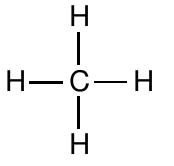
Methane (CH4): Main component of natural gas.
Propane (C3H8): Used as LP gas for grills.
Ethene (C2H4): Ripening agent in fruit.
Ethyne (C2H2): Used in welding torches.
Functionalized Hydrocarbons
Hydrocarbons containing additional atoms or groups (functional groups) that impart specific chemical properties. Examples include alcohols, ethers, aldehydes, ketones, carboxylic acids, esters, and amines.
Summary Table: Prefixes for Naming Compounds
Number | Prefix |
|---|---|
1 | mono- |
2 | di- |
3 | tri- |
4 | tetra- |
5 | penta- |
6 | hexa- |
7 | hepta- |
8 | octa- |
9 | nona- |
10 | deca- |
Additional info: Mastery of nomenclature and formula calculations is essential for success in general chemistry, as these skills are foundational for understanding chemical reactions, stoichiometry, and laboratory analysis.
