 뒤로
뒤로Periodic Patterns in the Main-Group Elements: Hydrogen, Groups 1A–4A, and Periodic Trends
스터디 가이드 - 스마트 노트
 자료에 맞춘 맞춤형 노트, 핵심 정의, 예시, 맥락을 확장해 제공합니다.
Periodic Patterns in the Main-Group Elements
Introduction to Periodic Trends
The main-group elements (Groups 1A to 8A) display systematic trends in their physical and chemical properties across periods and down groups. Understanding these trends is essential for predicting element behavior and reactivity in chemical reactions.
Hydrogen: The Simplest Atom
Structure and Properties of Hydrogen
Atomic Structure: Hydrogen consists of a single proton (nucleus) and one electron.
Abundance: It is the most abundant element in the universe, commonly found as H2 gas and in water (H2O).
Physical Properties: H2 is a colorless, odorless diatomic gas with very low melting and boiling points.
Hydrogen's Position in the Periodic Table
Hydrogen's placement is unique; it shares some properties with Groups 1A, 4A, and 7A but does not fit perfectly into any group.
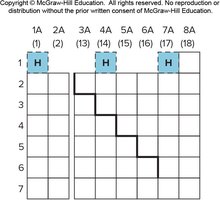
Hydrogen Compared to Other Groups
Group 1A (Alkali Metals): Like alkali metals, hydrogen has an ns1 configuration and a +1 oxidation state, but it shares electrons rather than transferring them and has a much higher ionization energy.
Group 4A: Hydrogen has a half-filled valence shell and similar ionization energy, electron affinity, and bond energies to Group 4A elements.
Group 7A (Halogens): Like halogens, hydrogen forms diatomic molecules and needs one electron to fill its shell, but it has lower electronegativity and lacks lone pairs.
Hydrides: Ionic, Covalent, and Metallic
Ionic Hydrides: Formed with reactive metals (e.g., LiH, CaH2), these are white, crystalline solids.
Covalent Hydrides: Formed with nonmetals (e.g., HF), hydrogen typically has a +1 oxidation state.
Metallic (Interstitial) Hydrides: Hydrogen atoms occupy spaces in metal lattices, common with transition metals.
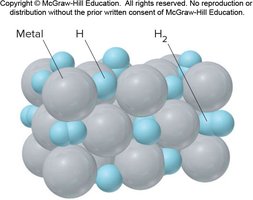
Trends Across Period 2 Elements
General Trends
Atomic Size: Decreases from left to right across the period.
Ionization Energy & Electronegativity: Both increase across the period.
Metallic Character: Decreases across the period; elements become less metallic and more nonmetallic.
Bonding: Changes from metallic to covalent to ionic as metallic character decreases.
Oxide Acidity: Increases across the period.
Reducing/Oxidizing Strength: Reducing strength decreases, oxidizing strength increases across the period.
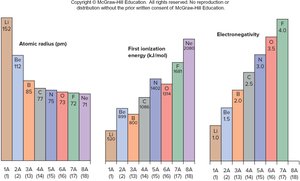
Anomalous Behavior in Period 2
Lithium: Only Period 2 element forming simple oxide and nitride.
Beryllium: All compounds are covalent; Be2+ does not exist as a discrete ion.
Boron: Forms complex compounds with metals and covalent hydrides (boranes).
Carbon: Bonds to itself extensively, forming the basis of organic chemistry.
Nitrogen: Exists as a triple-bonded, unreactive gas, unlike other Group 5A elements.
Oxygen: Only gas in Group 6A, highly reactive.
Fluorine: Most electronegative element, reacts violently with water.
Group 1A(1): The Alkali Metals
Properties of Alkali Metals
Atomic Structure: ns1 valence configuration; largest elements in their periods.
Physical Properties: Soft, low melting and boiling points, low densities.
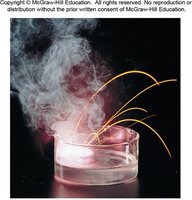
Chemical Properties: Highly reactive, strong reducing agents, always found as +1 cations in nature.
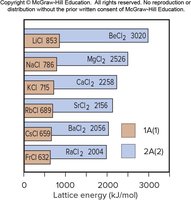
Lattice Energies of Alkali and Alkaline Earth Metal Chlorides
Lattice energy increases as cation size decreases and charge increases. This affects the stability and melting points of ionic compounds.
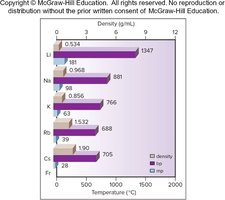
Trends in Density and Melting Points
Alkali metals have lower densities and melting points compared to other metals. These properties decrease down the group.
Reactivity and Reactions
React with halogens to form ionic solids:
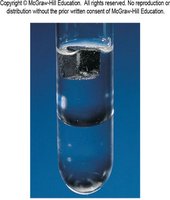
React vigorously with water:
Reduce hydrogen to form hydrides:
React with oxygen and tarnish rapidly.
Group 2A(2): The Alkaline Earth Metals
Properties of Alkaline Earth Metals
Atomic Structure: ns2 valence configuration; higher ionization energies than alkali metals.
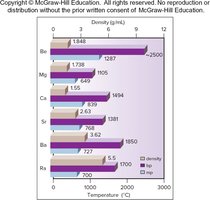
Physical Properties: Harder, higher melting points, and denser than alkali metals.
Chemical Properties: Strong reducing agents, form basic oxides.
Reactivity and Reactions
Form oxides with oxygen:
Larger metals react with water:
Form halides:
Form hydrides:
Form nitrides:
Oxides are basic (except BeO):
Carbonates decompose thermally:
Diagonal Relationships in the Periodic Table
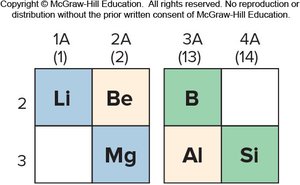
Diagonal relationships occur between certain pairs of elements in adjacent groups and periods, such as Li/Mg, Be/Al, and B/Si. These pairs often display similar properties due to comparable charge densities and atomic sizes.
Group 3A(13): The Boron Family
Trends and Features
Oxidation States: Larger elements exhibit multiple oxidation states due to the inert pair effect.
Covalency: Compounds have more covalent character compared to Group 2A compounds.
Oxide Acidity: Lower oxidation state oxides are more basic.
Boron Chemistry
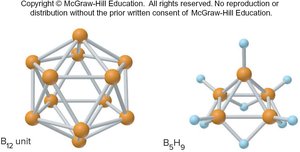
All boron compounds are covalent; boron is often electron-deficient and acts as a Lewis acid.
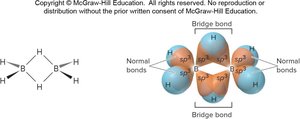
Boron forms bridge bonds (three-center, two-electron bonds), especially in boranes.
Reactivity of Group 3A Elements
React sluggishly with water; form oxides when heated in O2.
Reduce halogens to form halides.
Group 4A(14): The Carbon Family
Allotropes
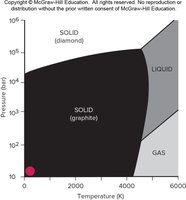
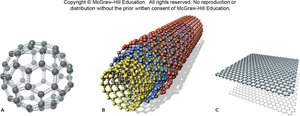
Allotropes are different forms of the same element. Carbon has several allotropes, including graphite, diamond, and fullerenes, each with unique structures and properties.
Bonding and Oxidation States
Carbon forms mainly covalent bonds; heavier group members form more ionic bonds.
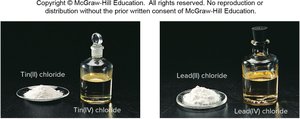
Multiple oxidation states are possible; lower states are more prominent down the group.
Pb and Sn show metallic character in lower oxidation states.
Organic and Inorganic Compounds of Carbon
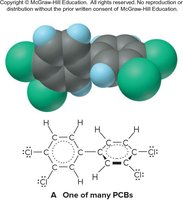
Organic Chemistry: Carbon's ability to catenate (form chains, rings, and branches) leads to millions of organic compounds.
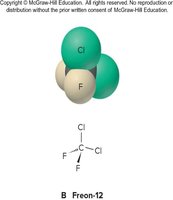
Inorganic Compounds: Includes carbonates (e.g., CaCO3), oxides (CO, CO2), and halides.
Silicon Chemistry
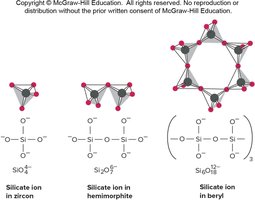
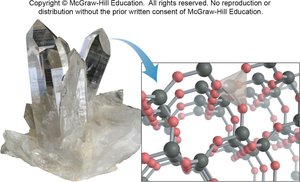
Silicon forms strong bonds with oxygen, creating silicates and silicones.
Silicate minerals are abundant in Earth's crust; silicones are synthetic polymers with diverse uses.
Reactivity of Group 4A Elements
Oxidized by halogens and oxygen to form tetrahalides and dioxides, respectively.
Lower oxidation state halides are more stable for Sn and Pb.
Oxides become more basic down the group.
Hydrocarbons combust in oxygen to form CO2 and H2O.
Silica can be reduced to elemental silicon.
