 뒤로
뒤로Real Gases and the van der Waals Equation: Mini-Textbook Study Notes
스터디 가이드 - 스마트 노트
 자료에 맞춘 맞춤형 노트, 핵심 정의, 예시, 맥락을 확장해 제공합니다.
Real Gases
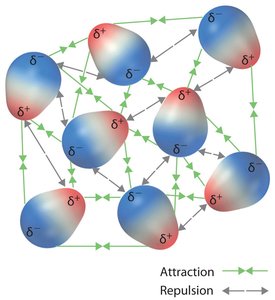
Molecular Interactions
Real gases differ from ideal gases due to the presence of intermolecular forces and the finite volume occupied by gas molecules. These interactions include attractive and repulsive forces, which affect the physical properties and behavior of gases, especially under high pressure and low temperature conditions.
Attractive Forces: These forces (such as dispersion, dipole-dipole, and hydrogen bonding) tend to hold molecules together, reducing the pressure exerted by the gas.
Repulsive Forces: When molecules are very close, repulsive forces dominate, preventing them from occupying the same space.
Finite Molecular Volume: Real gas molecules occupy a measurable volume, unlike the point particles assumed in ideal gas models.
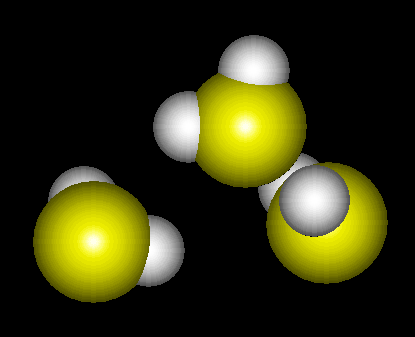
Example: Hydrogen bonding in H2S(g) is a significant intermolecular force affecting its behavior.

Comparison: Perfect (Ideal) Gas vs Real Gas
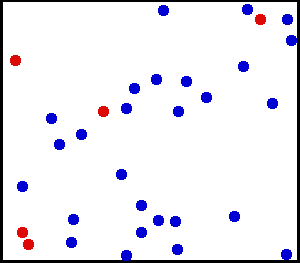
The ideal gas model assumes no intermolecular forces and point particles, which is only accurate at low pressure and high temperature. Real gases deviate from this behavior, especially under extreme conditions.
Perfect Gas Equation:
Assumptions: No attractive or repulsive forces, point particles.
Real Gas: Deviations occur due to molecular interactions and finite volume.
Applications: Accurate modeling is crucial for industrial processes and chemical reactors.
The van der Waals Equation
Origins and Empirical Adjustments
The van der Waals equation modifies the ideal gas law to account for real gas behavior by introducing two empirically determined constants: a (attractive forces) and b (volume occupied by molecules).
Volume Correction: The term b adjusts for the finite volume of gas molecules.
Pressure Correction: The term a adjusts for intermolecular attractions, which reduce the observed pressure.
Equation for 1 mole:
General Equation:
Parameters: a and b are experimentally determined and vary for different gases.

Using the van der Waals Equation
To calculate the pressure of a real gas, the van der Waals equation is used with the appropriate constants for the gas in question. This provides a more accurate value than the ideal gas law, especially at high pressures and low volumes.
Example: For hydrogen sulphide (H2S), the van der Waals constants are: a = 4.484 atm dm6 mol−2, b = 4.34 × 10⁻² dm3 mol−1.
Calculation: Compare the pressure at 500 K in 150 cm3 using both the ideal and van der Waals equations.
Relative Error:

van der Waals Coefficients Table
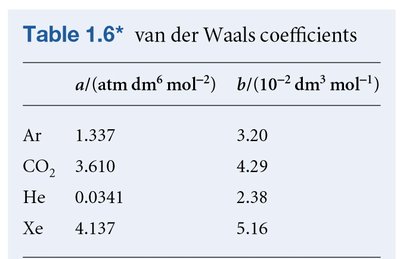
The van der Waals coefficients for various gases are tabulated for reference. These values are essential for accurate calculations in physical chemistry.
Gas | a (atm dm6 mol−2) | b (10−2 dm3 mol−1) |
|---|---|---|
Ar | 1.337 | 3.20 |
CO2 | 3.610 | 4.29 |
He | 0.0341 | 2.38 |
Xe | 4.137 | 5.16 |

Condensation of Real Gases
Phase Changes and Industrial Applications
Real gases condense into liquids upon cooling, a process utilized in industrial applications such as the storage and transport of liquid nitrogen. The expansion of nitrogen from liquid to gas is significant, with a volume increase of about 700 times.
Example: Liquid nitrogen at −196 °C expands rapidly when exposed to boiling water at 100 °C.
Application: Used in laboratories and industry for cooling and storage.



Summary Table: Ideal vs Real Gas Behavior
Condition | Perfect Gas Pressure (atm) | Real Gas Pressure (atm) | Relative Error (%) |
|---|---|---|---|
273.15 K in 22.414 dm3 | 1.00 | 0.99 | 1 |
500 K in 150 cm3 | 273.5 | 185.6 | 32 |

Additional info:
Self-study of the First and Second Laws of Thermodynamics and Chemical Thermodynamics is recommended for deeper understanding (see Atkins, 10th ed, Chapters 1-3).
Compressibility factor (Z) and fugacity are additional methods for modeling real gas behavior, but are not detailed in these notes.
