 뒤로
뒤로Valence Bond Theory, Hybridization, and Molecular Geometry
스터디 가이드 - 스마트 노트
 자료에 맞춘 맞춤형 노트, 핵심 정의, 예시, 맥락을 확장해 제공합니다.
Valence Bond Theory and Molecular Geometry
Introduction to Valence Bond Theory (VBT)
Valence Bond Theory (VBT) explains how atomic orbitals combine to form chemical bonds in molecules. It provides a quantum mechanical description of bonding, supplementing the Lewis structure approach by describing the spatial orientation and overlap of atomic orbitals.
Atomic Orbitals: Regions in an atom where electrons are likely to be found. Common types include s, p, d, and f orbitals.
Bond Formation: Bonds form when atomic orbitals on adjacent atoms overlap, allowing electrons to be shared or transferred.
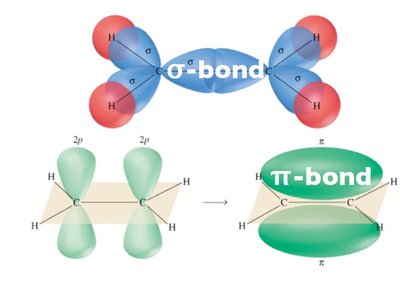
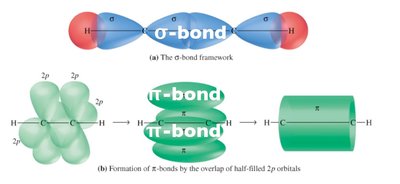
Types of Overlap: σ (sigma) bonds result from head-on overlap, while π (pi) bonds result from sidewise overlap.
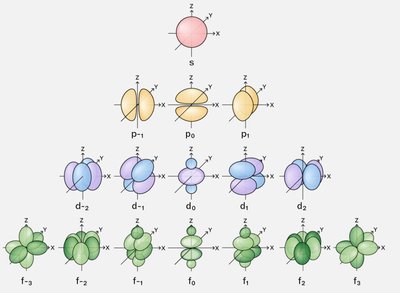
Hybridization of Atomic Orbitals
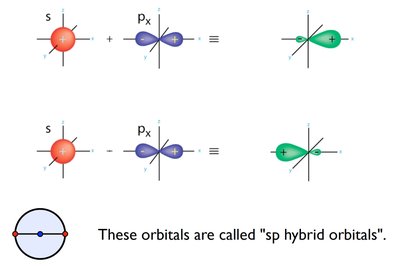
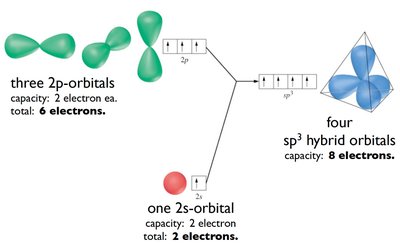
Hybridization is the process by which atomic orbitals mix to form new, equivalent hybrid orbitals that are oriented to maximize bonding and explain observed molecular geometries.
sp Hybridization: Mixing one s and one p orbital forms two sp hybrid orbitals, arranged linearly (180° apart).
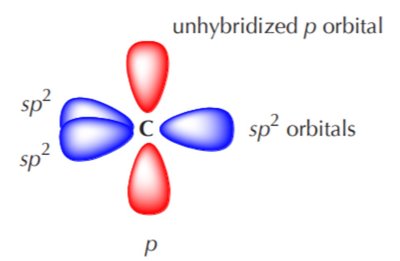
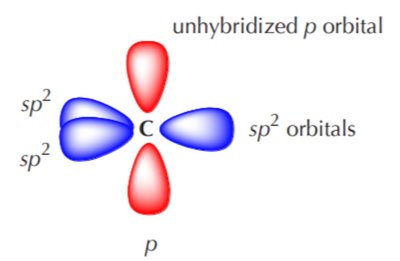
sp2 Hybridization: Mixing one s and two p orbitals forms three sp2 hybrid orbitals, arranged trigonal planar (120° apart).
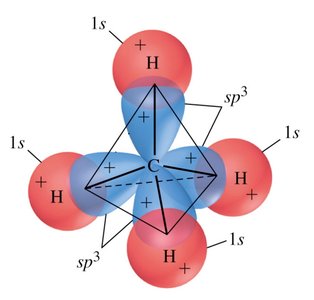
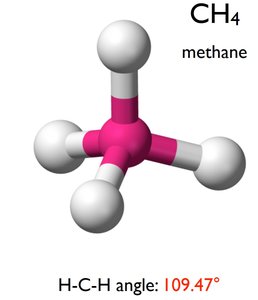
sp3 Hybridization: Mixing one s and three p orbitals forms four sp3 hybrid orbitals, arranged tetrahedrally (109.5° apart).
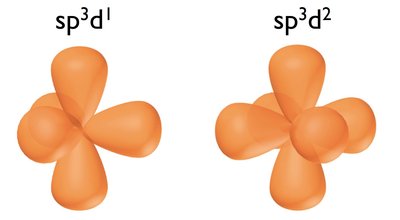
sp3d and sp3d2 Hybridization: Involves d orbitals, leading to trigonal bipyramidal and octahedral geometries, respectively.

Comparison: Lewis Structures vs. Valence Bond Theory
Lewis structures depict bonding and lone pairs but do not explain the three-dimensional geometry of molecules. VBT, through hybridization, provides a more complete picture of molecular shape and bond angles, consistent with VSEPR theory.
Lewis Structures: Show connectivity and electron pairs but not geometry.
VBT: Explains geometry and bond formation via orbital overlap and hybridization.
Examples of Hybridization and Geometry
BeCl2: Beryllium uses sp hybridization, resulting in a linear geometry (180° bond angle).
BF3: Boron uses sp2 hybridization, resulting in a trigonal planar geometry (120° bond angle).
CH4: Carbon uses sp3 hybridization, resulting in a tetrahedral geometry (109.5° bond angle).
Bonding in Multiple Bonds: Ethylene and Acetylene
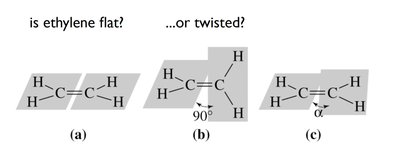
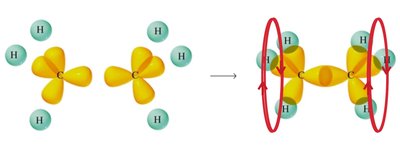
Multiple bonds involve both σ and π bonds. In ethylene (C2H4), each carbon is sp2 hybridized, forming a planar structure with a double bond (one σ and one π bond). In acetylene (C2H2), each carbon is sp hybridized, forming a linear structure with a triple bond (one σ and two π bonds).

Benzene and Delocalized π Bonding
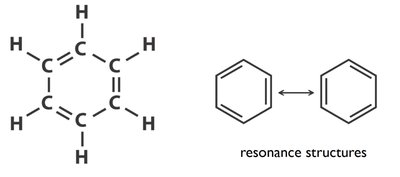
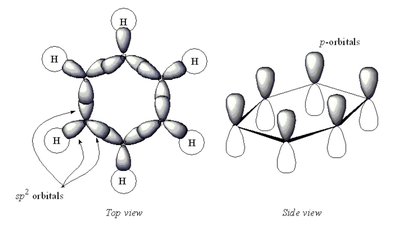
Benzene (C6H6) is a planar molecule where each carbon is sp2 hybridized. The unhybridized p orbitals overlap to form a delocalized π system, resulting in resonance and extra stability.
Isomerism and Conformers
Definition of Isomers
Isomers are compounds with the same molecular formula but different arrangements of atoms, resulting in different properties. There are two main types: structural isomers (different connectivity) and stereoisomers (same connectivity, different spatial arrangement).
Cis-Trans (Geometric) Isomerism
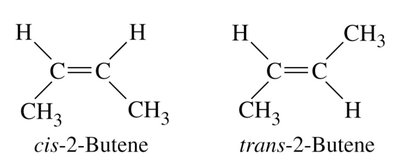
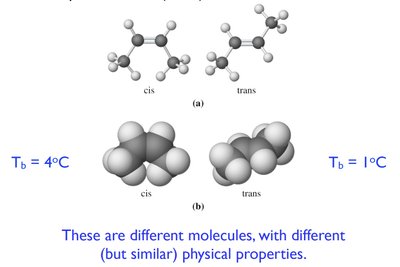
Geometric isomerism arises due to restricted rotation around double bonds. For example, 2-butene exists as cis (same side) and trans (opposite side) isomers, which have different physical properties.
Conformers and Cyclohexane
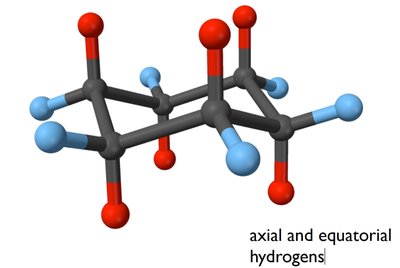
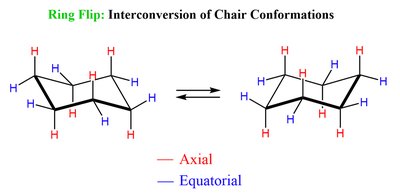
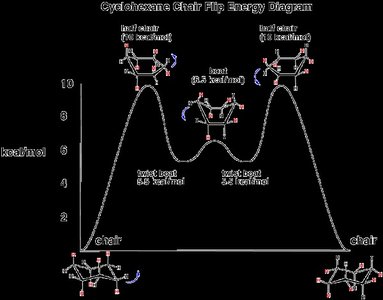
Conformers are different spatial arrangements of a molecule that can be interconverted by rotation around single bonds. Cyclohexane exhibits chair conformations, which interconvert via ring flipping. These conformers have different stabilities due to steric interactions.
Calculating Hybridization: Stepwise Method
Hybridization Determination Steps
Add the number of valence electrons of all atoms in the species.
For ions, adjust for charge (subtract for cations, add for anions).
Divide the total by 8 (for 9-56 electrons) or by 2 (for less than 8 electrons) to determine the number of electron domains (X).
Assign hybridization based on X:
2: sp
3: sp2
4: sp3
5: sp3d
6: sp3d2
7: sp3d3
Ionic Character and Dipole Moments
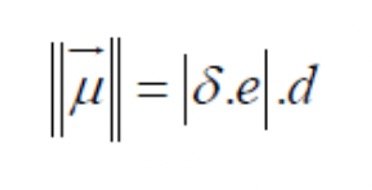
Dipole Moment Formula
The dipole moment (μ) of a molecule is a measure of the separation of positive and negative charges. It is calculated as:
Where δ is the partial charge, e is the elementary charge, and d is the bond length.
Measured in Debye (D), where 1 D = C·m.
Summary Table: Hybridization and Geometry
Value of X | Hybridization | Geometry |
|---|---|---|
2 | sp | Linear |
3 | sp2 | Trigonal planar |
4 | sp3 | Tetrahedral |
5 | sp3d | Trigonal bipyramidal |
6 | sp3d2 | Octahedral |
7 | sp3d3 | Pentagonal bipyramidal |
Additional info: For more advanced bonding and stability analysis, Molecular Orbital Theory is used, which is based on quantum mechanics and can explain phenomena not covered by VBT or Lewis structures.
