Ch.1 - Introduction: Matter, Energy, and Measurement
Brown - Chemistry: The Central Science 14th Edition
Brown14th EditionChemistry: The Central ScienceISBN: 9780134414232당신이 사용하는 게 아니라요?교과서 변경
1장, 문제 66a

(a) Which is more likely to eventually be shown to be incorrect: an hypothesis or a theory?

검증된 단계별 안내
1
Understand the definitions: An hypothesis is a proposed explanation made on the basis of limited evidence as a starting point for further investigation. A theory, on the other hand, is a well-substantiated explanation acquired through the scientific method and repeatedly tested and confirmed through observation and experimentation.
Recognize the level of evidence: Hypotheses are generally the initial step in the scientific method, often based on less evidence and not yet extensively tested. Theories have undergone extensive testing and are supported by a significant amount of evidence.
Consider the process of scientific validation: Theories are usually accepted by the scientific community after a rigorous process of evaluation and are less likely to be disproven compared to hypotheses, which are still in the early stages of evaluation.
Evaluate the likelihood of change: Since hypotheses are tentative and not yet thoroughly tested, they are more susceptible to being disproven or modified as new evidence emerges.
Conclude which is more likely to be shown incorrect: Based on the above understanding, an hypothesis is more likely to eventually be shown to be incorrect compared to a theory, due to its preliminary nature and lesser degree of testing and evidence.

비슷한 문제에 대한 검증된 영상 답변:

이 영상 해법은 위 문제에 도움이 된다고 튜터들이 추천한 것입니다.
영상 길이:
2m
도움이 되었나요?

주요 개념

질문에 올바르게 답하기 위해 반드시 이해해야 하는 핵심 개념들은 다음과 같습니다.

Hypothesis

A hypothesis is a testable statement or prediction about the relationship between two or more variables. It is often formulated based on observations and prior knowledge, serving as a starting point for scientific investigation. Hypotheses can be supported or refuted through experimentation and data collection, making them inherently provisional.

Theory

A theory is a well-substantiated explanation of an aspect of the natural world that is based on a body of evidence and has withstood rigorous testing and scrutiny. Theories integrate and generalize many hypotheses and are widely accepted within the scientific community. Unlike hypotheses, theories are more comprehensive and are less likely to be shown incorrect, although they can be refined or expanded with new evidence.
추천 영상:
가이드 코스
02:08
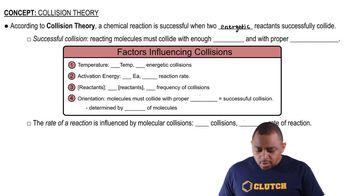
Collision Theory

Scientific Method

The scientific method is a systematic approach to inquiry that involves making observations, forming hypotheses, conducting experiments, and drawing conclusions. This iterative process allows scientists to test and refine their ideas, leading to the development of theories. Understanding the scientific method is crucial for distinguishing between the provisional nature of hypotheses and the more established status of theories.
추천 영상:
가이드 코스
01:41
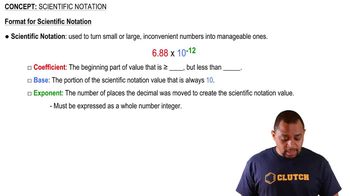
Scientific Notation Concepts