Ch.11 - Liquids and Intermolecular Forces
Brown - Chemistry: The Central Science 14th Edition
Brown14th EditionChemistry: The Central ScienceISBN: 9780134414232당신이 사용하는 게 아니라요?교과서 변경
11장, 문제 32

The generic structural formula for a 1-alkyl-3-methylimid- azolium cation is where R is a -CH2(CH2)nCH3 alkyl group. The melting points of the salts that form between 1-alkyl-3-methylimidazolium cation and the PF6- anion are as follows: R = CH2CH3 (m.p. = 60 °C), R = CH2CH2CH3 (m.p. = 40 °C), r = CH2CH2CH2CH3 (m.p. = 10 °C), and R = CH2CH2CH2CH2CH2CH3 (m.p. = -61 °C). Why does the melting point decrease as the length of alkyl group increases?

검증된 단계별 안내
1
Identify the trend in melting points as the alkyl chain length increases: the melting point decreases.
Understand that the melting point is influenced by the strength of intermolecular forces in the solid state.
Recognize that longer alkyl chains increase the hydrophobic character and disrupt the packing efficiency of the ions in the solid state.
Explain that as the alkyl chain length increases, the van der Waals forces become more significant, but the overall packing becomes less efficient, leading to a decrease in melting point.
Conclude that the decrease in melting point with increasing alkyl chain length is due to the reduced packing efficiency and increased disorder in the solid state.

비슷한 문제에 대한 검증된 영상 답변:

이 영상 해법은 위 문제에 도움이 된다고 튜터들이 추천한 것입니다.
영상 길이:
1m
도움이 되었나요?

주요 개념

질문에 올바르게 답하기 위해 반드시 이해해야 하는 핵심 개념들은 다음과 같습니다.

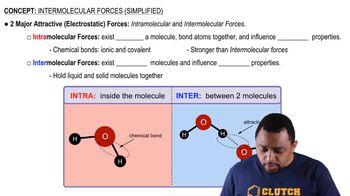
Intermolecular Forces

Intermolecular forces are the attractive forces between molecules that influence physical properties such as melting and boiling points. In ionic compounds, like the salts formed from 1-alkyl-3-methylimidazolium cations and PF6- anions, the strength of these forces is crucial. As the alkyl chain length increases, the overall molecular size increases, which can lead to weaker interactions due to increased distance between charged regions.
추천 영상:
가이드 코스
01:59
Intermolecular vs Intramolecular Forces

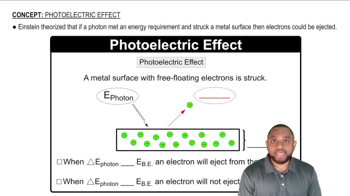
Hydrophobic Effect

The hydrophobic effect refers to the tendency of nonpolar substances to aggregate in aqueous solutions to minimize their exposure to water. In the context of ionic liquids, longer alkyl chains are more hydrophobic, which can disrupt the packing of ions in the solid state. This disruption can lead to a decrease in the melting point as the solid structure becomes less stable with longer, bulkier alkyl groups.
추천 영상:
가이드 코스
02:31
Photoelectric Effect

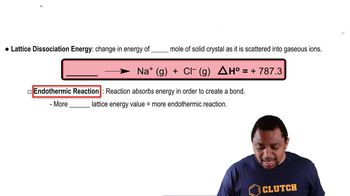
Crystal Lattice Energy

Crystal lattice energy is the energy released when ions in the gas phase come together to form a solid ionic compound. It is a measure of the stability of the ionic lattice. As the alkyl chain length increases, the lattice energy may decrease due to the larger size and lower charge density of the cation, resulting in weaker ionic interactions and a lower melting point for the resulting salts.
추천 영상: