Ch.12 - Solids and Modern Materials
Brown - Chemistry: The Central Science 14th Edition
Brown14th EditionChemistry: The Central ScienceISBN: 9780134414232당신이 사용하는 게 아니라요?교과서 변경
12장, 문제 48

An increase in temperature causes most metals to undergo thermal expansion, which means the volume of the metal increases upon heating. How does thermal expansion affect the unit cell length? What is the effect of an increase in temperature on the density of a metal?

검증된 단계별 안내
1
Thermal expansion refers to the increase in volume of a material as its temperature increases. For metals, this means that the atoms vibrate more vigorously and tend to occupy more space, leading to an expansion of the material's dimensions.
In a crystalline solid, the smallest repeating unit is the unit cell. As the metal expands due to increased temperature, the dimensions of the unit cell, including its length, will also increase. This is because the atoms within the unit cell move slightly further apart.
Density is defined as mass per unit volume (\( \rho = \frac{m}{V} \)). As the temperature increases, the volume of the metal increases due to thermal expansion, while the mass remains constant.
Since the volume increases and the mass stays the same, the density of the metal will decrease. This is because the same amount of mass is now spread over a larger volume.
In summary, an increase in temperature causes the unit cell length of a metal to increase due to thermal expansion, and as a result, the density of the metal decreases because the volume increases while the mass remains constant.

비슷한 문제에 대한 검증된 영상 답변:

이 영상 해법은 위 문제에 도움이 된다고 튜터들이 추천한 것입니다.
영상 길이:
2m
도움이 되었나요?

주요 개념

질문에 올바르게 답하기 위해 반드시 이해해야 하는 핵심 개념들은 다음과 같습니다.

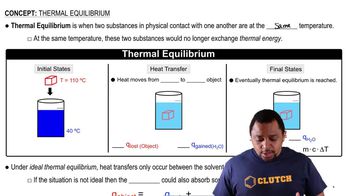
Thermal Expansion

Thermal expansion refers to the increase in volume of a material as its temperature rises. In metals, this occurs because the increased kinetic energy of atoms causes them to vibrate more vigorously, leading to greater distances between them. This phenomenon is typically linear for solids, meaning that as temperature increases, the dimensions of the material, including length, width, and height, expand proportionally.
추천 영상:
가이드 코스
02:35
Thermal Equilibrium

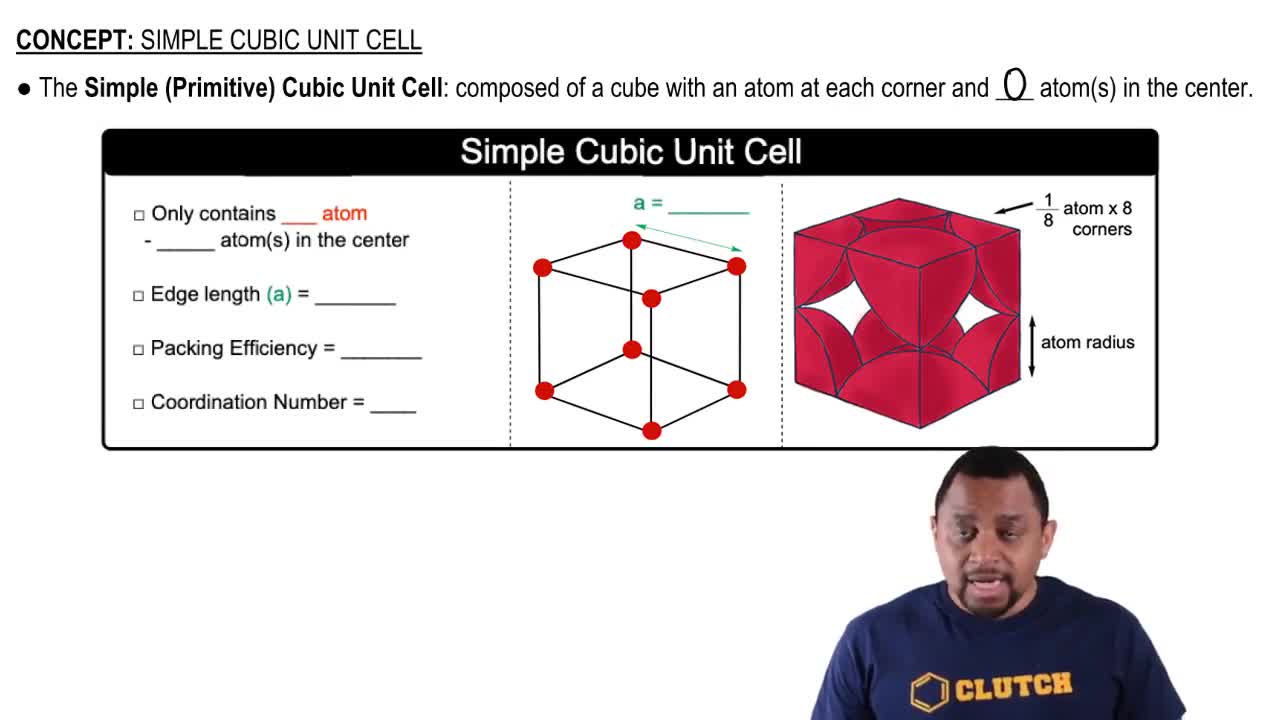
Unit Cell Length

The unit cell is the smallest repeating unit in a crystal lattice that defines the structure of a solid. As temperature increases and thermal expansion occurs, the dimensions of the unit cell also increase, leading to a longer unit cell length. This change can affect the overall properties of the material, including its mechanical and thermal characteristics, as the arrangement of atoms within the unit cell is altered.
추천 영상:
가이드 코스
01:27
Simple Cubic Unit Cell

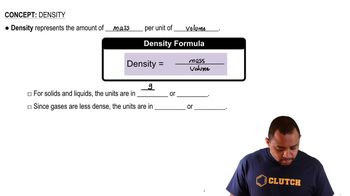
Density

Density is defined as mass per unit volume and is a critical property of materials. When a metal is heated and undergoes thermal expansion, its volume increases while its mass remains constant, leading to a decrease in density. This relationship is important in understanding how temperature changes can affect the buoyancy and structural integrity of metals in various applications.
추천 영상:
가이드 코스
01:56
Density Concepts