
Ch.18 - Chemistry of the Environment
Brown - Chemistry: The Central Science 14th Edition
Brown14th EditionChemistry: The Central ScienceISBN: 9780134414232당신이 사용하는 게 아니라요?교과서 변경
18장, 문제 56

Discuss how catalysts can make processes more energy efficient.

검증된 단계별 안내
1
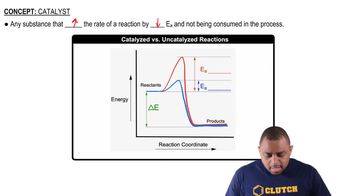
Step 1: Define what a catalyst is in the context of chemistry. A catalyst is a substance that increases the rate of a chemical reaction without being consumed in the process. It provides an alternative reaction pathway with a lower activation energy.
Step 2: Explain the concept of activation energy. Activation energy is the minimum energy required for a chemical reaction to occur. Catalysts lower this energy barrier, allowing more reactant molecules to have enough energy to react at a given temperature.
Step 3: Describe how lowering the activation energy affects reaction rates. By reducing the activation energy, catalysts increase the number of successful collisions between reactant molecules, thereby increasing the reaction rate.
Step 4: Discuss the impact of increased reaction rates on energy efficiency. Faster reactions mean that processes can be completed in less time and often at lower temperatures, reducing the energy required to maintain reaction conditions.
Step 5: Provide examples of industrial processes where catalysts improve energy efficiency. For instance, in the Haber process for ammonia synthesis, iron catalysts allow the reaction to occur at lower temperatures and pressures, saving energy and costs.

주요 개념

질문에 올바르게 답하기 위해 반드시 이해해야 하는 핵심 개념들은 다음과 같습니다.

Catalysis

Catalysis is the process by which a substance, known as a catalyst, increases the rate of a chemical reaction without being consumed in the process. Catalysts work by providing an alternative reaction pathway with a lower activation energy, allowing reactants to convert to products more easily and quickly.
추천 영상:
가이드 코스
01:59
Catalyzed vs. Uncatalyzed Reactions

Activation Energy

Activation energy is the minimum energy required for a chemical reaction to occur. It represents the energy barrier that reactants must overcome to transform into products. Catalysts lower this energy barrier, making it easier for reactions to proceed, which enhances the overall efficiency of the process.
추천 영상:
가이드 코스
02:02
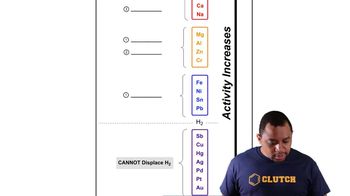
Activity Series Chart

Energy Efficiency in Chemical Processes

Energy efficiency in chemical processes refers to the effective use of energy to drive reactions while minimizing waste and energy loss. By employing catalysts, reactions can occur at lower temperatures and pressures, reducing energy consumption and making industrial processes more sustainable and cost-effective.
추천 영상: