
Ch.18 - Chemistry of the Environment
Brown - Chemistry: The Central Science 14th Edition
Brown14th EditionChemistry: The Central ScienceISBN: 9780134414232당신이 사용하는 게 아니라요?교과서 변경
18장, 문제 22b

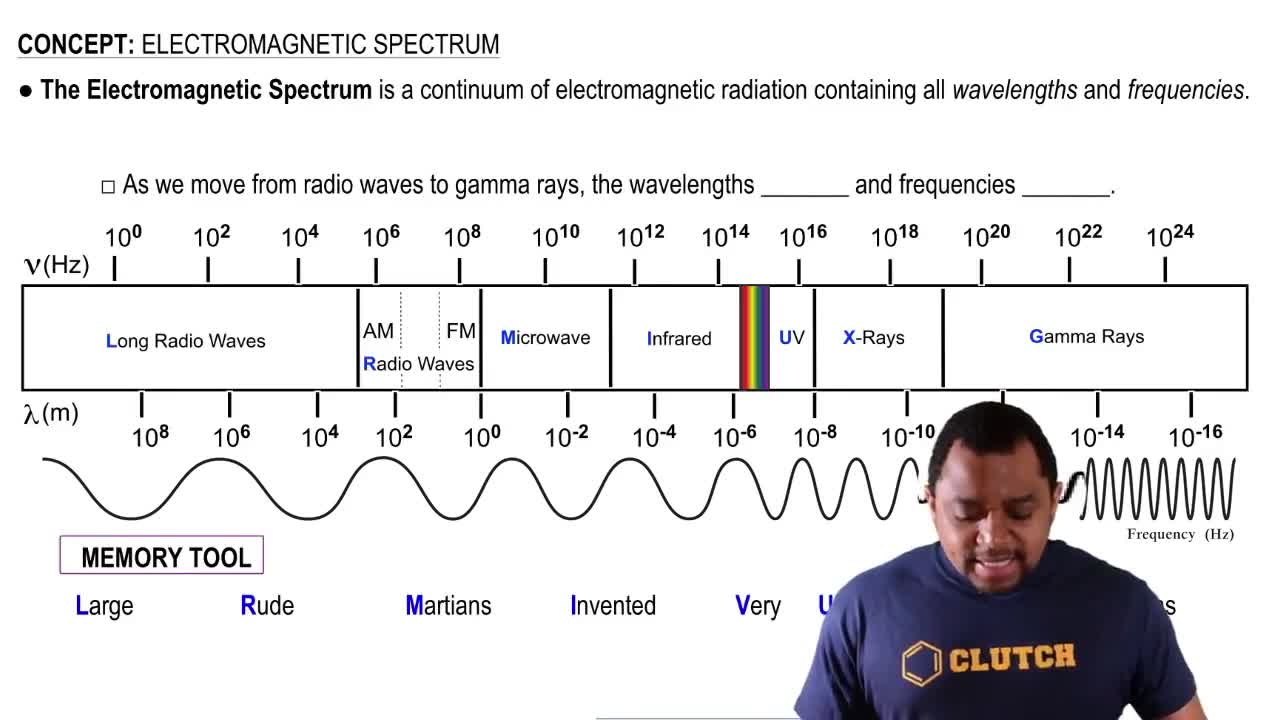
The ultraviolet spectrum can be divided into three regions based on wavelength: UV-A (315–400 nm), UV-B (280–315 nm), and UV-C (100–280 nm). (b) In the absence of ozone, which of these three regions, if any, are absorbed by the atmo- sphere?

검증된 단계별 안내
1
Step 1: Understand the problem. The question is asking which of the three regions of the ultraviolet spectrum (UV-A, UV-B, and UV-C) are absorbed by the atmosphere in the absence of ozone.
Step 2: Recall that the Earth's atmosphere is composed of several layers, each with its own unique properties and functions. The ozone layer, which is located in the stratosphere, is primarily responsible for absorbing most of the Sun's harmful ultraviolet radiation.
Step 3: Understand that in the absence of ozone, the atmosphere would still absorb some UV radiation, but not as effectively. The atmosphere is composed of other gases such as nitrogen and oxygen, which can absorb some UV radiation, particularly in the UV-C region.
Step 4: Note that UV-A and UV-B are less effectively absorbed by the other gases in the atmosphere. Therefore, in the absence of ozone, more UV-A and UV-B would reach the Earth's surface.
Step 5: Conclude that in the absence of ozone, the UV-C region would still be absorbed by the atmosphere, while the UV-A and UV-B regions would be less effectively absorbed.

비슷한 문제에 대한 검증된 영상 답변:

이 영상 해법은 위 문제에 도움이 된다고 튜터들이 추천한 것입니다.
영상 길이:
1m

주요 개념

질문에 올바르게 답하기 위해 반드시 이해해야 하는 핵심 개념들은 다음과 같습니다.

Ultraviolet Spectrum

The ultraviolet (UV) spectrum is a portion of the electromagnetic spectrum with wavelengths shorter than visible light, ranging from about 10 nm to 400 nm. It is divided into three regions: UV-A (315–400 nm), UV-B (280–315 nm), and UV-C (100–280 nm), each with different properties and biological effects. Understanding these regions is crucial for assessing their interaction with the atmosphere and their potential impact on living organisms.
추천 영상:
가이드 코스
02:53
Electromagnetic Spectrum

Ozone Layer

The ozone layer is a region of Earth's stratosphere that contains a high concentration of ozone (O3) molecules, which absorb the majority of the sun's harmful UV radiation, particularly UV-B and UV-C. This protective layer plays a vital role in shielding the Earth's surface from excessive UV exposure, which can lead to skin cancer and other health issues. In the absence of ozone, the atmosphere's ability to filter UV radiation is significantly reduced.
추천 영상:
가이드 코스
08:52
Acid-Base Extraction

Atmospheric Absorption

Atmospheric absorption refers to the process by which certain gases and particles in the atmosphere absorb specific wavelengths of electromagnetic radiation. In the context of UV radiation, gases like ozone and water vapor absorb UV-B and UV-C radiation effectively, while UV-A is less absorbed. This concept is essential for understanding which regions of the UV spectrum reach the Earth's surface and the implications for environmental and health effects.
추천 영상:
가이드 코스
03:29
Electronic Transitions