
교과서 질문
(b) Use the energy requirements of these two pro- cesses to explain why photodissociation of oxygen is more important than photoionization of oxygen at altitudes below about 90 km.
520
views

 검증된 단계별 안내
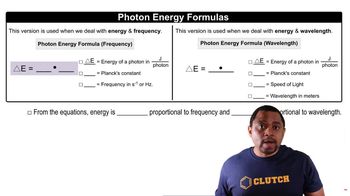
 01:40
01:40
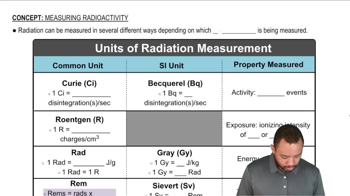 02:52
02:52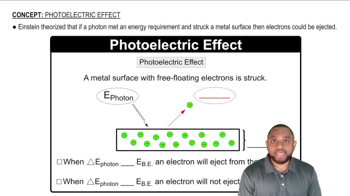 02:31
02:31(b) Use the energy requirements of these two pro- cesses to explain why photodissociation of oxygen is more important than photoionization of oxygen at altitudes below about 90 km.
The ultraviolet spectrum can be divided into three regions based on wavelength: UV-A (315–400 nm), UV-B (280–315 nm), and UV-C (100–280 nm). (b) In the absence of ozone, which of these three regions, if any, are absorbed by the atmo- sphere?
The wavelength at which the O2 molecule most strongly absorbs light is approximately 145 nm. (b) Would a photon whose wavelength is 145 nm have enough energy to photodissociate O2 whose bond energy is 495 kJ/mol? Would it have enough energy to photoionize O2?
The wavelength at which the O2 molecule most strongly absorbs light is approximately 145 nm. (a) In which region of the electromagnetic spectrum does this light fall?
The ultraviolet spectrum can be divided into three regions based on wavelength: UV-A (315–400 nm), UV-B (280–315 nm), and UV-C (100–280 nm). (c) When appropriate concentrations of ozone are present in the stratosphere, is all of the UV light absorbed before reaching the Earth’s surface? If not, which region or regions are not filtered out?