
Ch.22 - Chemistry of the Nonmetals
Brown - Chemistry: The Central Science 14th Edition
Brown14th EditionChemistry: The Central ScienceISBN: 9780134414232당신이 사용하는 게 아니라요?교과서 변경
22장, 문제 5

Complete the exercises below. Write the chemical formula for each of the following compounds, and indicate the oxidation state of nitrogen in each: a. nitric oxide, b. hydrazine, c. potassium cyanide, d. sodium nitrite, e. ammonium chloride, f. lithium nitride.

검증된 단계별 안내
1
Step 1: Identify the chemical formula for each compound. For example, nitric oxide is NO, hydrazine is N2H4, potassium cyanide is KCN, sodium nitrite is NaNO2, ammonium chloride is NH4Cl, and lithium nitride is Li3N.
Step 2: Determine the oxidation state of nitrogen in nitric oxide (NO). Use the fact that the sum of oxidation states in a neutral compound is zero. Oxygen typically has an oxidation state of -2.
Step 3: Determine the oxidation state of nitrogen in hydrazine (N2H4). Consider that hydrogen usually has an oxidation state of +1.
Step 4: Determine the oxidation state of nitrogen in sodium nitrite (NaNO2). Sodium typically has an oxidation state of +1, and oxygen is usually -2.
Step 5: Determine the oxidation state of nitrogen in ammonium chloride (NH4Cl). Chlorine typically has an oxidation state of -1, and hydrogen is +1.

주요 개념

질문에 올바르게 답하기 위해 반드시 이해해야 하는 핵심 개념들은 다음과 같습니다.

Chemical Formulas

A chemical formula represents the composition of a compound, indicating the types and numbers of atoms present. For example, in nitric oxide (NO), the formula shows one nitrogen atom and one oxygen atom. Understanding how to derive these formulas involves knowledge of valence electrons and the bonding behavior of elements.
추천 영상:
가이드 코스
02:26
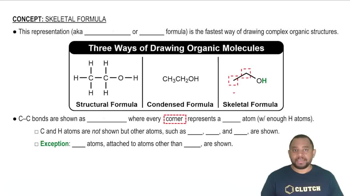
Skeletal Formula

Oxidation States

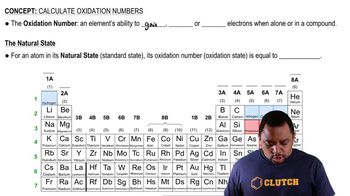
The oxidation state (or oxidation number) of an element in a compound reflects its degree of oxidation or reduction, indicating how many electrons an atom has gained, lost, or shared. For nitrogen in compounds like hydrazine (N2H4) or sodium nitrite (NaNO2), determining the oxidation state requires applying rules based on the electronegativity of the other elements and the overall charge of the compound.
추천 영상:
가이드 코스
02:42
Oxidation Numbers

Ionic and Covalent Compounds

Compounds can be classified as ionic or covalent based on the nature of the bonds between their atoms. Ionic compounds, such as potassium cyanide (KCN), consist of metal and non-metal ions held together by electrostatic forces, while covalent compounds, like hydrazine, involve the sharing of electrons between non-metals. This distinction is crucial for predicting properties and behaviors of the compounds.
추천 영상:
가이드 코스
02:11
Ionic Compounds Naming