
교과서 질문
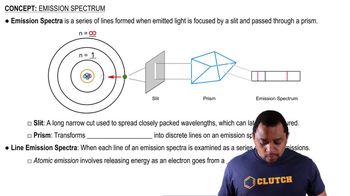
Is energy emitted or absorbed when the following electronic transitions occur in hydrogen? (a) from n = 3 to n = 2 (c) an electron adds to the H+ ion and ends up in the n = 2 shell?
734
views

 검증된 단계별 안내
 01:22
01:22
 01:51
01:51 01:51
01:51Is energy emitted or absorbed when the following electronic transitions occur in hydrogen? (a) from n = 3 to n = 2 (c) an electron adds to the H+ ion and ends up in the n = 2 shell?
(b) Is this line in the visible region of the electromagnetic spectrum?
The visible emission lines observed by Balmer all involved nf = 2. (a) Which of the following is the best explanation of why the lines with nf = 3 are not observed in the visible portion of the spectrum: (i) Transitions to nf = 3 are not allowed to happen, (ii) transitions to nf = 3 emit photons in the infrared portion of the spectrum, (iii) transitions to nf = 3 emit photons in the ultraviolet portion of the spectrum, or (iv) transitions to nf = 3 emit photons that are at exactly the same wavelengths as those to nf = 2.
Indicate whether energy is emitted or absorbed when the following electronic transitions occur in hydrogen: (a) from n = 2 to n = 3 (c) from the n = 9 to the n = 6 state.
Consider a transition of the electron in the hydrogen atom from n = 8 to n = 3. (b) Will the light be absorbed or emitted?
Is energy emitted or absorbed when the following electronic transitions occur in hydrogen? (b) from an orbit of radius 0.846 nm to one of radius 0.212 nm