Ch.7 - Periodic Properties of the Elements
Brown - Chemistry: The Central Science 14th Edition
Brown14th EditionChemistry: The Central ScienceISBN: 9780134414232당신이 사용하는 게 아니라요?교과서 변경
7장, 문제 61

Would you expect zirconium(II) oxide, ZrO, to react more readily with HCl(aq) or NaOH(aq)?

검증된 단계별 안내
1
Identify the nature of zirconium(II) oxide, ZrO. ZrO is a basic oxide because it is formed from a metal, Zirconium, and oxygen.
Consider the properties of HCl(aq) and NaOH(aq). HCl(aq) is a strong acid, and NaOH(aq) is a strong base.
Recall the general reaction between acids and bases. Acids react with basic oxides to form salt and water.
Analyze the potential reaction between ZrO and HCl(aq). When ZrO, a basic oxide, reacts with HCl, a strong acid, they would typically react to form zirconium(II) chloride (ZrCl2) and water (H2O).
Compare the reaction of ZrO with NaOH(aq). Since both ZrO and NaOH are basic, there is less likelihood of a reaction occurring between them.

비슷한 문제에 대한 검증된 영상 답변:

이 영상 해법은 위 문제에 도움이 된다고 튜터들이 추천한 것입니다.
영상 길이:
1m

주요 개념

질문에 올바르게 답하기 위해 반드시 이해해야 하는 핵심 개념들은 다음과 같습니다.

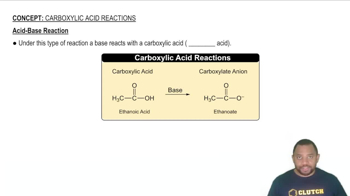
Acid-Base Reactions

Acid-base reactions involve the transfer of protons (H+) between reactants. In this context, HCl is a strong acid that donates protons, while NaOH is a strong base that accepts protons. Understanding the nature of these substances helps predict how zirconium(II) oxide will interact with them, as ZrO can act as a base due to its oxide nature.
추천 영상:
가이드 코스
01:09
Acid-Base Reaction

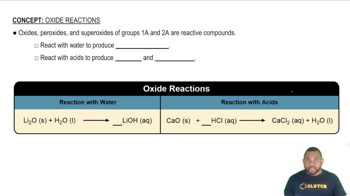
Oxide Reactivity

Metal oxides, such as zirconium(II) oxide, can exhibit different reactivities depending on their oxidation state and the nature of the oxide. ZrO, being a basic oxide, is more likely to react with acids than with bases. This concept is crucial for predicting the outcome of reactions involving metal oxides and various acids or bases.
추천 영상:
가이드 코스
00:58
Oxide Reactions

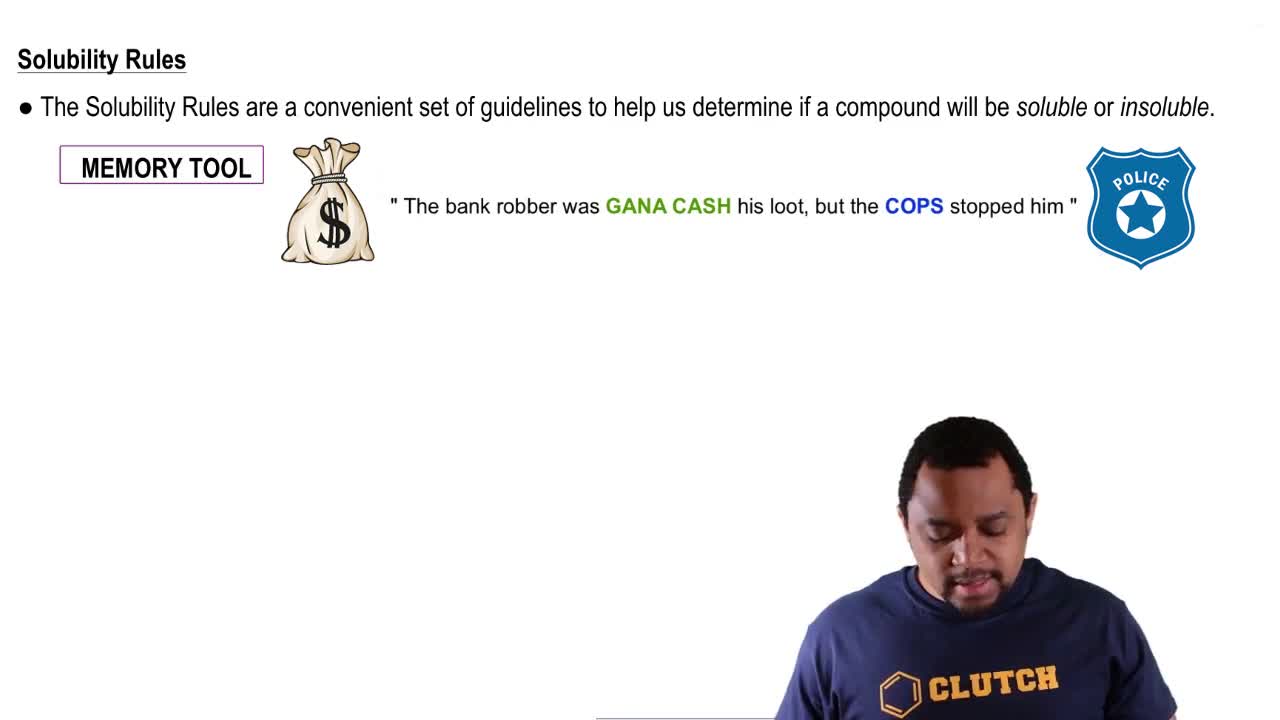
Solubility and Reaction Conditions

The solubility of reactants in aqueous solutions affects the extent of chemical reactions. HCl is highly soluble and dissociates completely in water, providing a strong acidic environment, while NaOH also dissociates completely as a strong base. The solubility and concentration of these reactants influence the likelihood and rate of reaction with zirconium(II) oxide.
추천 영상:
가이드 코스
00:28
Solubility Rules