
교과서 질문
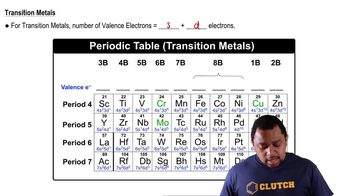
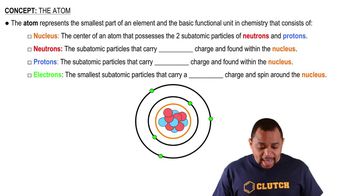
(c) An atom has the electron configuration 1s22s22p63s23p2. How many valence electrons does the atom have?
1106
views

 검증된 단계별 안내
 02:12
02:12
 02:10
02:10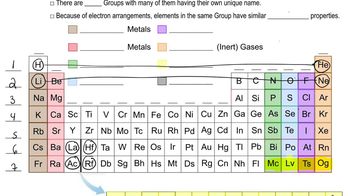 05:33
05:33(c) An atom has the electron configuration 1s22s22p63s23p2. How many valence electrons does the atom have?
The partial Lewis structure that follows is for a hydrocarbon molecule. In the full Lewis structure, each carbon atom satisfies the octet rule, and there are no unshared electron pairs in the molecule. The carbon—carbon bonds are labeled 1, 2, and 3. (c) Which carbon—carbon bond is the strongest one?
The partial Lewis structure that follows is for a hydrocarbon molecule. In the full Lewis structure, each carbon atom satisfies the octet rule, and there are no unshared electron pairs in the molecule. The carbon—carbon bonds are labeled 1, 2, and 3. (a) How many hydrogen atoms are in the molecule?
(a) True or false: The hydrogen atom is most stable when it has a full octet of electrons.
(b) How many valence electrons does a nitrogen atom possess?
Consider the Lewis structure for the polyatomic oxyanion shown here, where X is an element from the third period (Na - Ar). By changing the overall charge, n, from 1- to 2- to 3- we get three different polyatomic ions. For each of these ions (b) determine the formal charge of the central atom, X;