
At 80ยฐC, ๐พ๐ = 1.87ร10โ3 for the reaction PH3BCl3(๐ ) โ PH3(๐) + BCl3(๐) (a) Calculate the equilibrium concentrations of PH3 and BCl3 if a solid sample of PH3BCl3 is placed in a closed vessel at 80ยฐC and decomposes until equilibrium is reached.
Ch.15 - Chemical Equilibrium

Brown15th EditionChemistry: The Central ScienceISBN: 9780137542970๋น์ ์ด ์ฌ์ฉํ๋ ๊ฒ ์๋๋ผ์?๊ต๊ณผ์ ๋ณ๊ฒฝ
15์ฅ, ๋ฌธ์ 52b
At 80ยฐC, ๐พ๐ = 1.87ร10โ3 for the reaction PH3BCl3(๐ ) โ PH3(๐) + BCl3(๐) (a) Calculate the equilibrium concentrations of PH3 and BCl3 if a solid sample of PH3BCl3 is placed in a closed vessel at 80ยฐC and decomposes until equilibrium is reached. (b) If the flask has a volume of 0.250 L, what is the minimum mass of PH3BCl3(๐ ) that must be added to the flask to achieve equilibrium?
๊ฒ์ฆ๋ ๋จ๊ณ๋ณ ์๋ด1
Write the expression for the equilibrium constant, Kc, for the reaction: PH3BCl3(s) โ PH3(g) + BCl3(g). Since the solid does not appear in the expression, Kc = [PH3][BCl3].
Set up an ICE (Initial, Change, Equilibrium) table. Assume initially there are no gases, so [PH3] = 0 and [BCl3] = 0. Let x be the change in concentration for both PH3 and BCl3 as the solid decomposes.
At equilibrium, the concentrations will be [PH3] = x and [BCl3] = x. Substitute these into the equilibrium expression: Kc = x^2.
Solve the equation Kc = x^2 for x to find the equilibrium concentrations of PH3 and BCl3. Remember that Kc = 1.87ร10^โ3 at 80ยฐC.
For part (b), use the ideal gas law PV = nRT to find the number of moles of gas at equilibrium, which is 2x (since x moles of PH3 and x moles of BCl3 are produced). Calculate the mass of PH3BCl3 needed to produce these moles, using its molar mass.

๋น์ทํ ๋ฌธ์ ์ ๋ํ ๊ฒ์ฆ๋ ์์ ๋ต๋ณ:
์ด ์์ ํด๋ฒ์ ์ ๋ฌธ์ ์ ๋์์ด ๋๋ค๊ณ ํํฐ๋ค์ด ์ถ์ฒํ ๊ฒ์
๋๋ค.
์์ ๊ธธ์ด:
3m์ฃผ์ ๊ฐ๋
์ง๋ฌธ์ ์ฌ๋ฐ๋ฅด๊ฒ ๋ตํ๊ธฐ ์ํด ๋ฐ๋์ ์ดํดํด์ผ ํ๋ ํต์ฌ ๊ฐ๋
๋ค์ ๋ค์๊ณผ ๊ฐ์ต๋๋ค.
Equilibrium Constant (Kc)
The equilibrium constant (Kc) is a numerical value that expresses the ratio of the concentrations of products to reactants at equilibrium for a given reaction at a specific temperature. For the reaction PHโBClโ(s) โ PHโ(g) + BClโ(g), Kc = [PHโ][BClโ] / [PHโBClโ]. A small Kc value, like 1.87ร10โปยณ, indicates that at equilibrium, the concentration of reactants is much greater than that of products.
์ถ์ฒ ์์:
๊ฐ์ด๋ ์ฝ์ค
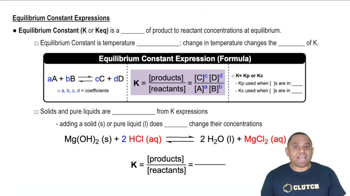
Equilibrium Constant Expressions
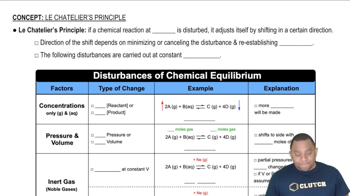
Le Chatelier's Principle
Le Chatelier's Principle states that if a dynamic equilibrium is disturbed by changing the conditions, the system will adjust itself to counteract the change and restore a new equilibrium. In this case, adding PHโBClโ(s) will shift the equilibrium towards the products, PHโ(g) and BClโ(g), until a new balance is achieved.
์ถ์ฒ ์์:
๊ฐ์ด๋ ์ฝ์ค
Le Chatelier's Principle
Stoichiometry and Concentration Calculations
Stoichiometry involves using the coefficients of a balanced chemical equation to relate the amounts of reactants and products. To find the equilibrium concentrations of PHโ and BClโ, one must set up an ICE (Initial, Change, Equilibrium) table based on the stoichiometry of the reaction and the initial amount of PHโBClโ(s) added, considering the volume of the flask to convert moles to concentrations.
์ถ์ฒ ์์:
๊ฐ์ด๋ ์ฝ์ค
Stoichiometric Rate Calculations
๊ด๋ จ ์ค์ฒ
๊ต๊ณผ์ ์ง๋ฌธ
496
views
๊ต๊ณผ์ ์ง๋ฌธ
At 218ยฐC, ๐พ๐ = 1.2ร10โ4 for the equilibrium NH4SH(๐ ) โ NH3(๐) + H2S(๐) (a) Calculate the equilibrium concentrations of NH3 and H2S if a sample of solid NH4SH is placed in a closed vessel at 218ยฐC and decomposes until equilibrium is reached.
๊ต๊ณผ์ ์ง๋ฌธ
At 2000ยฐC, the equilibrium constant for the reaction 2 NO(๐) โ N2(๐) + O2(๐) is ๐พ๐ = 2.4ร103. If the initial concentration of NO is 0.175 M, what are the equilibrium concentrations of NO, N2, and O2?
983
views
๊ต๊ณผ์ ์ง๋ฌธ
At 25ยฐC, the reaction CaCrO4(๐ ) โ Ca2+(๐๐) + CrO42โ(๐๐) has an equilibrium constant ๐พ๐ = 7.1ร10โ4. What are the equilibrium concentrations of Ca2+ and CrO42โ in a saturated solution of CaCrO4?
398
views
