
Ch.5 - Thermochemistry
Brown - Chemistry: The Central Science 15th Edition
Brown15th EditionChemistry: The Central ScienceISBN: 9780137542970당신이 사용하는 게 아니라요?교과서 변경
5장, 문제 59c

Under constant-volume conditions, the heat of combustion of benzoic acid (C6H5COOH) is 26.38 kJ/g. A 2.760-g sample of benzoic acid is burned in a bomb calorimeter. The temperature of the calorimeter increases from 21.60 to 29.93 °C. c. Suppose that in changing samples, a portion of the water in the calorimeter were lost. In what way, if any, would this change the heat capacity of the calorimeter?

검증된 단계별 안내
1
Understand that the heat capacity of the calorimeter is the amount of heat required to raise the temperature of the entire calorimeter system by 1 degree Celsius.
Recognize that the calorimeter system includes both the calorimeter itself and the water it contains.
Consider that if water is lost from the calorimeter, the total mass of the system decreases.
Recall that heat capacity is an extensive property, meaning it depends on the amount of substance present.
Conclude that losing water would decrease the heat capacity of the calorimeter, as there is less mass to absorb the heat.

비슷한 문제에 대한 검증된 영상 답변:

이 영상 해법은 위 문제에 도움이 된다고 튜터들이 추천한 것입니다.
영상 길이:
3m

주요 개념

질문에 올바르게 답하기 위해 반드시 이해해야 하는 핵심 개념들은 다음과 같습니다.

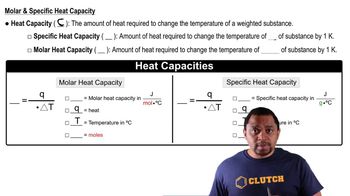
Heat Capacity

Heat capacity is the amount of heat required to change the temperature of a substance by one degree Celsius. In calorimetry, it is crucial for determining how much heat is absorbed or released during a chemical reaction. The heat capacity of a calorimeter is influenced by its mass and the specific heat of the materials it contains, which means any loss of water would alter its overall heat capacity.
추천 영상:

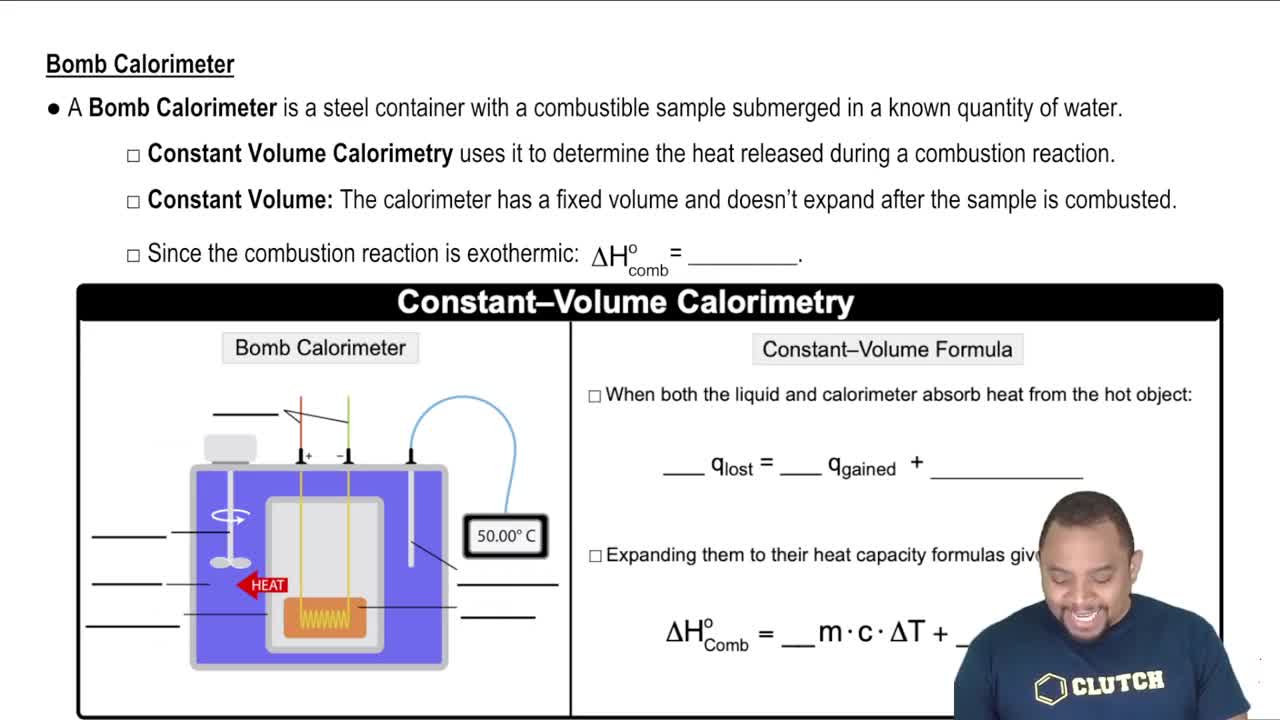
Bomb Calorimeter

A bomb calorimeter is a device used to measure the heat of combustion of a substance under constant volume conditions. It consists of a sealed container (the bomb) where the reaction occurs, surrounded by a known quantity of water. The temperature change of the water is used to calculate the heat released by the combustion, making it essential to understand how changes in the system, like water loss, affect the results.
추천 영상:
가이드 코스
02:35
Constant-Volume Calorimetry

Specific Heat Capacity

Specific heat capacity is the amount of heat required to raise the temperature of one gram of a substance by one degree Celsius. Different substances have different specific heat capacities, which affects how they absorb and transfer heat. In the context of a calorimeter, if water is lost, the specific heat capacity of the remaining system changes, potentially leading to inaccurate measurements of heat transfer during the combustion process.
추천 영상: