Ch.2 - Atoms, Molecules & Ions
McMurry - Chemistry 8th Edition
McMurry8th EditionChemistryISBN: 9781292336145당신이 사용하는 게 아니라요?교과서 변경
2장, 문제 146b

Give systematic names for the following binary compounds: (b) K2O

검증된 단계별 안내
1
Identify the elements in the compound: Potassium (K) and Oxygen (O).
Determine the type of compound: K2O is a binary ionic compound.
Name the metal (cation) first: Potassium.
Name the non-metal (anion) second, changing its ending to '-ide': Oxygen becomes Oxide.
Combine the names: Potassium Oxide.

비슷한 문제에 대한 검증된 영상 답변:

이 영상 해법은 위 문제에 도움이 된다고 튜터들이 추천한 것입니다.
영상 길이:
2m
도움이 되었나요?

주요 개념

질문에 올바르게 답하기 위해 반드시 이해해야 하는 핵심 개념들은 다음과 같습니다.

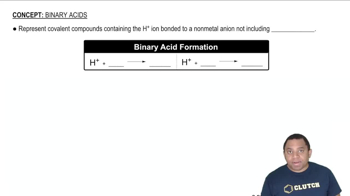
Binary Compounds

Binary compounds consist of two different elements. In chemistry, these compounds can be ionic or covalent, depending on the nature of the bonding between the elements. Understanding the type of elements involved (metals vs. nonmetals) is crucial for determining the naming conventions used in systematic nomenclature.
추천 영상:

Ionic Compounds

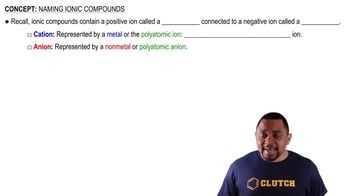
Ionic compounds are formed when metals transfer electrons to nonmetals, resulting in the formation of positively charged cations and negatively charged anions. In the case of K2O, potassium (K) is a metal that forms a cation (K+) and oxygen (O) is a nonmetal that forms an anion (O2-). The systematic naming of ionic compounds involves naming the cation first followed by the anion.
추천 영상:
가이드 코스
02:11
Ionic Compounds Naming

Nomenclature Rules

The systematic naming of compounds follows specific rules established by the International Union of Pure and Applied Chemistry (IUPAC). For binary ionic compounds, the name of the metal is followed by the name of the nonmetal with its ending changed to '-ide.' For K2O, the systematic name is potassium oxide, reflecting the elements involved and their respective charges.
추천 영상:
가이드 코스
00:28
Solubility Rules