Ch.2 - Atoms, Molecules & Ions
McMurry - Chemistry 8th Edition
McMurry8th EditionChemistryISBN: 9781292336145당신이 사용하는 게 아니라요?교과서 변경
2장, 문제 64

List several general properties of the following groups: (a) Alkali metals (b) Noble gases (c) Halogens

검증된 단계별 안내
1
Identify the position of each group in the periodic table. Alkali metals are in Group 1, noble gases are in Group 18, and halogens are in Group 17. This positioning helps in understanding their general properties based on their valence electrons.
Discuss the general properties of alkali metals: They are highly reactive, soft metals with low melting points. They have one electron in their outermost shell, which they tend to lose easily, forming +1 ions.
Examine the general properties of noble gases: These elements are characterized by their complete valence electron shells, which makes them extremely unreactive. They are all gases at room temperature and are used in applications where non-reactivity is required, such as in lighting and shielding gases.
Explore the general properties of halogens: Halogens are highly reactive nonmetals with seven electrons in their outermost shell. They tend to gain an electron to form -1 ions. They have varying physical states across the group, from gases (like fluorine and chlorine) to solids (like iodine).
Relate the properties of each group to their uses based on their chemical behavior. For example, alkali metals are used in batteries due to their reactivity, noble gases are used in lighting due to their inertness, and halogens are used in disinfection and pharmaceuticals due to their reactive nature.

비슷한 문제에 대한 검증된 영상 답변:

이 영상 해법은 위 문제에 도움이 된다고 튜터들이 추천한 것입니다.
영상 길이:
3m

주요 개념

질문에 올바르게 답하기 위해 반드시 이해해야 하는 핵심 개념들은 다음과 같습니다.

Alkali Metals

Alkali metals are highly reactive elements found in Group 1 of the periodic table, including lithium, sodium, and potassium. They have one electron in their outermost shell, which they readily lose to form positive ions. This reactivity increases down the group, making them react vigorously with water and halogens. They are characterized by low melting and boiling points, and they are typically soft and can be cut with a knife.
추천 영상:
가이드 코스
03:12
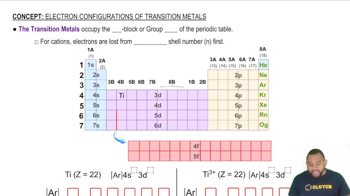
Transition Metals

Noble Gases

Noble gases, located in Group 18 of the periodic table, are known for their lack of reactivity due to having a full valence shell of electrons. This stability makes them inert under most conditions, which is why they are often used in applications requiring non-reactive environments, such as in neon signs or as inert gas shields in welding. The group includes helium, neon, argon, krypton, xenon, and radon, all of which are colorless and odorless at room temperature.
추천 영상:
가이드 코스
00:44
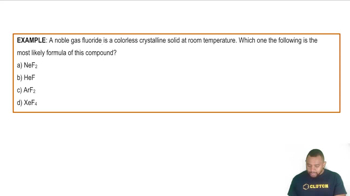
Noble Gas Compounds Example

Halogens

Halogens are found in Group 17 of the periodic table and include fluorine, chlorine, bromine, iodine, and astatine. They are highly reactive nonmetals with seven electrons in their outer shell, which makes them eager to gain an electron to achieve a stable octet configuration. This reactivity decreases down the group, and halogens can form salts when they react with alkali metals. They exist in various states at room temperature: gases (fluorine, chlorine), liquid (bromine), and solid (iodine).
추천 영상:
가이드 코스
01:11
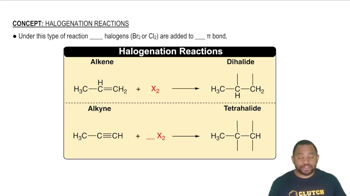
Halogenation Reactions