
Ch.2 - Atoms, Molecules & Ions
McMurry - Chemistry 8th Edition
McMurry8th EditionChemistryISBN: 9781292336145당신이 사용하는 게 아니라요?교과서 변경
2장, 문제 92

Prior to Rutherford's gold foil experi-ment, the 'plum pudding' model of the atom represented atomic structure. In this model, the atom is composed of elec-trons interspersed within a positive cloud of charge. If this were the correct model of the atom, predict how the results of Rutherford's experiment would have been different. (a) The alpha particles would pass right through the gold foil with little to no deflection. (b) Most of the alpha particles would be deflected back toward the source. (c) Most of the alpha particles would be absorbed by the atom and neither pass through nor be deflected from the gold foil.

검증된 단계별 안내
1
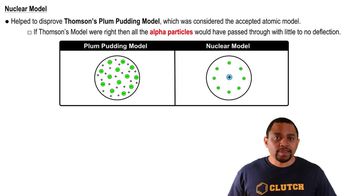
Understand the 'plum pudding' model: In this model, the atom is visualized as a diffuse cloud of positive charge with negatively charged electrons embedded randomly within it. The positive charge is spread evenly throughout the atom.
Consider the nature of alpha particles: Alpha particles are positively charged and relatively massive compared to electrons.
Predict the interaction between alpha particles and the 'plum pudding' model: Since the positive charge is spread out and not concentrated, the alpha particles would experience a uniform, weak electrostatic force as they pass through the atom.
Analyze the expected path of alpha particles: Given the diffuse nature of the positive charge in the 'plum pudding' model, the alpha particles would likely pass through the gold foil with minimal interaction and deflection.
Conclude the expected result: If the 'plum pudding' model were correct, the alpha particles would pass right through the gold foil with little to no deflection, aligning with option (a).

비슷한 문제에 대한 검증된 영상 답변:

이 영상 해법은 위 문제에 도움이 된다고 튜터들이 추천한 것입니다.
영상 길이:
6m

주요 개념

질문에 올바르게 답하기 위해 반드시 이해해야 하는 핵심 개념들은 다음과 같습니다.

Plum Pudding Model

The plum pudding model, proposed by J.J. Thomson, suggests that atoms are composed of negatively charged electrons embedded within a positively charged 'soup' or cloud. This model implies that the positive charge is diffuse and not concentrated in any specific location, leading to the expectation that alpha particles would pass through with minimal interaction.
추천 영상:

Rutherford's Gold Foil Experiment

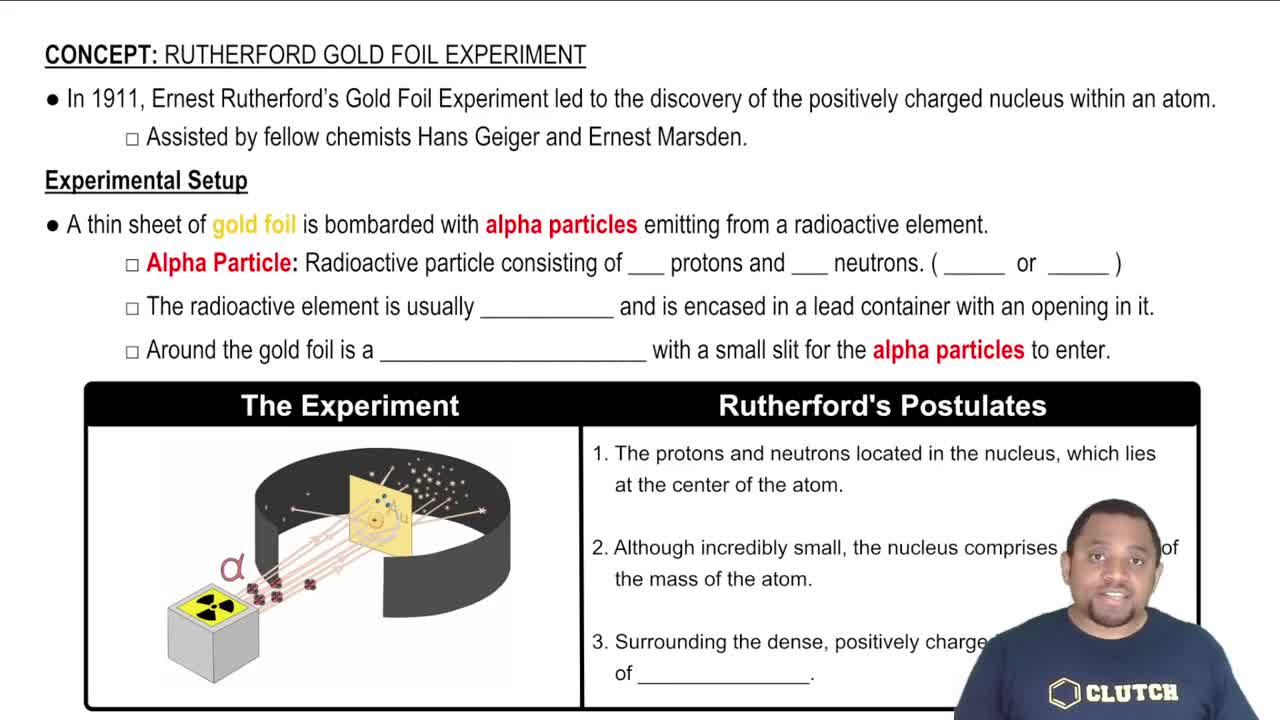
Rutherford's gold foil experiment involved firing alpha particles at a thin sheet of gold foil. The unexpected results, where some particles were deflected at large angles, led to the conclusion that atoms have a small, dense nucleus containing most of their mass and positive charge, contradicting the plum pudding model and suggesting a more complex atomic structure.
추천 영상:
가이드 코스
04:22
Rutherford Gold Foil Experiment

Alpha Particle Interaction

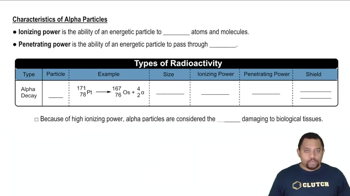
Alpha particles are positively charged and relatively massive compared to electrons. In the context of atomic models, their interaction with atomic structures depends on the distribution of charge within the atom. If the plum pudding model were accurate, alpha particles would experience minimal deflection due to the diffuse positive charge, whereas the actual results indicated a concentrated nucleus that could significantly deflect some particles.
추천 영상:
가이드 코스
02:48
Characteristics of Alpha Particles