Ch.2 - Atoms, Molecules & Ions
McMurry - Chemistry 8th Edition
McMurry8th EditionChemistryISBN: 9781292336145당신이 사용하는 게 아니라요?교과서 변경
2장, 문제 97

What is the difference between an element's atomic number and its atomic weight?

검증된 단계별 안내
1
The atomic number of an element is the number of protons found in the nucleus of an atom of that element. It is a whole number and is unique to each element, serving as an identifier on the periodic table.
The atomic weight (also known as atomic mass) of an element is the average mass of atoms of an element, measured in atomic mass units (amu). It takes into account the relative abundances of all the naturally occurring isotopes of that element.
The atomic number determines the chemical properties of the element because it defines the element's electron configuration, which dictates how it will interact with other atoms.
The atomic weight is important for calculations in chemistry involving mass, such as when determining the mass of reactants and products in a chemical reaction.
In summary, while the atomic number is fundamental to the identity and chemical behavior of an element, the atomic weight is crucial for practical measurements and calculations in chemistry.

비슷한 문제에 대한 검증된 영상 답변:

이 영상 해법은 위 문제에 도움이 된다고 튜터들이 추천한 것입니다.
영상 길이:
58s
도움이 되었나요?

주요 개념

질문에 올바르게 답하기 위해 반드시 이해해야 하는 핵심 개념들은 다음과 같습니다.

Atomic Number

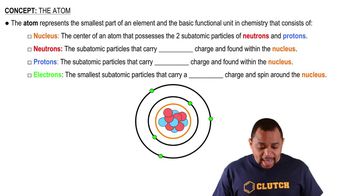
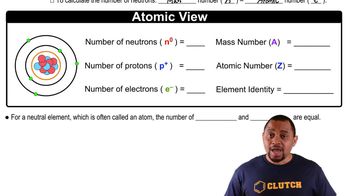
The atomic number of an element is defined as the number of protons found in the nucleus of an atom. It uniquely identifies an element and determines its position in the periodic table. For example, hydrogen has an atomic number of 1, indicating it has one proton. The atomic number also influences the element's chemical properties and behavior.
추천 영상:

Atomic Weight

Atomic weight, often referred to as atomic mass, is the weighted average mass of an element's isotopes, measured in atomic mass units (amu). It takes into account the relative abundance of each isotope in nature. For instance, carbon has an atomic weight of approximately 12.01 amu, reflecting the presence of both carbon-12 and carbon-13 isotopes. Unlike atomic number, atomic weight is not a whole number due to the presence of isotopes.
추천 영상:

Isotopes

Isotopes are variants of a particular chemical element that have the same number of protons but different numbers of neutrons, resulting in different atomic masses. For example, carbon-12 and carbon-14 are isotopes of carbon, with 6 protons but differing neutron counts. The existence of isotopes is crucial for understanding atomic weight, as the average is calculated based on the relative abundances of these isotopes in nature.
추천 영상: