Ch.20 - Nuclear Chemistry
McMurry - Chemistry 8th Edition
McMurry8th EditionChemistryISBN: 9781292336145당신이 사용하는 게 아니라요?교과서 변경
20장, 문제 92

Can fuel rods in a power plant be used to make an atomic weapon without further treatment? Explain.

검증된 단계별 안내
1
Understand the difference between the fuel used in nuclear power plants and the material used in atomic weapons. Nuclear power plants typically use fuel that is enriched to about 3-5% uranium-235, whereas weapons-grade uranium is enriched to about 90% uranium-235.
Recognize that the process of enrichment involves increasing the percentage of uranium-235 in natural uranium. This is achieved through techniques such as gaseous diffusion or gas centrifugation.
Acknowledge that fuel rods from a nuclear reactor contain not only uranium but also a variety of other isotopes, including plutonium, which are produced during the fission process in the reactor.
Consider the technical and legal barriers to using nuclear reactor fuel for weapons. Reprocessing spent nuclear fuel to extract plutonium or further enrich uranium-235 to weapons-grade requires sophisticated technology, stringent safety measures, and is heavily regulated by international agreements to prevent proliferation.
Conclude that while theoretically possible, converting nuclear reactor fuel into weapons-grade material is highly impractical, heavily guarded by international law, and requires advanced technological processes that go beyond simply obtaining spent fuel rods.

비슷한 문제에 대한 검증된 영상 답변:

이 영상 해법은 위 문제에 도움이 된다고 튜터들이 추천한 것입니다.
영상 길이:
2m

주요 개념

질문에 올바르게 답하기 위해 반드시 이해해야 하는 핵심 개념들은 다음과 같습니다.

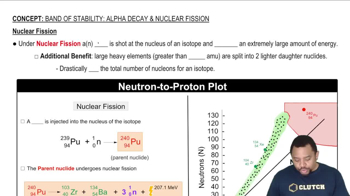
Nuclear Fission

Nuclear fission is the process by which a heavy nucleus splits into two or more lighter nuclei, releasing a significant amount of energy. This reaction is the fundamental principle behind both nuclear power generation and atomic weapons. In power plants, controlled fission occurs to produce energy, while in weapons, an uncontrolled chain reaction is desired for explosive yield.
추천 영상:
가이드 코스
03:29
Band of Stability: Nuclear Fission

Enrichment of Uranium

Uranium used in nuclear reactors typically contains a low percentage of the fissile isotope U-235, with the majority being U-238. For atomic weapons, uranium must be enriched to increase the proportion of U-235, making it more suitable for rapid fission. Fuel rods from power plants usually contain low-enriched uranium, which is not sufficient for weaponization without further processing.
추천 영상:
가이드 코스
03:29
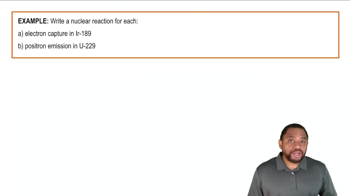
Electron Capture & Positron Emission Reaction Example

Radioactive Decay and Isotope Stability

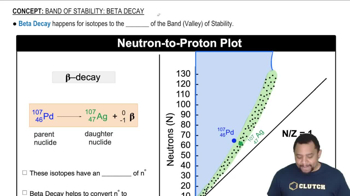
Radioactive decay refers to the process by which unstable atomic nuclei lose energy by emitting radiation. The stability of isotopes plays a crucial role in determining their suitability for nuclear reactions. Fuel rods contain isotopes that may decay over time, and the presence of isotopes like plutonium, which can be bred from U-238 in reactors, can complicate the potential for weaponization without additional treatment.
추천 영상:
가이드 코스
01:13
Band of Stability: Beta Decay