Ch.20 - Nuclear Chemistry
McMurry - Chemistry 8th Edition
McMurry8th EditionChemistryISBN: 9781292336145당신이 사용하는 게 아니라요?교과서 변경
20장, 문제 91

What is the difference between uranium fuel rods in a nuclear power plant and uranium fuel for an atomic weapon?

검증된 단계별 안내
1
Understand that both uranium fuel rods in nuclear power plants and uranium fuel for atomic weapons use the element uranium, but the key difference lies in the isotopic composition and the level of enrichment.
Recognize that uranium found in nature primarily consists of two isotopes: uranium-238 and uranium-235. Uranium-235 is the isotope that is capable of sustaining a nuclear chain reaction.
Learn that for use in nuclear power plants, the uranium is processed into fuel rods and is typically enriched to about 3-5% uranium-235, which is sufficient to sustain a controlled chain reaction that produces heat for generating electricity without reaching explosive levels.
Note that for atomic weapons, the uranium is highly enriched, typically to over 90% uranium-235. This high level of enrichment allows for a rapid, uncontrolled chain reaction, resulting in the massive energy release characteristic of nuclear explosions.
Understand the implications of these differences in enrichment for handling, safety, and international regulations, as the highly enriched uranium in weapons poses significant security risks and is subject to strict controls.

비슷한 문제에 대한 검증된 영상 답변:

이 영상 해법은 위 문제에 도움이 된다고 튜터들이 추천한 것입니다.
영상 길이:
1m
도움이 되었나요?

주요 개념

질문에 올바르게 답하기 위해 반드시 이해해야 하는 핵심 개념들은 다음과 같습니다.

Nuclear Fission

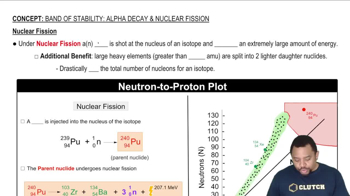
Nuclear fission is the process by which a heavy nucleus, such as uranium-235, splits into two smaller nuclei along with the release of energy and neutrons. In nuclear power plants, controlled fission reactions are used to generate heat, which is then converted into electricity. In contrast, atomic weapons rely on an uncontrolled chain reaction, leading to a rapid release of energy and an explosive yield.
추천 영상:
가이드 코스
03:29
Band of Stability: Nuclear Fission

Enrichment Levels

Uranium used in nuclear power plants is typically enriched to about 3-5% uranium-235, which is sufficient for sustaining a controlled fission reaction. In contrast, uranium for atomic weapons is highly enriched, often exceeding 90% uranium-235, allowing for a rapid and uncontrolled chain reaction necessary for an explosion. The level of enrichment is a critical factor that differentiates the two applications.
추천 영상:
가이드 코스
00:31
Quantum Numbers and Orbitals Example

Reactor Design vs. Weapon Design

The design of nuclear reactors and atomic weapons is fundamentally different. Reactors are engineered to maintain a stable and controlled reaction, utilizing moderators and control rods to manage the fission process. Conversely, atomic weapons are designed for maximum energy release in a very short time, employing fast fission and specific geometries to achieve a critical mass rapidly, resulting in an explosive reaction.
추천 영상:
가이드 코스
02:45
Intensive Properties