Ch.22 - The Main Group Elements
McMurry - Chemistry 8th Edition
McMurry8th EditionChemistryISBN: 9781292336145당신이 사용하는 게 아니라요?교과서 변경
22장, 문제 22.29a

Consider the six second- and third-row elements in groups 4A–6A of the periodic table:


Possible structures for the binary fluorides of each of these elements in its highest oxidation state are shown below.


(a) Identify the nonfluorine atom in each case, and write the molecular formula of each fluoride.

검증된 단계별 안내
1
Identify the elements in groups 4A–6A of the periodic table from the second and third rows.
List the elements: Carbon (C), Silicon (Si), Germanium (Ge), Tin (Sn), Lead (Pb) for group 4A; Nitrogen (N), Phosphorus (P), Arsenic (As), Antimony (Sb), Bismuth (Bi) for group 5A; Oxygen (O), Sulfur (S), Selenium (Se), Tellurium (Te), Polonium (Po) for group 6A.
Determine the highest oxidation state for each element, which is equal to the group number.
Write the molecular formula for the binary fluorides by combining each element with fluorine (F) in its highest oxidation state.
For example, for Carbon in group 4A, the highest oxidation state is +4, so the formula is CF4. Repeat this for each element.

비슷한 문제에 대한 검증된 영상 답변:

이 영상 해법은 위 문제에 도움이 된다고 튜터들이 추천한 것입니다.
도움이 되었나요?

주요 개념

질문에 올바르게 답하기 위해 반드시 이해해야 하는 핵심 개념들은 다음과 같습니다.

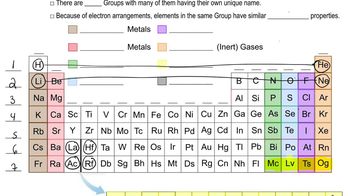
Periodic Table Groups

The periodic table is organized into groups (columns) that share similar chemical properties. Groups 4A to 6A include elements such as carbon, silicon, germanium, tin, lead, and their corresponding nonmetals. Understanding the position of these elements helps predict their behavior and the types of compounds they form, including binary fluorides.
추천 영상:
가이드 코스
05:33
Periodic Table: Group Names

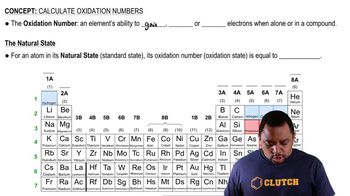
Oxidation States

Oxidation states indicate the degree of oxidation of an atom in a compound, reflecting the number of electrons lost or gained. In the context of binary fluorides, the highest oxidation state of an element determines how many fluorine atoms can bond with it. This is crucial for writing the correct molecular formulas for the fluorides of the specified elements.
추천 영상:
가이드 코스
02:42
Oxidation Numbers

Binary Compounds

Binary compounds consist of two different elements. In this case, the binary fluorides are formed by combining the nonfluorine atom from groups 4A to 6A with fluorine. Identifying the nonfluorine atom and understanding how it interacts with fluorine is essential for determining the correct molecular formulas for these compounds.
추천 영상: