Ch.22 - The Main Group Elements
McMurry - Chemistry 8th Edition
McMurry8th EditionChemistryISBN: 9781292336145당신이 사용하는 게 아니라요?교과서 변경
22장, 문제 22.86

Describe the structure of diborane (B2H6) and explain why the bridging B–H bonds are longer than the terminal B–H bonds.

검증된 단계별 안내
1
Diborane (B_2H_6) consists of two boron (B) atoms and six hydrogen (H) atoms. The structure is unique due to the presence of bridging hydrogen atoms.
In diborane, there are four terminal hydrogen atoms, each bonded to a boron atom, and two bridging hydrogen atoms that form bonds between the two boron atoms.
The terminal B–H bonds are typical covalent bonds, where each hydrogen shares a pair of electrons with a boron atom.
The bridging B–H bonds are different; they are three-center two-electron (3c-2e) bonds, involving two boron atoms and one hydrogen atom sharing two electrons.
The bridging B–H bonds are longer than the terminal B–H bonds because the electron density is spread over three atoms in the 3c-2e bonds, resulting in weaker and longer bonds compared to the typical two-center two-electron bonds of the terminal B–H.

비슷한 문제에 대한 검증된 영상 답변:

이 영상 해법은 위 문제에 도움이 된다고 튜터들이 추천한 것입니다.
도움이 되었나요?

주요 개념

질문에 올바르게 답하기 위해 반드시 이해해야 하는 핵심 개념들은 다음과 같습니다.

Diborane Structure

Diborane (B2H6) has a unique structure characterized by two boron atoms and six hydrogen atoms. It features a central framework where two boron atoms are connected by two bridging hydrogen atoms, forming a 'banana bond' geometry. This arrangement leads to a three-dimensional shape that is not typical for simple covalent compounds, making diborane a fascinating example of electron-deficient bonding.
추천 영상:
가이드 코스
01:42
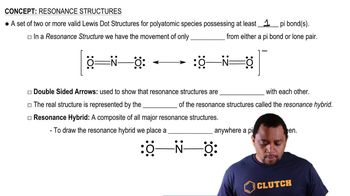
Resonance Structures

Terminal vs. Bridging Bonds

In diborane, terminal B–H bonds are formed between a boron atom and a hydrogen atom directly attached to it, while bridging B–H bonds connect two boron atoms through a hydrogen atom. The terminal bonds are shorter due to the direct overlap of orbitals between boron and hydrogen, resulting in stronger, more stable bonds compared to the bridging bonds, which involve more complex orbital interactions.
추천 영상:

Bond Length and Strength

Bond length is influenced by the strength of the bond; stronger bonds tend to be shorter. In diborane, the terminal B–H bonds are stronger and thus shorter than the bridging B–H bonds. The bridging bonds are longer because they involve a different bonding interaction, where the hydrogen atom is shared between two boron atoms, leading to a weaker bond due to less effective orbital overlap.
추천 영상:
가이드 코스
00:36
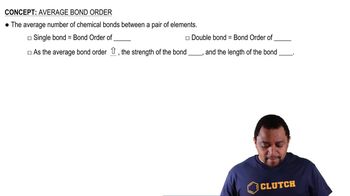
Average Bond Order