Ch.4 - Reactions in Aqueous Solution
McMurry - Chemistry 8th Edition
McMurry8th EditionChemistryISBN: 9781292336145당신이 사용하는 게 아니라요?교과서 변경
4장, 문제 72

Classify each of the following reactions as a precipitation, acid–base neutralization, or oxidation–reduction. (a) (b) (c)

검증된 단계별 안내
1
insert step 1
insert step 2
insert step 3
insert step 4
insert step 5

비슷한 문제에 대한 검증된 영상 답변:

이 영상 해법은 위 문제에 도움이 된다고 튜터들이 추천한 것입니다.
영상 길이:
4m
도움이 되었나요?

주요 개념

질문에 올바르게 답하기 위해 반드시 이해해야 하는 핵심 개념들은 다음과 같습니다.

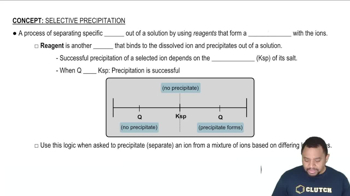
Precipitation Reactions

Precipitation reactions occur when two soluble salts react in solution to form an insoluble product, known as a precipitate. This process typically involves the exchange of ions between the reactants, leading to the formation of a solid that separates from the liquid phase. An example is the reaction between silver nitrate and sodium chloride, which produces solid silver chloride.
추천 영상:
가이드 코스
01:53
Selective Precipitation

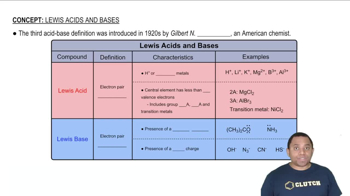
Acid-Base Neutralization

Acid-base neutralization reactions involve the reaction between an acid and a base, resulting in the formation of water and a salt. This process typically involves the transfer of protons (H⁺ ions) from the acid to the base. A common example is the reaction between hydrochloric acid and sodium hydroxide, which produces sodium chloride and water.
추천 영상:
가이드 코스
05:04
Lewis Acids and Bases

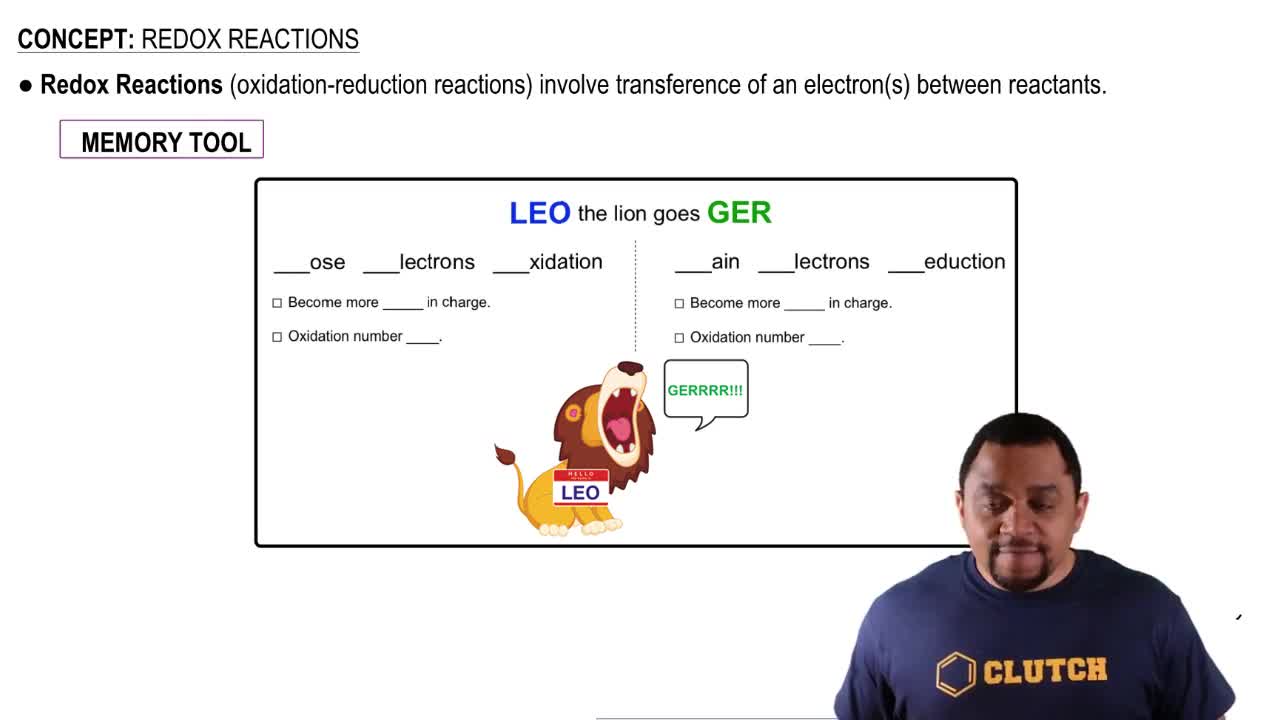
Oxidation-Reduction Reactions

Oxidation-reduction (redox) reactions involve the transfer of electrons between substances, leading to changes in oxidation states. In these reactions, one species is oxidized (loses electrons) while another is reduced (gains electrons). An example is the reaction between zinc and copper sulfate, where zinc is oxidized and copper is reduced, resulting in the deposition of copper metal.
추천 영상:
가이드 코스
01:53
Oxidation and Reduction Reactions