Two electromagnetic waves are represented below. (c) Which wave represents yellow light, and which represents infrared radiation?
검증된 단계별 안내
1
Identify the characteristics of yellow light and infrared radiation. Yellow light is part of the visible spectrum with a wavelength range of approximately 570-590 nm. Infrared radiation has longer wavelengths, typically greater than 700 nm.
Examine the given electromagnetic waves and determine their wavelengths.
Compare the wavelengths of the given waves to the known ranges for yellow light and infrared radiation.
Assign the wave with a wavelength in the range of 570-590 nm to yellow light.
Assign the wave with a wavelength greater than 700 nm to infrared radiation.
비슷한 문제에 대한 검증된 영상 답변:
이 영상 해법은 위 문제에 도움이 된다고 튜터들이 추천한 것입니다.
영상 길이:
2m
영상 재생:
0 댓글
주요 개념
질문에 올바르게 답하기 위해 반드시 이해해야 하는 핵심 개념들은 다음과 같습니다.
Electromagnetic Spectrum
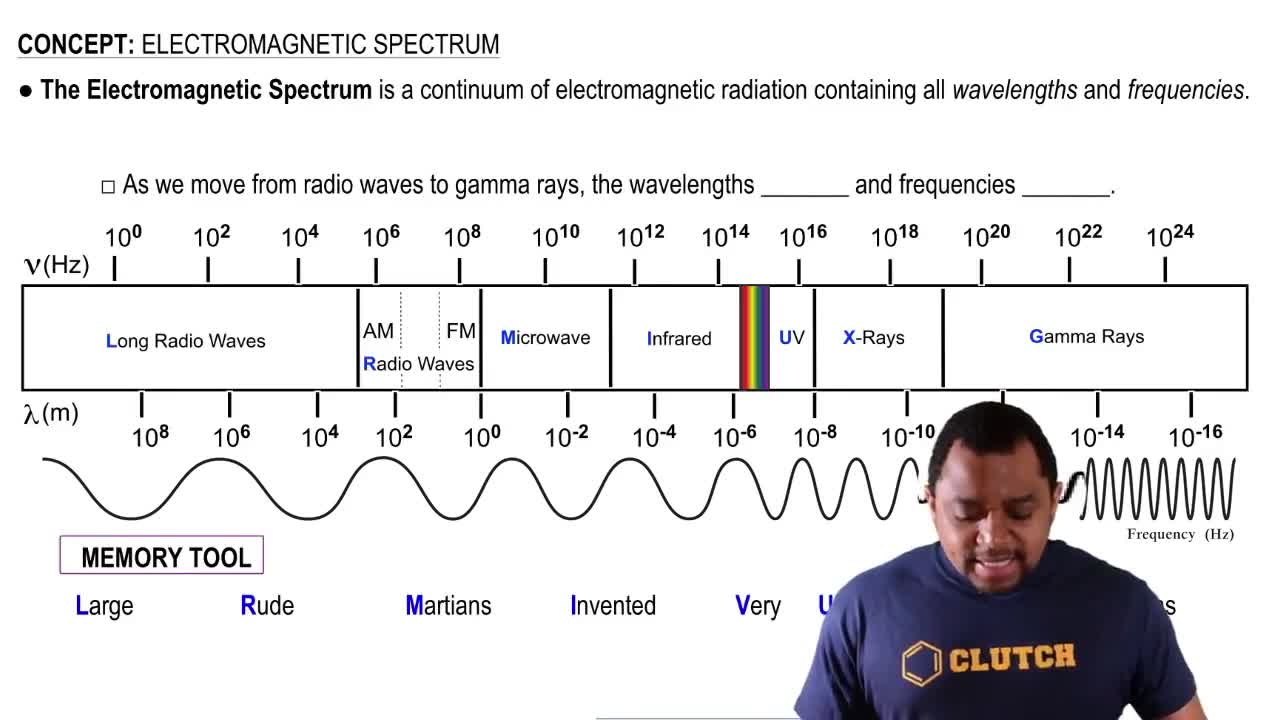
The electromagnetic spectrum encompasses all types of electromagnetic radiation, arranged by wavelength or frequency. It ranges from gamma rays with very short wavelengths to radio waves with very long wavelengths. Visible light, including yellow light, occupies a small portion of this spectrum, while infrared radiation has longer wavelengths than visible light.
Wavelength is the distance between successive peaks of a wave, while frequency is the number of wave cycles that pass a point per second. These two properties are inversely related; as wavelength increases, frequency decreases. Yellow light has a specific wavelength range (approximately 570-590 nm), while infrared radiation has longer wavelengths (greater than 700 nm).
Color perception in humans is based on the wavelengths of light that are absorbed and reflected by objects. The human eye can detect visible light, which includes colors like yellow, but cannot see infrared radiation. This difference in perception is crucial for distinguishing between visible light and infrared, as they interact differently with materials and are used in various applications, such as thermal imaging.


 검증된 단계별 안내
 02:53
02:53