What is the likely identity of the second-row element with the first four ionization energies of 900, 1757, 14,849, and 21,007 kJ/mol?
검증된 단계별 안내
1
Step 1: Understand the concept of ionization energy, which is the energy required to remove an electron from an atom in the gaseous state. The first ionization energy is for removing the first electron, the second for the second electron, and so on.
Step 2: Recognize that a significant jump in ionization energy indicates the removal of an electron from a new, more stable electron shell. This jump helps identify the element's group.
Step 3: Compare the given ionization energies: 900, 1757, 14,849, and 21,007 kJ/mol. Notice the large increase between the second and third ionization energies, suggesting the first two electrons are removed from the same shell, and the third from a more stable inner shell.
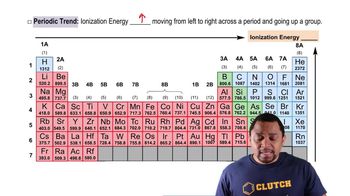
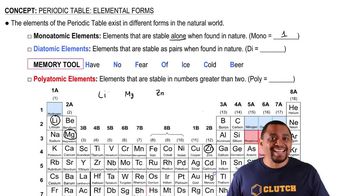
Step 4: Identify the second-row elements in the periodic table: Li, Be, B, C, N, O, F, Ne. Consider the electron configurations and the likely positions of these elements based on the ionization energy pattern.
Step 5: Determine that the large jump after the second ionization energy suggests the element is in Group 2, as the removal of the third electron involves breaking into a stable noble gas configuration. This points to the element being Beryllium (Be).
주요 개념
질문에 올바르게 답하기 위해 반드시 이해해야 하는 핵심 개념들은 다음과 같습니다.
Ionization Energy
Ionization energy is the energy required to remove an electron from an atom in its gaseous state. It is a key indicator of an element's reactivity and can vary significantly among different elements. Generally, ionization energy increases across a period due to increasing nuclear charge and decreases down a group due to increased electron shielding.
The trends in ionization energies across the periodic table reveal that elements in the same group have lower ionization energies than those in the same period. As you move from left to right across a period, the ionization energy increases due to the greater effective nuclear charge experienced by the outer electrons. A large jump in ionization energy values indicates the removal of an electron from a much more stable electron configuration, often suggesting the element is nearing a noble gas configuration.
Second-row elements refer to the elements in the second period of the periodic table, which includes lithium (Li) to neon (Ne). These elements exhibit distinct chemical properties and trends in ionization energy, electronegativity, and atomic size. Understanding the specific ionization energies of these elements helps in identifying their identity based on the energy required to remove successive electrons.


 검증된 단계별 안내
 01:19
01:19