Ch.1 - Matter, Measurement & Problem Solving
Tro - Chemistry: A Molecular Approach 4th Edition
Tro4th EditionChemistry: A Molecular ApproachISBN: 9780134112831당신이 사용하는 게 아니라요?교과서 변경
1장, 문제 48

Classify each change as physical or chemical. a. Sugar burns when heated in a skillet. b. Sugar dissolves in water. c. A platinum ring becomes dull because of continued abrasion. d. A silver surface becomes tarnished after exposure to air for a long period of time.

검증된 단계별 안내
1
Identify the type of change: Physical changes involve changes in physical properties without altering the substance's chemical identity, while chemical changes involve a transformation into a different substance.
Analyze each scenario: a. Sugar burns when heated in a skillet. This involves a chemical change as sugar reacts with oxygen to form new substances like carbon dioxide and water.
b. Sugar dissolves in water. This is a physical change because the sugar molecules are dispersed in water but remain chemically unchanged.
c. A platinum ring becomes dull because of continued abrasion. This is a physical change as the dullness is due to physical wear and tear, not a change in chemical composition.
d. A silver surface becomes tarnished after exposure to air for a long period of time. This is a chemical change as silver reacts with sulfur compounds in the air to form silver sulfide, a new substance.

비슷한 문제에 대한 검증된 영상 답변:

이 영상 해법은 위 문제에 도움이 된다고 튜터들이 추천한 것입니다.
영상 길이:
3m
도움이 되었나요?

주요 개념

질문에 올바르게 답하기 위해 반드시 이해해야 하는 핵심 개념들은 다음과 같습니다.

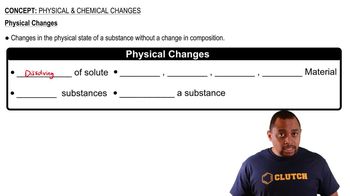
Physical Change

A physical change involves a transformation that does not alter the chemical composition of a substance. Examples include changes in state (like melting or dissolving) and changes in appearance (like grinding or cutting). In the context of the question, dissolving sugar in water is a physical change because the sugar retains its chemical identity.
추천 영상:
가이드 코스
01:41
Physical Changes

Chemical Change

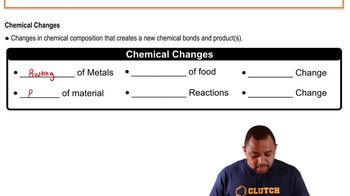
A chemical change results in the formation of one or more new substances with different chemical properties. This process often involves a reaction where bonds are broken and formed. In the question, burning sugar is a chemical change because it produces new substances, such as carbon dioxide and water, through combustion.
추천 영상:
가이드 코스
01:53
Chemical Changes

Tarnishing and Abrasion

Tarnishing is a specific type of chemical change that occurs when metals react with oxygen or other substances in the environment, leading to the formation of a tarnish layer. Abrasion, on the other hand, is a physical change that alters the surface texture of materials without changing their chemical identity. The dulling of a platinum ring due to abrasion and the tarnishing of silver are both important examples of these concepts.